REVIEW · GRAN CANARIA
Gran Canaria Playa del Ingles: Surf lessons all levels
Book on GetYourGuide →Operated by South Coast surfschool · Bookable on GetYourGuide
Surf lessons only work when coaching is clear.
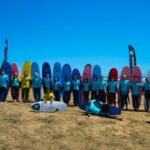
This 3-hour session on Gran Canaria’s south coast pairs a calm plan with real ocean time, so you can focus on catching waves instead of guessing what to do. I like that it’s built for both first-timers and people who already ride, and that the group stays small at 8 participants max. One thing to keep in mind: the class is marked for Playa del Ingles, but the actual surf area lines up with the Maspalomas/Meloneras lighthouse meeting area, so check your directions carefully.
What I love most is the two-step structure: short theory on the beach, then a 2-hour practice session in the sea. I also like the value mix—surfboard and wetsuit are included, and you get accident and liability insurance with the booking. The possible drawback is that the mineral water/fruit is listed as included, but it didn’t show up in one case, so if food timing matters to you, bring a backup snack.
In This Review
- Key Things to Know Before You Go
- A 3-Hour Surf Lesson That’s Actually Designed for Progress
- Coaching That Focuses on Fun and Waves
- Price and Value: What $59 Buys You (and Why It’s Not Just the Session)
- Beach Theory First: How the Lesson Sets You Up
- Then the Real Work: 2 Hours in the Sea
- What You Actually Get: Surfboard, Wetsuit, Water, and Insurance
- Meeting Point in Real Life: SouthCoast Flags by the Red Cross
- How to Prepare: Small Choices That Improve Your Session
- What Levels You Should Expect (Beginner to Advanced)
- Small Group Energy: Why 8 People Makes a Difference
- Who This Surf Lesson Fits Best
- Should You Book This South Coast Surf Lesson in Gran Canaria?
- FAQ
- Where do I meet for the surf lesson?
- How long is the surf lesson?
- Is this surf lesson only for beginners?
- What happens during the lesson?
- What’s included in the price?
- Is hotel pickup or transportation included?
- How many people are in the class?
- What languages are the instructors?
- Can I cancel for a refund?
- Is the lesson actually in Playa del Ingles?
Key Things to Know Before You Go
- Small group coaching (up to 8 people) keeps feedback personal.
- Theory on the beach, then 2 hours in the water turns instructions into results.
- Gear included means you show up ready: surfboard and wetsuit are provided.
- English, German, and Spanish lets most people follow along without stress.
- The surf spot is near Maspalomas/Meloneras lighthouse, not always where you’d expect from the headline name.
- In-water instruction is part of the teaching style, which speeds up progress.
A 3-Hour Surf Lesson That’s Actually Designed for Progress
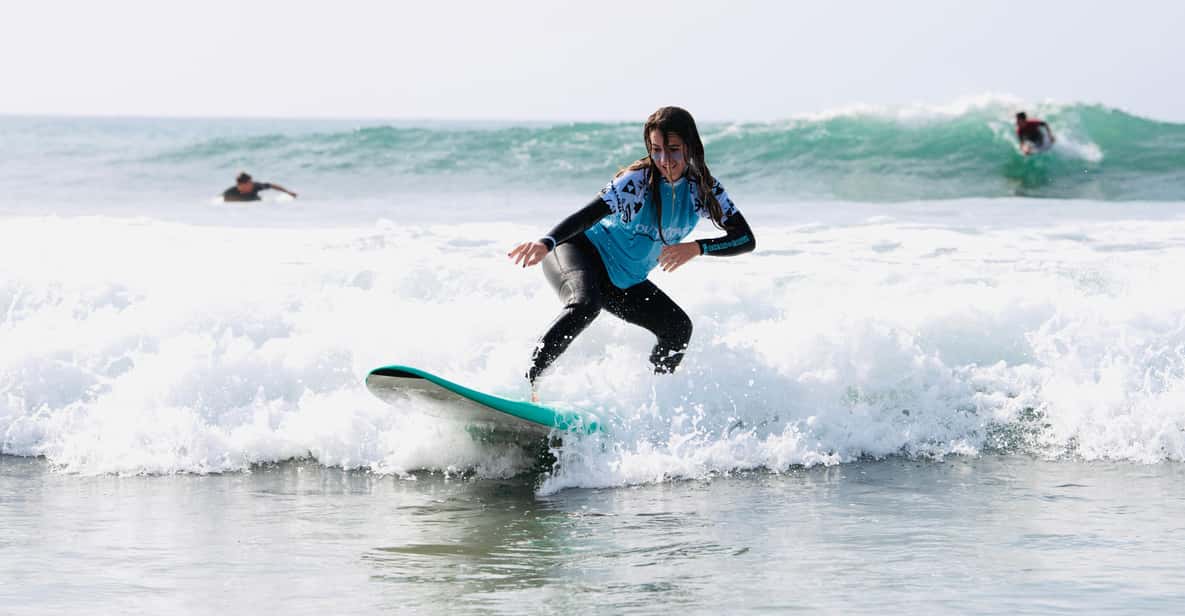
A lot of surf experiences fail at the same point: you spend time waiting, then you’re rushed. This one is built to avoid that. The format is simple—get the basics on land, then spend real time in the water where your balance, timing, and turning all get tested.
You’re also not thrown into a one-size-fits-all class. The lesson is described for beginners up through more advanced surfers who want to sharpen technique. That matters because beginners need confidence with paddling and standing, while more experienced riders often need small corrections that fix big problems.
You can also read our reviews of more tours and experiences in Gran Canaria
Coaching That Focuses on Fun and Waves
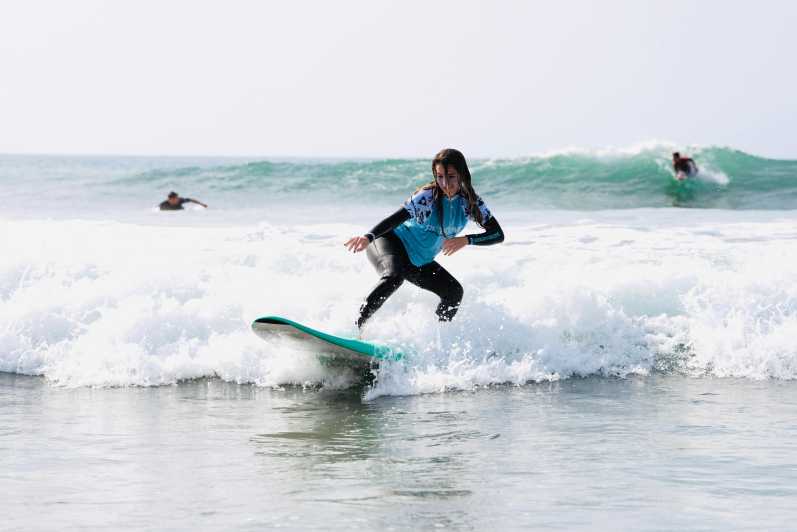
The guiding idea here is that you improve by staying in the right headspace—having fun while you learn. That may sound like motivational poster stuff, but the best part is how it shows up in the teaching approach. With a small group and an instructor who works directly with you, you’re more likely to understand what to change right away.
In a couple of feedback notes, the instructors are credited for explaining clearly and giving a lot of attention per person. One name that comes up is Daniel, praised as a strong surf teacher. Another common theme is that having the instructor in the water helps everyone make progress faster, because you’re not only getting tips—you’re getting live correction as you try again.
Price and Value: What $59 Buys You (and Why It’s Not Just the Session)
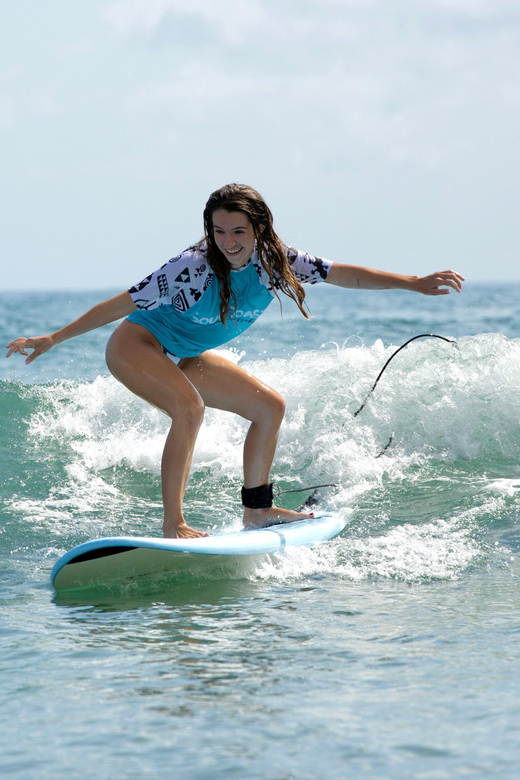
At around $59 per person for about 3 hours, the question is whether you’re paying for an activity or paying for coaching plus equipment. Here, you get more than just a board and a spot on the beach.
Included items are surfboard, wetsuit, mineral water and fruit (listed), and accident and liability insurance. That combination changes the value calculation. Many surf lessons charge extra for equipment, and few include insurance in the basic price.
Also, small group teaching has a cost in time and staffing. When only up to 8 people are in the class, the instructor can actually observe your posture and paddle position without splitting attention across a huge crowd. For a first surf day, that can be the difference between a few awkward tries and consistent little wins.
Beach Theory First: How the Lesson Sets You Up
The lesson starts with a theoretical class on the beach. This is where you learn the basic principles of surfing at a low to intermediate level, and it’s designed to keep you from wasting water time on guesswork.
The practical value of this beach portion is that it gives you a mental checklist before you get wet. If you understand how to handle the board, where to place your weight, and what you’re trying to do with your timing, you’ll spend your next session actually practicing those actions instead of flailing for balance.
You should expect this to be short and direct, not a long lecture. The goal is to make the ocean time usable, especially if it’s your first time on a surfboard.
Then the Real Work: 2 Hours in the Sea
After theory, you shift into a 2-hour practice session in the sea. This is the heart of the experience. With enough time on the water, you get repetition—the thing that builds muscle memory fast.
One detail that’s especially helpful for beginners: the teaching beach area is reported as fairly flat, with conditions where you can stand more easily while you learn. That reduces the panic factor. The waves still come with size enough to practice, but the setup makes it less likely that you’ll feel overwhelmed before you’ve even gotten confident on the board.
For intermediate surfers, the value is different but still real. You can focus on improving your next section: better positioning, smoother turning attempts, or refining how you take off. The coaching style—especially with the instructor working in the water—supports those micro-fixes that often make the biggest difference on a crowded shoreline.





What You Actually Get: Surfboard, Wetsuit, Water, and Insurance
Here’s what’s included in the class:
- Surfboard
- Wetsuit
- Mineral water and fruit
- Accident and liability insurance
The wetsuit matters in Gran Canaria because water temperature and wind can change how comfortable you stay during learning. If you’re not thinking about warmth, you can focus on what you’re doing with your body.
One practical note: mineral water and fruit are listed, but there was at least one instance where the water/fruit didn’t appear and there wasn’t a clear break. If you’re the kind of person who likes to keep energy steady, bring a backup snack or plan to grab something after class.
The insurance is a quiet but important inclusion. Surf can be bumpy—boards, wipeouts, saltwater, and sandy footing. Knowing that accident and liability insurance are part of the booking helps you relax a bit more while you concentrate on your technique.
Meeting Point in Real Life: SouthCoast Flags by the Red Cross
Logistics can make or break a good surf morning. The meeting point is clearly stated as SouthCoast surfschool flags, by a beach bar near the red cross office.
Two details are worth extra attention:
- The surf lesson is described with Playa del Ingles in mind, but the actual learning area can be around Maspalomas/Meloneras near the lighthouse.
- Your best move is to follow the meeting point exactly as given, rather than assuming the closest landmark name on a headline matches the water location.
If you’re arriving by foot or from your hotel area, give yourself time to walk and find the flags. Surf sessions run on tide and wave timing, and you’ll have a smoother start if you’re early.
How to Prepare: Small Choices That Improve Your Session
You’ll enjoy this class more if you treat it like a skill session, not a sightseeing stop. Here are practical tips that fit the structure of the lesson.
Wear swimwear you’re comfortable getting in and out of quickly, since you’ll be changing into a wetsuit. If you have rash guard or surf layers you like, you might find them helpful under a wetsuit, but the key point is that the wetsuit is provided.
Bring a simple bag for essentials after. Your hands and shoulders will work, and you’ll want water and something to eat once you’re done. Since the water/fruit isn’t guaranteed based on one feedback note, plan for your own post-session snack too.
And mentally: expect a learning curve. You’re going to get better in the water by trying, failing, and immediately adjusting based on instructor cues. That’s why the small-group format is so valuable.
What Levels You Should Expect (Beginner to Advanced)
This is positioned for both beginners and advanced riders, but the way it feels will differ.
For beginners, the big win is that you get:
- beach instruction first,
- time to practice with your instructor nearby, and
- conditions where you can learn without constant full wipeouts.
For intermediate surfers, you’ll still benefit because the instructor can guide your next refinement. With the instructor working from the water and a group capped at 8, it’s more realistic to get targeted advice rather than generic tips.
For more advanced surfers, the course may be more about sharpening technique than chasing a hard progression. If your main goal is learning to ride big surf or mastering high-performance maneuvers, you might need a more specialized program elsewhere—but for improving basics and making your session productive, this fits.
Small Group Energy: Why 8 People Makes a Difference
A capped class size isn’t just a comfort perk. It’s a teaching tool. With fewer participants, instructors can:
- watch your paddling start and body angle,
- correct stance and weight transfer quickly, and
- repeat exercises without losing momentum.
You also spend less time waiting for your turn. Waiting kills progress. It also steals the calm confidence you need to keep trying after a wipeout.
If you’re traveling with friends or you want a class where the instructor learns what each person needs, small group coaching is one of the strongest reasons to book this instead of a larger beach demo.
Who This Surf Lesson Fits Best
This experience is best for you if:
- it’s your first time surfing and you want clear coaching,
- you want a short session with enough water time to feel improvement,
- you prefer small-group attention,
- you’re comfortable going to the meeting point yourself (since hotel pickup isn’t included).
It’s also a good choice for couples or small friend groups who don’t want a big crowd atmosphere.
If you need a fully packaged experience with transportation from your hotel, plan to arrange your own way to the meeting point. This one does not include hotel pickup or transportation.
Should You Book This South Coast Surf Lesson in Gran Canaria?
I’d book it if your top priority is practical coaching in a small group and you want enough ocean time to actually learn. The structure—beach theory plus 2 hours in the sea—is the right recipe for turning instructions into results. Add included gear and accident/liability insurance, and the value becomes strong for a 3-hour session.
I’d hesitate only if you’re picky about the exact snack/water setup, since mineral water and fruit are listed but not always delivered in the same way. Also, make sure you’re comfortable checking the correct meeting spot near the red cross office and understanding the surf area may be around Maspalomas/Meloneras lighthouse rather than Playa del Ingles.
If you show up, listen, and try again right away, you’ll leave with that best kind of souvenir: a skill that feels real, not just a photo.
FAQ
Where do I meet for the surf lesson?
Meet at the SouthCoast surfschool flags by a beach bar, directly close to the red cross office.
How long is the surf lesson?
The total duration is 3 hours.
Is this surf lesson only for beginners?
No. The class is for beginners and also supports more advanced surfers who want to improve skills.
What happens during the lesson?
You start with a theoretical class on the beach, then you do a 2-hour practice session in the sea.
What’s included in the price?
Included: surfboard, wetsuit, mineral water and fruit, and accident and liability insurance.
Is hotel pickup or transportation included?
No. Hotel pickup and transportation are not included.
How many people are in the class?
It’s a small group limited to 8 participants.
What languages are the instructors?
Instructors speak English, German, and Spanish.
Can I cancel for a refund?
Yes. You can cancel up to 24 hours in advance for a full refund.
Is the lesson actually in Playa del Ingles?
The class is associated with Playa del Ingles, but the meeting point and learning area can be around Maspalomas/Meloneras near the lighthouse, so follow the stated meeting point.