REVIEW · GRAN CANARIA
Playa del Inglés Maspalomas: High Quality Surf Classes
Book on GetYourGuide →Operated by Surf Canaries · Bookable on GetYourGuide
First wave on day one is a rush. I like the small-group coaching that stays hands-on in the water, and I like the video-and-theory start that helps you understand the basics before you even step in. The one real consideration: your surf day depends on conditions, so timing can shift a little and you should be ready for that.
What makes this surf class feel extra practical is where it happens. You’re based near the famous Maspalomas sand dunes, and Surf Canaries runs as a mobile surf school, choosing the best beach each day. If the better waves are elsewhere, transport is included; if you’re walking to the home spot, expect a manageable stroll along the sand while carrying your board.
In This Review
- Key things you’ll notice right away
- Why Playa del Inglés is a smart first-stop for surfing
- Meeting Surf Canaries Surf School and getting sorted fast
- Theory and video tips: learning the basics before you stand
- Choosing the best waves: walking the sand or riding to the spot
- In the water: how the coaching keeps you safe and moving
- The equipment plan: you come with your body, not your gear
- Price and value: why $68 can make sense for a 4-hour beginner day
- Who this surf class fits best (and who should rethink it)
- What to bring so your day doesn’t get messy
- Should you book the Playa del Inglés beginner surf class?
- FAQ
- What’s the duration of the Playa del Inglés surf class?
- Where do I check in for the lesson?
- Is prior surfing experience required?
- What’s included in the price?
- Do you provide transportation to the best beach?
- What should I bring with me?
- What are the age and health limits?
- What languages are the instructors?
- What happens if surf conditions are not ideal?
Key things you’ll notice right away
- Beginner-friendly structure: theory + video intro before you hit the waves
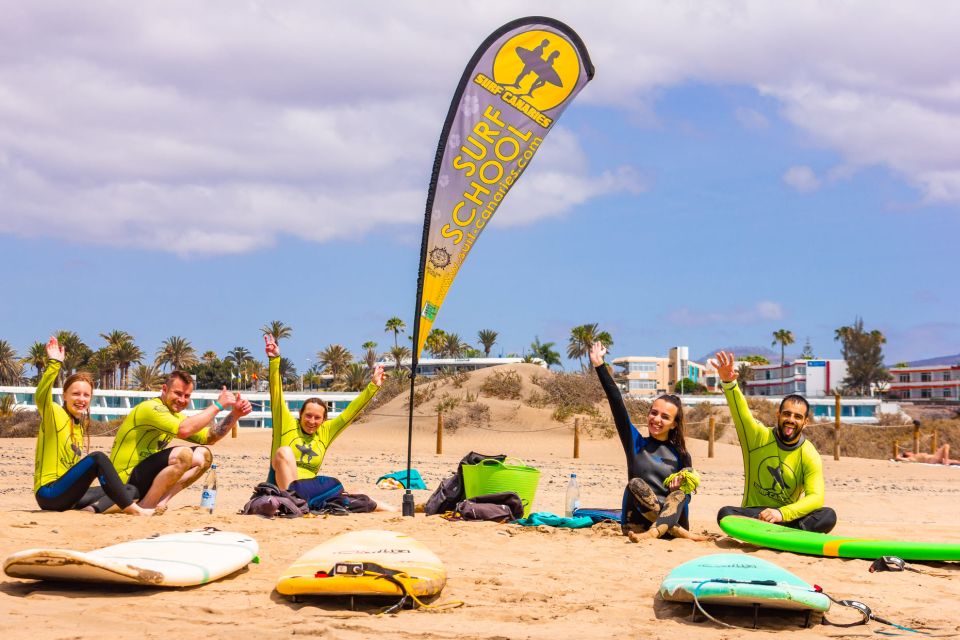
- Small-group attention: instructors stay close so you can adjust fast
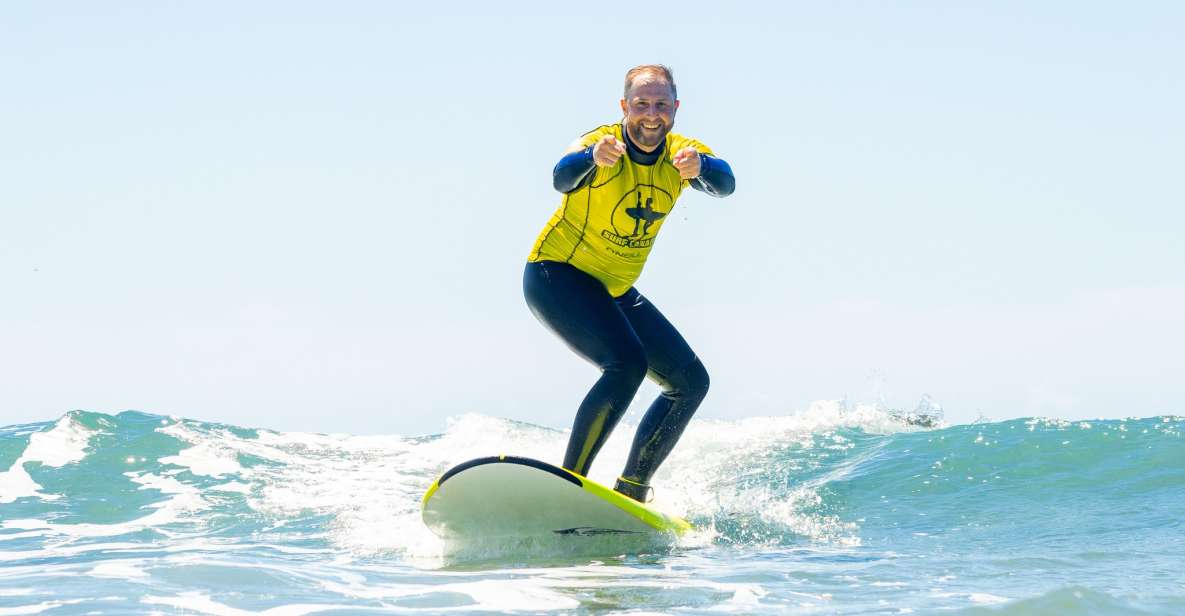
- Stand up learning goal: lessons are built for first-day success in good conditions
- Mobile surf school planning: the team picks the best breaking spots each day
- Photos included: you get proof you were actually surfing, not just watching
- 4 full hours: it’s longer and more physical than a quick demo
Why Playa del Inglés is a smart first-stop for surfing
Playa del Inglés and the Maspalomas area are set up for beginner surf days. The big reason is simple: Gran Canaria can offer wave conditions that are workable for new surfers, and this school leans into that by staying flexible. You’re not stuck with one spot no matter what the ocean does.
Another big plus is the setting. The lesson starts near the sand dunes of Maspalomas, so even your walk to the water feels like you’re doing something iconic in Gran Canaria, not just going through a routine activity. And because Surf Canaries is mobile, the plan adapts to where the waves break best that day.
If you’ve ever been unsure whether you’ll actually enjoy a first lesson, this is the kind of class that reduces the guesswork. You’re guided step by step, and the instructors are there to help you translate what you learned into what you do on the board.
You can also read our reviews of more tours and experiences in Gran Canaria
Meeting Surf Canaries Surf School and getting sorted fast
You check in at Surf Canaries Surf School at Alf. Provisionales, Anexo 2, Playa del Ingles (the activity ends back there). From there, the lesson starts inside with a relaxed intro before you go to the beach.
This matters because surfing is part sport, part timing, part technique. If you start in the water without a plan, you can feel lost even if you’re doing your best. The pre-water session helps you get your bearings and gives you a framework for what you’re about to practice.
At this point you’ll also get what you need to ride comfortably:
- surfboard
- leash
- rash vest
- long or short wetsuit (you’ll be in the one that fits the session conditions)
The school also includes third party and accident insurance, which I always appreciate for outdoor activities where stuff happens fast. There’s also a 10% shop discount, which is a nice bonus if you want gear or a souvenir like caps.
Bring your essentials so you don’t lose time once you’re there: hat, swimwear, towel, sunscreen, and a passport or ID card (a copy is accepted).
Theory and video tips: learning the basics before you stand
A lot of surf schools toss you into the lineup with only a few quick pointers. This one does the opposite. Your session begins with a beginner-friendly theory class that’s designed to be easy to follow, plus a video intro that gives you practical technique cues.
Why that’s valuable: in your first surf lesson, your attention is overloaded. You’re balancing, watching the waves, managing your timing, and listening to instructions. A short theory and video start helps your brain connect the dots, so the coaching later in the water lands faster.
After the first water session, you’ll also get a bit to recharge: water and a piece of fruit. It’s not a big meal, but it’s the kind of small, smart touch that helps you keep going through a full 4-hour experience.
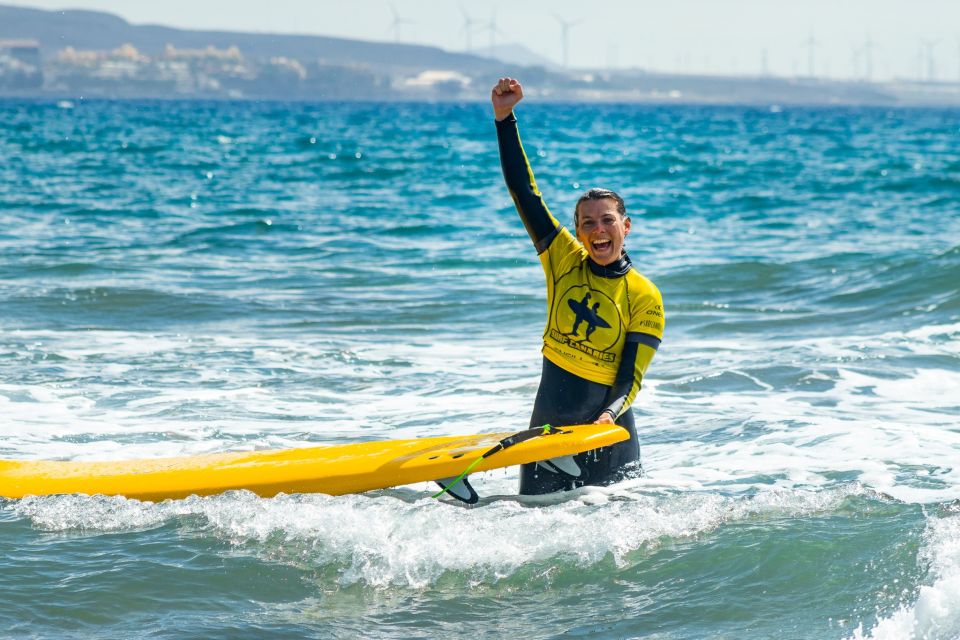
Also, photos are included. That shifts the mood in a good way. You’re not only thinking about surviving the session—you can focus on improving, knowing you’ll have images afterward.
Choosing the best waves: walking the sand or riding to the spot
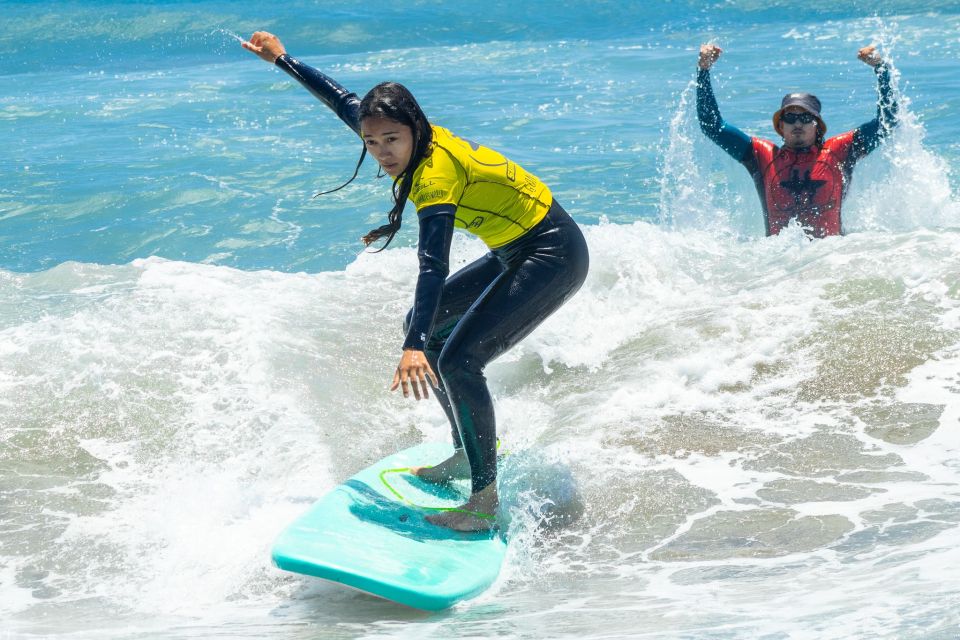
The school runs as a mobile operation, which means they pick where conditions are best each day. If the best breaking waves are at a different beach, transport is included.
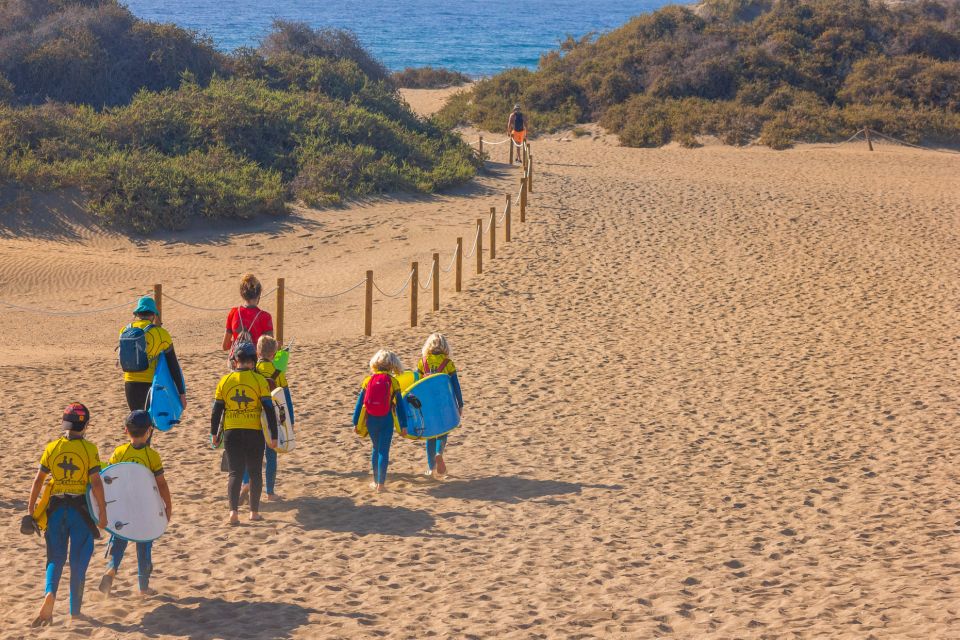
If the best spot is their home beach in Playa del Inglés, you’ll walk with your boards. The walk can take 10 to 20 minutes along the sand, carrying your surfboard. For most people in reasonable physical shape, it’s manageable—but it’s still a real walk in beach conditions.
A small detail worth knowing: because this area is known for beach culture, you might notice some nude sunbathers in the dunes area. That doesn’t change the lesson, but it can affect how you feel about where you’re changing and moving around. If you’re sensitive to that, plan your comfort accordingly.
This mobile approach is one of the reasons beginners do well here. In surfing, the difference between a frustrating day and a productive one is often wave quality at the moment. The school’s flexibility helps you get into the water where you can actually practice.
In the water: how the coaching keeps you safe and moving
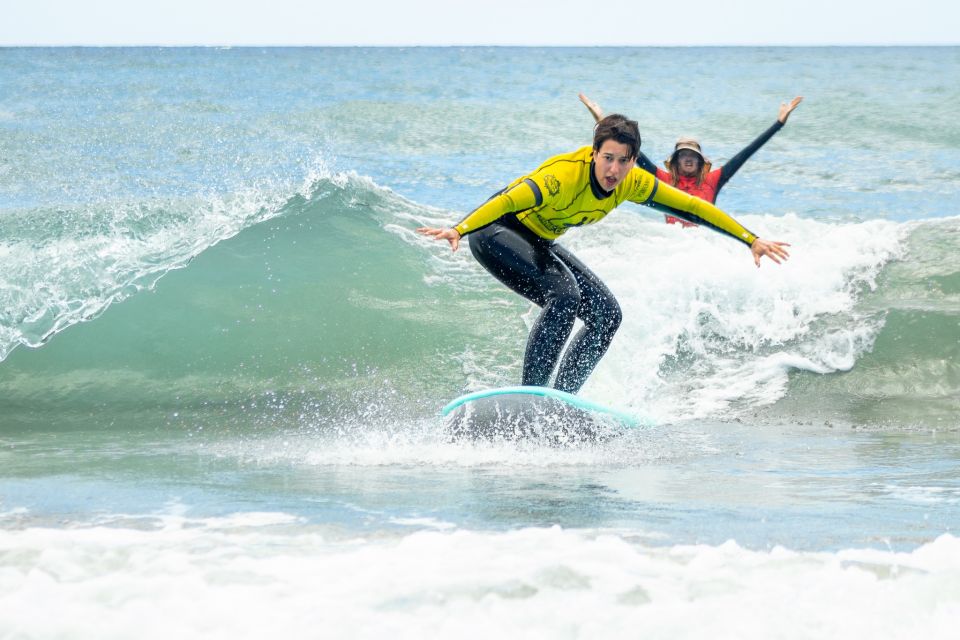
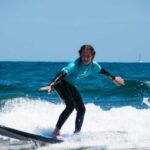
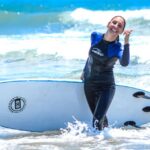
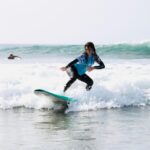
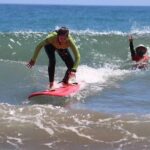
Once you’re at the beach, the instructors stay right with you. The teaching style is expert, hands-on coaching throughout, and it’s built for first-timers. They help you catch your first waves rather than leaving you to figure it out alone.
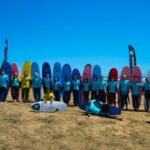
You’ll also see why the class is repeatedly described as safe. The group size is small, which means you don’t spend long stretches waiting for your turn while an instructor talks over your head. Instead, you get targeted feedback and corrections when you need them.
Expect the session to be physical. Even with beginner waves, you’re paddling, balancing, and repositioning repeatedly over 4 hours. Some participants mention bruises and that it can be a workout if you truly commit to the practice. That’s normal. Surfing asks for effort.
At the same time, it’s not chaotic. The point is to help you progress quickly and confidently. If you can follow instructions and you’re reasonably fit, you’re in good shape to enjoy this day.





The equipment plan: you come with your body, not your gear
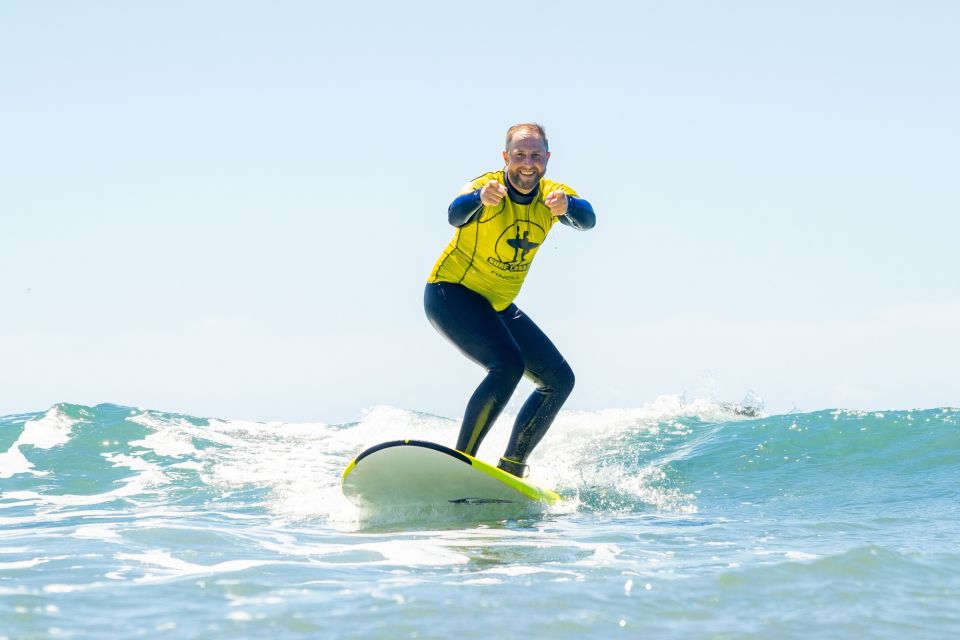
One of the best value angles here is what’s included. You don’t have to shop for rentals or show up figuring out which wetsuit thickness you need.
You get all the standard surfing kit plus the comfort stuff:
- surfboard
- leash
- rash vest
- long or short wetsuit
That covers the basics and also reduces friction for your first attempt. Your wetsuit fit, your board size, and your leash matter a lot. When the school controls those details, beginners tend to learn faster and feel safer.
And yes, you’ll be learning in different moments across the 4-hour block. Having the full setup handled for you keeps the pace steady.
Price and value: why $68 can make sense for a 4-hour beginner day
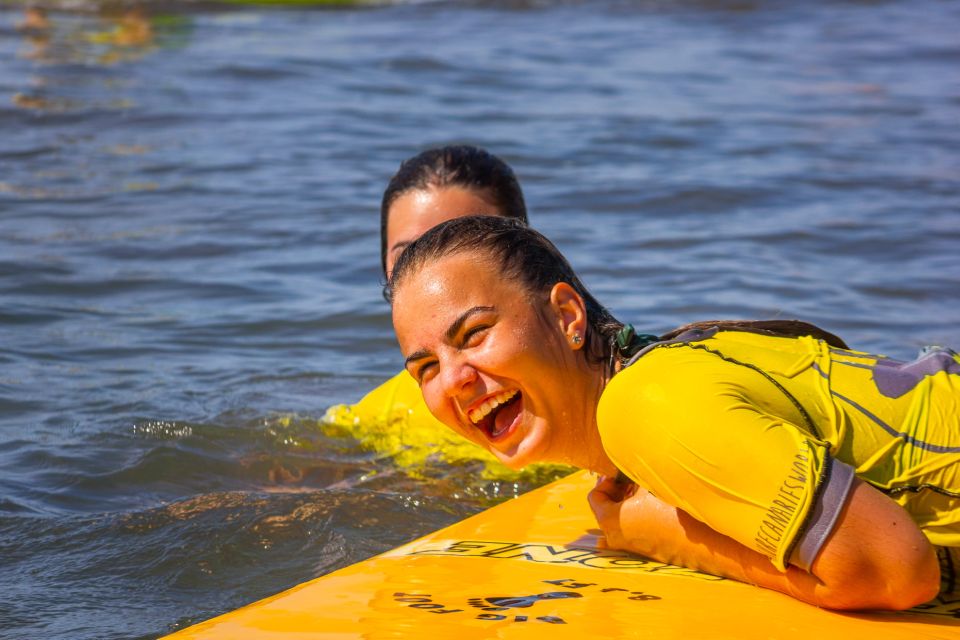
At $68 per person for 4 hours, the price is easiest to judge by what you’re not paying for separately.
You’re getting:
- instruction for the full session
- surf equipment (including wetsuit and rash vest)
- water and fruit after the first session
- photos of you surfing
- third party and accident insurance
- a 10% shop discount
For a first lesson, the photos alone are a hidden value. Surfing is hard to visualize while you’re doing it. When you leave with images, you can actually see what worked and what you want to fix next time.
Also, small groups matter with time. You’ll spend more time practicing and less time waiting. That usually improves the odds you’ll stand up and feel like the lesson did something for you, not just taught you in theory.
Bottom line: if you want a beginner class that covers real basics, uses good conditions, and doesn’t make you coordinate gear, the total package is strong.
Who this surf class fits best (and who should rethink it)
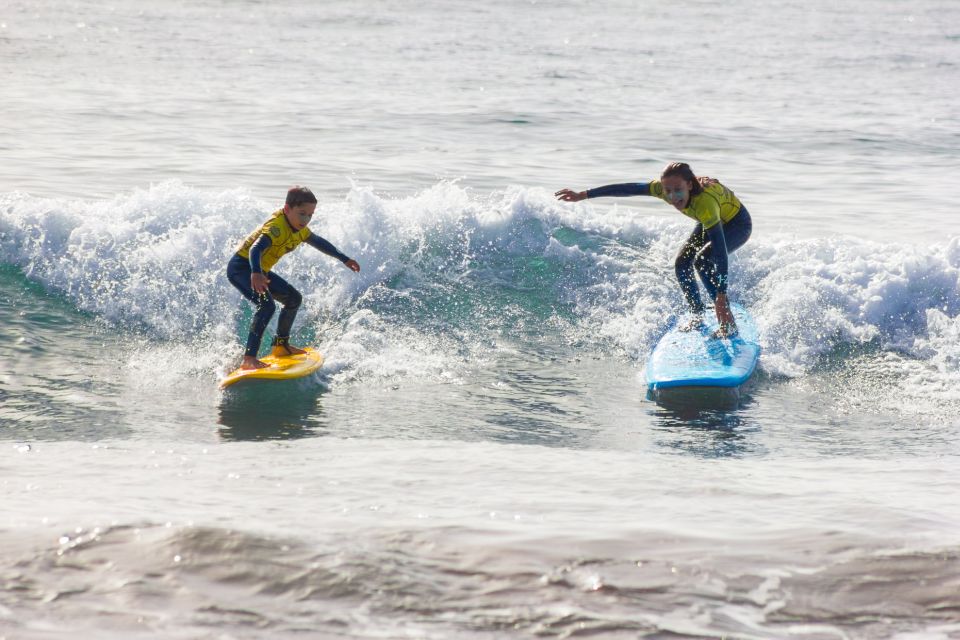
This is a beginner surf class, but it’s still a physical activity with specific requirements. The activity is not suitable for:
- children under 7
- pregnant women
- people with back problems
- wheelchair users
- non-swimmers
- people over 243 lbs (110 kg)
- people with low level of fitness
The school also recommends being in reasonable to good physical condition. That’s consistent with what people describe: a full 4-hour session can be demanding, even if you’re learning at beginner speed.
On the other hand, this is not only for young athletes. People describe success across ages, including a beginner who was in their 60s and a lesson done with kids who were enjoying ideal beginner conditions. If you can follow directions, walk a bit over sand with a board, and handle some time in the water, it’s a good match.
If you’re unsure where you fall on fitness or swimming ability, it’s worth being honest before you book. Surf lessons work best when you can focus on learning instead of scrambling to stay comfortable.
What to bring so your day doesn’t get messy
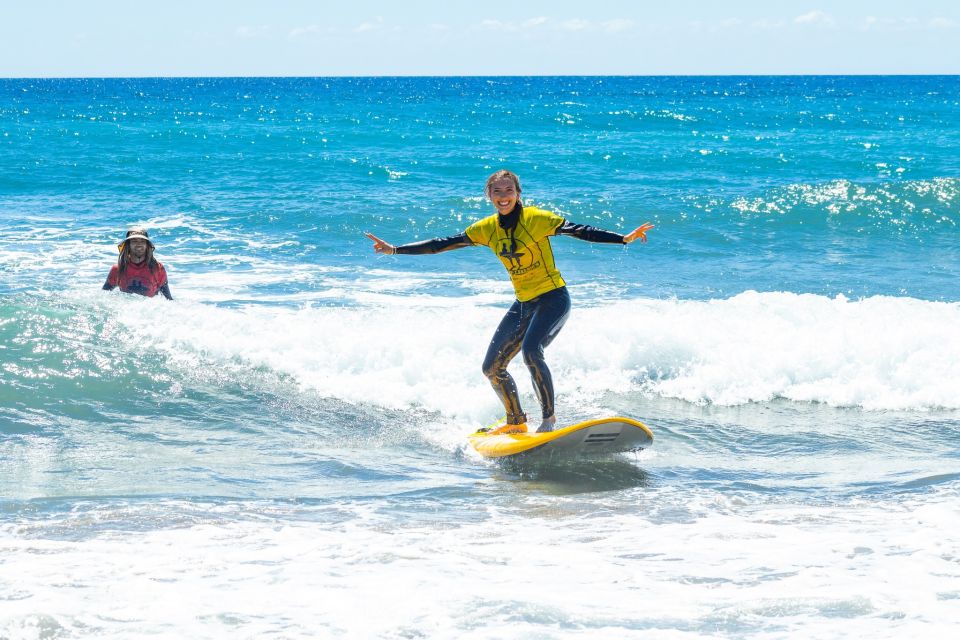
This class gives you the surfing gear, but you still need your basics. I’d treat your checklist like part of the plan.
Bring:
- swimwear
- towel
- hat
- sunscreen
- passport or ID card (a copy accepted)
And then think about comfort. The day includes time on the sand, a possible 10 to 20 minute walk carrying your board, and several rounds in and out of the water. If you’re the type who gets cold easily, make sure you’re ready to use the wetsuit properly (and listen when the instructor adjusts you).
Also, arrive prepared for the reality that the day is highly reliant on surf conditions. That’s not a gimmick; it’s how surfing works. The school adapts, but your schedule is never as fixed as a museum visit.
Should you book the Playa del Inglés beginner surf class?
Book it if you want:
- a first-day surf experience with real coaching, not just a tutorial
- small-group attention that helps you progress fast
- included equipment, wetsuit, and a photos package
- an active Gran Canaria day that goes beyond sunbathing and sightseeing
Skip it if:
- you’re a non-swimmer
- you have back issues or pregnancy
- you need wheelchair-accessible options
- your fitness level makes a long, physical 4-hour session feel unrealistic
If you’re in the beginner zone and you can handle some effort, this is the kind of class that gives you a genuine chance to stand up and feel the thrill of surfing—while staying safe and guided the whole time.
FAQ
What’s the duration of the Playa del Inglés surf class?
The surf class runs for about 4 hours.
Where do I check in for the lesson?
Check in with staff at Surf Canaries Surf School at Alf. Provisionales, Anexo 2, Playa del Ingles. The activity ends back at the meeting point.
Is prior surfing experience required?
No. The class is designed for beginners and includes theory and a video introduction.
What’s included in the price?
Equipment is included (surfboard, leash, rash vest, and long or short wetsuit), along with surf instruction, fruit and water, photos, a 10% shop discount, and third party and accident insurance.
Do you provide transportation to the best beach?
Yes, if the best conditions are at a different beach, transport is included. If the home beach in Playa del Inglés is best, you’ll walk with the boards (about 10 to 20 minutes).
What should I bring with me?
Bring hat, swimwear, towel, sunscreen, and a passport or ID card (a copy is accepted).
What are the age and health limits?
It’s not suitable for children under 7, pregnant women, people with back problems, wheelchair users, non-swimmers, and people over 243 lbs (110 kg). It’s also not suited to people with low level of fitness.
What languages are the instructors?
Instructors speak Spanish and English.
What happens if surf conditions are not ideal?
The surf day relies on surf conditions, and the starting time may vary slightly from what you see. The team chooses the best spot based on the conditions.