REVIEW · GRAN CANARIA
Beginners Scuba Diving Experience in Gran Canaria
Book on Viator →Operated by Blue Water Diving · Bookable on Viator
First-time underwater time can feel oddly doable. This beginner-focused scuba try-out in Gran Canaria includes shallow-water practice, a supervised reef swim, and the full setup—so you can focus on the experience instead of logistics. I also like that the team keeps things approachable with small groups, and they coach you through breathing underwater step by step.
The main thing to watch is timing and logistics: there’s no hotel pickup, and one reviewer noted the ocean location can be farther south than the Las Palmas meeting point. If you’re easily rattled by travel time or tight schedules, confirm exactly where you’ll be going before you show up.
In This Review
- Key highlights worth knowing
- What this beginner scuba try-out is really good at
- Price and what you get for $108.89
- The 2-hour flow: from paperwork to reef time
- 1) Meet at Blue Water and get set up
- 2) Shallow-water skills and breathing practice
- 3) Head out for the reef swim
- 4) Back to the meeting point
- The shallow-water skills: where anxiety can turn into confidence
- What you’ll see around the reef (and why it matters)
- Safety and why you never feel alone
- Logistics in Gran Canaria: meeting point, no pickup, and timing reality
- What to pack (and what actually helps)
- Who should book this, and who should pause
- Should you book this beginner scuba try-out in Gran Canaria?
- FAQ
- What’s included in the beginner scuba experience?
- How long does the experience last?
- Is there hotel pickup or drop-off?
- What level of experience do I need?
- Are there any age or medical requirements?
- What if the weather is poor?
Key highlights worth knowing
- Full equipment provided so you just bring the swimwear stuff and show up
- Shallow-water skills first, built for first-timers who need time to settle
- Small group size (max 8) and close supervision throughout
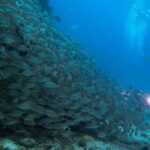
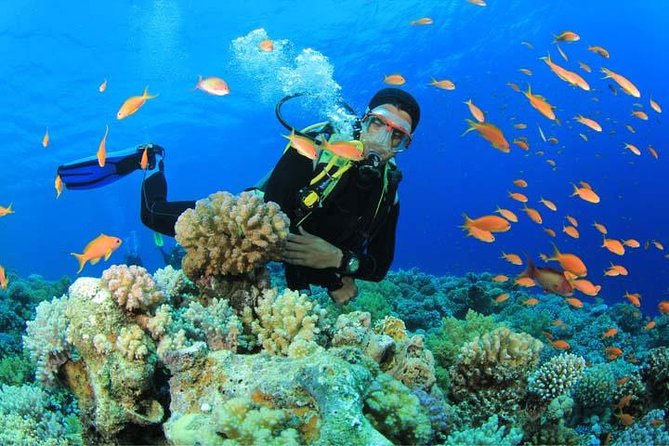
- Reef swim with real marine life like fish, anemones, and sometimes bigger surprises like stingrays
- Patient instructors called out by name, especially for nervous beginners
What this beginner scuba try-out is really good at
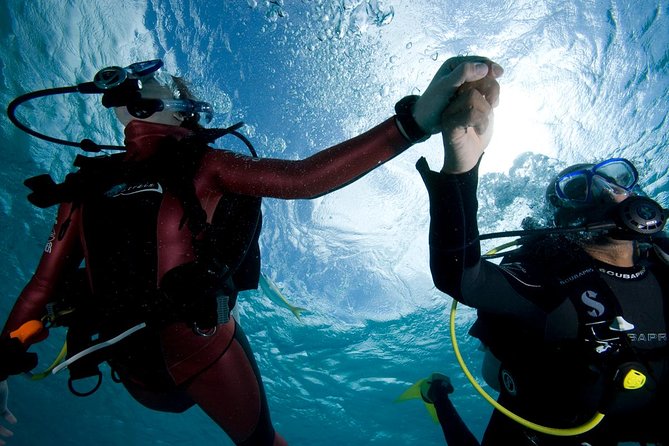
This is the kind of first underwater outing that targets the biggest beginner hurdles fast: breathing through the regulator, getting comfortable with the gear, and learning the basic hand signals and movement rules. You get a step-by-step flow instead of being thrown straight into a long, scary session.
It’s also a value play. For around $108.89 per person (about two hours total), you’re paying for guided coaching plus all equipment. If you were thinking about a full training course, this gives you a chance to find out whether you even like the feeling of being underwater—before you commit to anything longer.
One more practical win: the format is designed to reduce pressure. The team runs you through the basics in shallow water first, then only moves you on once you’re actually comfortable. That matters if you’re the type who needs to get your breathing under control before you can relax and enjoy the reef.
You can also read our reviews of more scuba diving tours in Gran Canaria
Price and what you get for $108.89
Let’s talk money in real terms. You’re not just paying for a boat trip and a quick look at fish. Your included basics are:
- A professional guide
- All necessary equipment
- A structured session that moves from practice to a reef swim
That’s why this price can feel fair compared to “experience” options where the instruction is minimal and you spend most of the time figuring things out yourself. Here, the goal is safety plus confidence. You’re also not paying extra for gear rental, which is the kind of add-on that can quietly add up.
Also note what’s not included: food and drinks, and no pickup/drop-off from hotels. So if you’re doing this as part of a day on your own, you’ll want to plan a snack and water around the time slot.
Finally, the group limit is 8 travelers max. That usually translates to more attention per person, especially in those early skills moments where everyone learns at their own pace.
The 2-hour flow: from paperwork to reef time
This experience runs on a clear rhythm, and that’s a big part of why it works for first-timers.
1) Meet at Blue Water and get set up
You meet your instructor at the meeting point: Blue Water on Calle Olimpicos, C. Doreste y Molina, s/n, 35130 Gran Canaria, Las Palmas, Spain. You’ll do the paperwork first, then organize your equipment with the team.
This step sounds boring, but for first-timers it matters. Good fitting is the difference between feeling controlled and feeling uncomfortable the whole time. The reviews repeatedly praise instructors for making sure gear fits before you go out.
2) Shallow-water skills and breathing practice
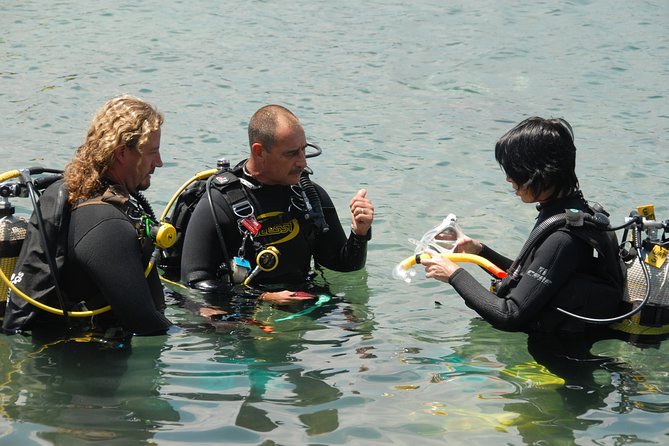
Next comes the shallow-water portion. Expect skills work aimed at basics: breathing underwater, getting comfortable in the equipment, and using the signals. Several reviews describe starting in a harbor and practicing in very controlled conditions.
One reviewer specifically described a structured progression: kneeling in the harbor while learning basic skills, then gradually feeling more relaxed with each step.




3) Head out for the reef swim
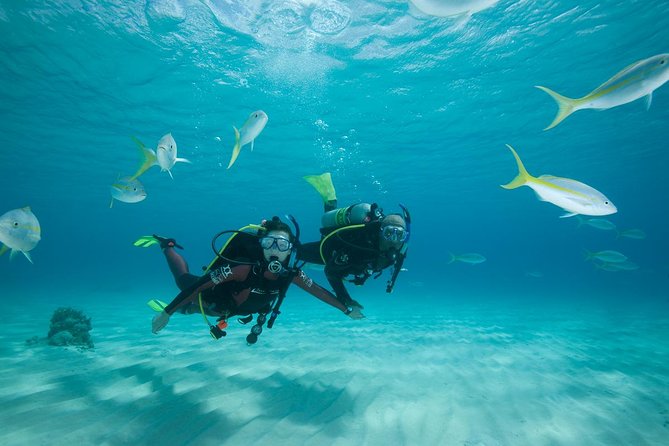
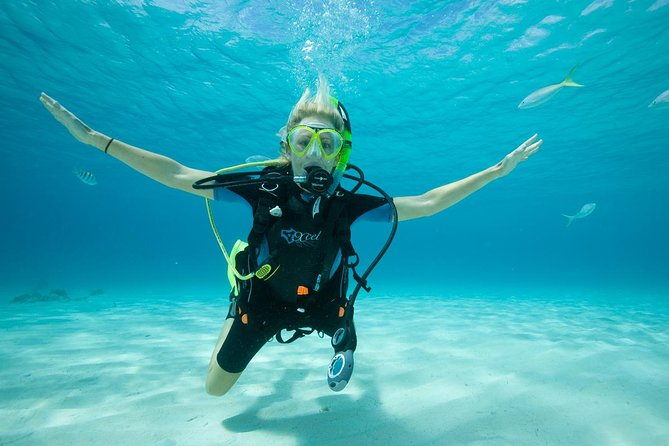
When you’re comfortable, you go for the underwater part around the reef and marine life area. You’ll likely descend with the instructor close by, swim as a group, and then return to the surface when it’s time.
Depth and time vary by group and conditions. Reviews mention roughly 8 meters for about 30 minutes, and another account around 11 meters. Either way, you’re not doing anything that requires advanced experience—you’re being coached through a beginner-friendly, reef-focused outing.
4) Back to the meeting point
After the reef swim, you return to the starting location and finish up with the team. You’ll leave with a new set of “I can do this” confidence notes, and probably a few new hand signals you’ll remember later.
The shallow-water skills: where anxiety can turn into confidence
If you’re nervous, you’re not alone. A lot of the best comments focus on instructors being calm, patient, and safety-first when someone struggles at the start.
In one review, the person had an anxiety attack and still managed to complete the experience thanks to patient support. That’s not a guarantee for everyone, but it tells you this team is used to nervous beginners and knows how to slow things down.
You can also expect a skills rhythm like this:
- Learn how your regulator feels and how your breathing pattern changes underwater
- Practice basic control movements in shallow water
- Work on comfort with equipment while staying close to the instructor
Some participants also reported an optional PADI Discover Scuba style online quiz in advance. If you’re the kind of person who likes to understand the theory first, doing that kind of prep can make the shallow-water practice feel less mysterious.
Name callouts from reviews include instructors like Kate and Chris, with praise for clarity and patience. Another set of reviews mentions Jiles being extra patient with nervous participants, and Kecko/Keko being great at calming people and explaining the full procedure.
What you’ll see around the reef (and why it matters)
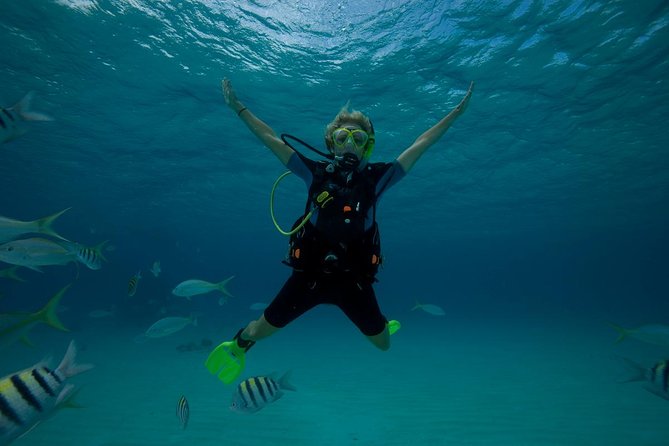
The reef swim is where the experience turns from “training” into “wow, I’m underwater.” The goal isn’t just to put you in the water—it’s to show you enough sea life that you remember the whole session.
Based on the accounts shared, you may see:
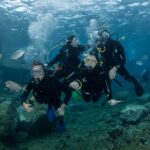
- Lots of colorful fish moving over the sea bed
- Sea anemones and reef terrain
- Smaller critters like crabs and sea cucumbers
- Bigger beginner-friendly surprises in some sessions
Several reviews mention spotting a stingray and even kneeling nearby to watch it glide off gently. Another person saw baby barracudas, and one described a seahorse hiding (sad for them, but honestly a good reminder that wildlife behavior is unpredictable—in a fun way).
Even if you don’t catch a “wow” moment like a stingray, the underwater view is a three-dimensional change from snorkeling. You’re not just looking at life from the surface; you’re moving through it with controlled breathing and a clear plan.
If you’re photographing, go in with realistic expectations. Your best photos usually come from short, slow moments when you’re stable and not rushing your breathing. Let the instructor’s timing guide you.
Safety and why you never feel alone
This is one of the strongest selling points. Multiple reviews mention you’re closely supervised and that there’s always support nearby. One person even highlighted that a second guide or companion stays alongside you for safety.
The experience also has built-in safeguards:
- A professional instructor throughout
- A small max group size of 8 travelers
- A health questionnaire requirement before you get in the water
There’s also clear medical guidance: diving within 12 hours of flying is not recommended, and people with certain medical conditions (for example asthma or heart conditions) may be prevented from participating. The smart move here is to check with your doctor if you have any concerns before you book.
In reviews, the tone is consistent: people felt safe, cared for, and guided—especially at the start when breathing underwater can feel unnatural.
Logistics in Gran Canaria: meeting point, no pickup, and timing reality
Here’s the practical part that can make or break the day.
The official meeting point is in Las Palmas at the Blue Water address listed. But one review warned that the actual ocean location can be about 30 miles south, near Amadores Beach in Puerto de Mogán. They said they were on a cruise, took a bus to get there, and found it manageable, just tight on arrival timing.
So do this simple checklist:
- Confirm where you’ll start your water session (not just where you meet)
- Give yourself extra buffer time for getting there, especially if you’re arriving by bus or cruise excursions
- Eat and hydrate beforehand, since food and drinks aren’t included
Also, there’s no hotel pickup or drop-off. That’s totally fine if you’re comfortable getting yourself to a meeting point using public transport. The good news: it’s described as near public transportation, so you’re not stuck renting a car.
Finally, group size is small, but the schedule can still be tight. One review criticized the experience for feeling rushed compared to the beginner expectation. That seems more like an outlier, but it’s still a reminder: if you’re very new and want extra time to settle, ask the team to tell you what pace you can expect.
What to pack (and what actually helps)
You don’t need to bring scuba equipment, since it’s included. But you should show up ready for a wet, salty, and slightly chilly-in-the-moment experience.
Bring:
- Swimwear (this is the big one)
- A change of clothes for after
- A towel (not listed as included)
- Water to sip after (some reviews suggest bringing water)
One useful tip from a review: wear clothes you can quickly slip over a wet bathing suit. That saves time and keeps you from spending the “getting dry and dressed” stage looking for your lost shirt.
If you’re prone to anxiety underwater, consider doing a few calm breathing exercises on land beforehand. Even though you won’t use them exactly the same way underwater, it helps your brain trust the process.
Who should book this, and who should pause
This experience is designed for beginners. The minimum age is 10 years old, and the experience notes that most travelers can participate—but medical conditions can matter.
It’s a great fit if:
- You want to try scuba without committing to a full course first
- You’re curious about the reef and want a guided first taste
- You want a team that’s used to nervous first-timers
- You like structured learning: shallow practice, then reef swim
It might not be the best fit if:
- You have a medical condition that could be disqualifying (asthma, heart conditions, etc.)
- You’re flying soon (avoid the 12-hour within-flight window)
- You hate any schedule pressure and need everything to be super unhurried—some people report timing feels rushed even when it’s meant for beginners
If you’re unsure about medical eligibility, this isn’t a “wing it” situation. The health questionnaire is required, and some conditions may prevent you from diving.
Should you book this beginner scuba try-out in Gran Canaria?
I think you should book it if your goal is a real first underwater experience—not just a photo-op. The combination of gear included, shallow-water coaching, and a team that’s praised by name for patience (Kate, Chris, Keko/Kecko, Jiles) makes it a strong choice for trying the sport safely.
I’d also book it if you’re motivated by marine life and want a reef-focused session with a decent chance of seeing fish, anemones, and other reef creatures. When that stingray moment hits, it’s the kind of memory that sticks.
Skip it or at least double-check first if logistics are your weak spot. There’s no hotel pickup, and the water location may be farther from Las Palmas than you’d expect. Confirm the exact plan, especially if your day is built around cruise timing or tight transit.
If everything lines up, this is one of the more practical ways to answer the big question: do you actually want to scuba beyond your first try?
FAQ
What’s included in the beginner scuba experience?
The experience includes a professional guide and all necessary equipment. Food and drinks are not included.
How long does the experience last?
It runs for about 2 hours (approx.).
Is there hotel pickup or drop-off?
No. There is no pick-up or drop-off service from hotels.
What level of experience do I need?
It’s designed for beginners and includes shallow-water skills before you go into the reef area.
Are there any age or medical requirements?
The minimum age is 10 years old. You must complete a health questionnaire before diving, and some pre-existing conditions may prevent you from participating. Diving within 12 hours of flying is not recommended.
What if the weather is poor?
The experience requires good weather. If it’s canceled due to poor weather, you’ll be offered a different date or a full refund.