REVIEW · GRAN CANARIA
2 Hour Stand Up Paddle Lesson in Gran Canaria
Book on Viator →Operated by Sup Fit Yoga · Bookable on Viator
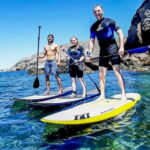
Stand up paddle lessons feel oddly calming. This 2-hour SUP class in Gran Canaria is built for newcomers, with a safety briefing and gear guidance before you ever try to stand. I like the small group (max 4) and the focus on balance and core stability right from the first minutes.
I also like the coaching style of instructor Mireie: patient, encouraging, and very focused on helping you feel at ease. The main drawback to plan around is that the experience depends on good weather, so conditions can affect timing.
In This Review
- Key things to know before you book
- Why this 2-hour SUP lesson is a smart Gran Canaria first-timer move
- Where you meet and how to start the lesson without stress
- Before you paddle: the beach briefing and gear/safety basics
- Warm-up + balance drills: the real workout (and why it matters)
- Out on the water: building confidence in open space
- Equipment and board stability: why beginners feel steady
- Instructor Mireie: patient coaching and that confidence factor
- Price and value: is $64.71 worth it for 2 hours?
- Weather and flexibility: what you should plan for
- Who this SUP lesson suits best (and who may want to rethink)
- Bottom line: should you book this 2-hour Gran Canaria SUP lesson?
- FAQ
- How long is the stand up paddle lesson?
- How much does it cost?
- Where do I meet for the lesson?
- What’s the group size?
- Is the lesson offered in English?
- Does the activity end back at the meeting point?
- What should I expect on the first part of the lesson?
- Is the lesson suitable for beginners?
- What happens if the weather is poor?
- What is the cancellation window?
Key things to know before you book
- Max 4 people means more hands-on attention when you’re learning to balance.
- Stable boards provided help you build confidence fast, even if you’re brand-new.
- Safety talk first covers the basics of paddle surfing and what to watch for on the water.
- Warm-ups and joint exercises are included, so you’re not just thrown onto the ocean.
- Small-group pace keeps things relaxed instead of rushed.
- Photos and videos are part of the experience for some sessions, including sunset moments.
Why this 2-hour SUP lesson is a smart Gran Canaria first-timer move
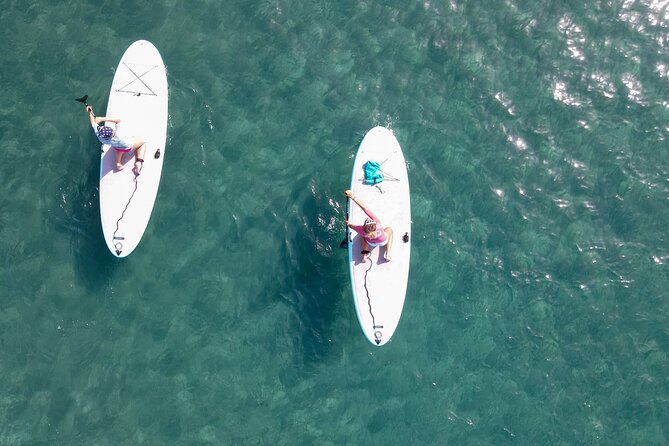
Gran Canaria has a way of making people want to be outside all day. This lesson is a nice way to do that without needing prior experience or a big time commitment.
What makes it work is the structure: you start with a clear introduction, then practice your balance step-by-step, and only then head out onto open water. You’re not just paying to rent a board—you’re buying the learning curve.
And because the group is capped at four, you’re less likely to feel lost. That matters most when you’re trying to coordinate stance, paddle strokes, and staying upright at the same time.
You can also read our reviews of more tours and experiences in Gran Canaria

Where you meet and how to start the lesson without stress
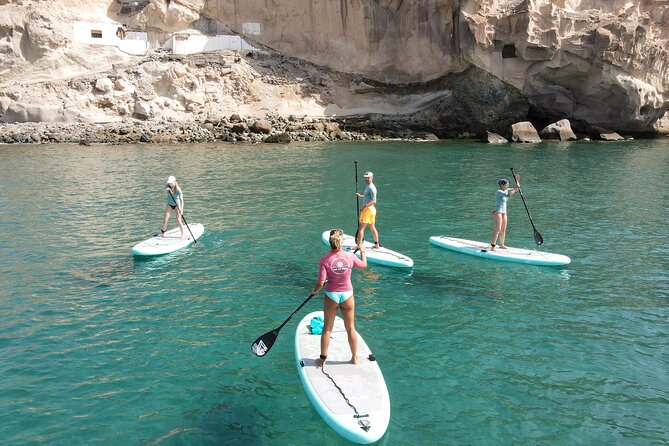
You’ll meet at World Sport Canarias Solrik WSCC, Miguel Marrero Rodríguez 57, 35120 Arguineguín, Las Palmas, Spain. The activity returns to this same meeting point at the end.
This is a practical setup if you want to keep the rest of your day flexible. It’s also described as near public transportation, which is helpful if you’re not driving. One detail worth noting: parking is said to be relatively easy, and you should be able to find the instructor on the beach with the SUP gear.
In the real world, that reduces the “Where do I go?” anxiety. For a beginner activity, that’s half the battle.
Before you paddle: the beach briefing and gear/safety basics
The lesson begins with a short, informative session covering what paddle surfing is like and what you’ll be using on the water. You’ll also get essential safety tips before anyone goes out.
For most first-timers, this is exactly the right order. If you know how the equipment works and what safety rules matter, you’ll spend less energy worrying and more energy learning.
This beach phase also sets expectations for how the session will feel: you’re warming up, doing balance practice, and then gradually moving from basic drills to open-water riding. That progression keeps things relaxed instead of chaotic.
Warm-up + balance drills: the real workout (and why it matters)
After the briefing, you’ll do joint and muscle warm-ups. This is not just “stretch and go.” It’s there to help your body handle the movements you’ll repeat on the board.
SUP uses more of your body than most people expect. You’ll engage arms, shoulders, back, chest, legs, and core—but the learning focus tends to be on control. You’re training balance so you can stand without fighting the board.
In practical terms, that core stability training is what makes you feel capable fast. Even if your paddling technique isn’t perfect, a steadier stance helps everything click sooner.
If you’re the kind of person who wants a vacation activity that also makes you feel stronger afterward, this is a good match. You get the physical effort without needing to be an athlete.
Out on the water: building confidence in open space
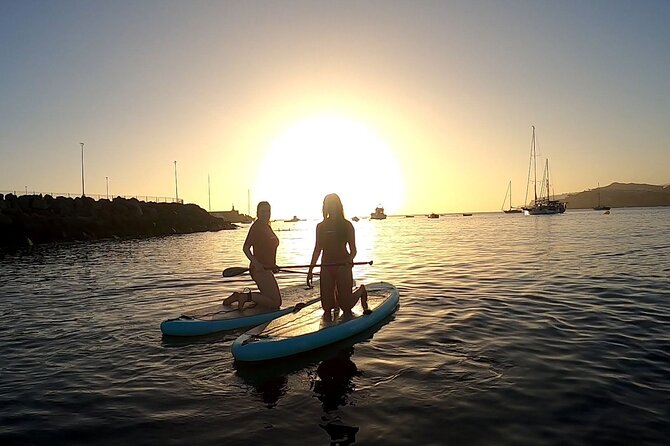
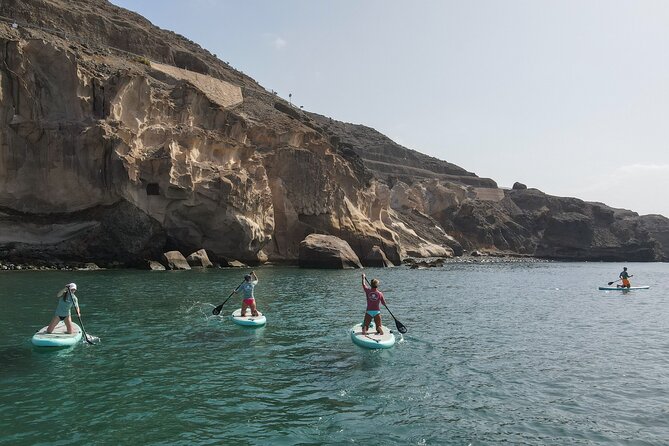
Once you’ve practiced the basics and feel steady enough, the instructor takes you into open water. This is where the lesson stops feeling like training and starts feeling like an experience.
One highlight from the experience description is that you may spot fish while you’re out there. Even if you don’t see wildlife on every session, you’re still rewarded with new angles on the island—views you simply don’t get from land.
The open-water section also reinforces what you learned earlier. Balance exercises on shore are good, but learning to control the board while you’re actually moving is the real skill.
And if you’re naturally cautious, that gradual switch—practice first, open water second—helps. You’re not guessing. You’re following steps.
You can also read our reviews of more tours and experiences in Gran Canaria
Equipment and board stability: why beginners feel steady
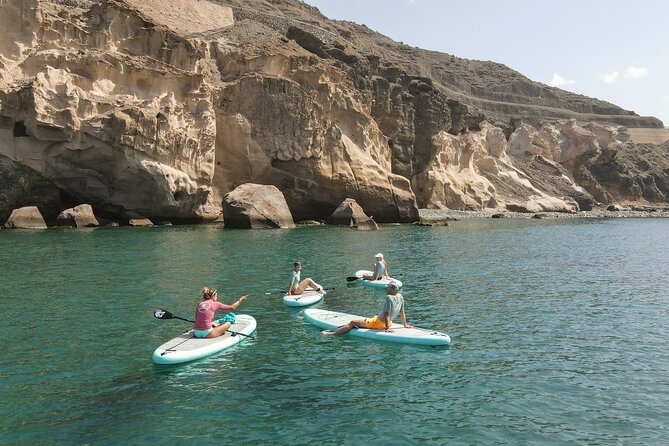
The boards provided are described as remarkably stable. That sounds like marketing, but in SUP lessons it’s a big deal. A stable board reduces wobble, and wobble is what usually scares beginners away.
Stability also makes your practice time more efficient. When you’re not spending every minute fighting the board, you can actually work on stance and paddle rhythm. That’s how you leave feeling like you learned something—not just like you got through a class.
If you’ve been curious but nervous to try, this setup is the reason these lessons work for a wide range of abilities. It’s tailored for beginners, and it’s also useful for people who want to tidy up their technique.
Instructor Mireie: patient coaching and that confidence factor
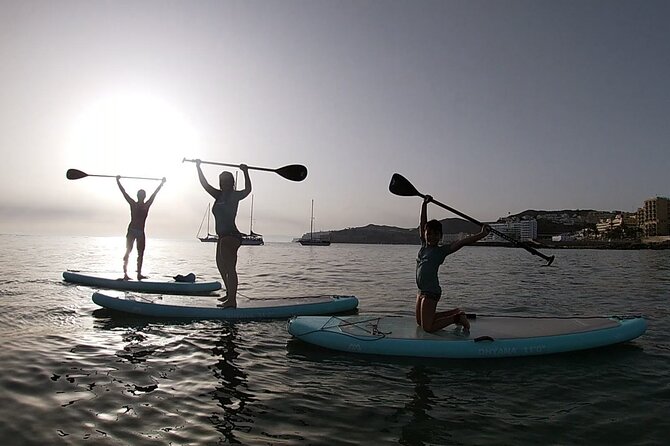
The name that comes up again and again is Mireie. The coaching style described is friendly, motivating, and very patient—especially for couples or people who are trying SUP for the first time.
That kind of teaching matters because SUP isn’t just about strength. It’s about timing: when to shift weight, how to hold the paddle, and how to stay calm when your balance wobbles.
Mireie’s approach is also described as very encouraging in moments when weather is not ideal. In at least one case, there was an option to postpone due to conditions, which is a good sign of safety-first decision making.
One more perk mentioned: the instructor can capture incredible pictures and videos, including sunset moments, and some participants say the images were sent at no extra cost. Even if you’re not chasing social media content, it’s a nice way to remember that you did something out of your usual routine.
Price and value: is $64.71 worth it for 2 hours?
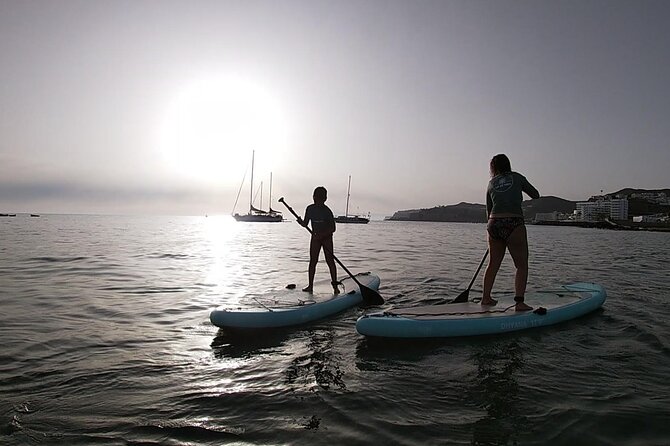
At $64.71 per person for about 2 hours, the value comes from two things that matter to beginners: instruction quality and group size.
This isn’t a “rent a board and good luck” setup. You get a structured class with:
- a safety and gear briefing,
- warm-ups,
- on-board balance practice,
- and open-water riding.
The max 4 travelers limit is also key. Paying the same as a larger-group class usually isn’t as helpful if you need extra guidance. Here, you have a better chance of getting quick feedback when you’re trying to stand and paddle.
So yes, the price is reasonable for Gran Canaria, but the real justification is that you’re buying a lesson designed to bring you from wobbly to standing with support.
Weather and flexibility: what you should plan for
SUP is a weather-driven activity, and this one specifically requires good conditions. If weather cancels the session, you’ll be offered a different date or a full refund.
That flexibility matters because the ocean can change quickly. If you’re booking near the start of your trip, you’re more likely to have a backup day available. If your schedule is tight, pick dates with some breathing room.
In real terms, this is one of those activities where being flexible is part of the fun. The goal is to get you on the water safely, not to force a bad session.
Who this SUP lesson suits best (and who may want to rethink)
This is designed for newcomers and also for people who want to refine their technique. If you want a low-pressure intro to a fun water sport, it fits well.
It’s also listed as suitable for most travelers. The lesson structure helps: you’re not thrown into advanced skills right away. You learn in stages, and the board stability supports the process.
You might want to consider another activity (or a later date) if you strongly dislike outdoor experiences that depend on weather. Since good conditions are required, you may need to adjust plans if the sea doesn’t cooperate.
Bottom line: should you book this 2-hour Gran Canaria SUP lesson?
If you want a beginner-friendly SUP experience with a small group, clear safety guidance, and coaching that focuses on balance and confidence, I think this is a strong choice. The pricing makes sense when you factor in instruction, guided practice, and the stable boards.
I’d book it if:
- you’re curious about SUP but nervous about getting started,
- you like structured classes more than self-guided tours,
- you want a calm, outdoorsy workout that doesn’t eat your whole day.
I’d be slightly cautious if:
- your schedule is tight and you can’t shift dates for weather.
FAQ
How long is the stand up paddle lesson?
The lesson is listed as 2 hours (approx.).
How much does it cost?
The price is $64.71 per person.
Where do I meet for the lesson?
You meet at World Sport Canarias Solrik WSCC, Miguel Marrero Rodríguez, 57, 35120 Arguineguín, Las Palmas, Spain.
What’s the group size?
This activity has a maximum of 4 travelers.
Is the lesson offered in English?
Yes, the tour is offered in English.
Does the activity end back at the meeting point?
Yes, the activity ends back at the meeting point.
What should I expect on the first part of the lesson?
You’ll start with a brief session about paddle surfing, including the gear you’ll use and safety tips, then you’ll warm up with joint and muscle exercises.
Is the lesson suitable for beginners?
Yes. It’s tailored for those new to paddle surfing and for people who want to fine-tune technique.
What happens if the weather is poor?
If it’s canceled due to poor weather, you’ll be offered a different date or a full refund.
What is the cancellation window?
You can cancel for a full refund up to 24 hours in advance of the experience’s start time.