REVIEW · GRAN CANARIA
San Agustín Surf lessons
Book on GetYourGuide →Operated by Canary Wave Surf School · Bookable on GetYourGuide
Watching your first waves line up is a great kind of nervous. This 3-hour surf course in the south of Gran Canaria focuses on real technique, but keeps the mood light so you can actually enjoy the ride. I love that the lessons are run in small groups with hands-on help, and I also like that the surf spot can change based on conditions so you’re more likely to get waves that work.
One thing to keep in mind: the course location and start time can shift with the sea, and while a transfer is included for hotels in the south, pickup isn’t for every address—so you should confirm your details before you head out.
In This Review
- Key highlights you’ll feel right away
- Where You’ll Learn Surfing in Gran Canaria (Maspalomas Lighthouse as Your Anchor)
- Playa del Inglés or Maspalomas: Why the Beach Can Change
- The 3-Hour Flow: What Happens After You Meet
- Small-Group Coaching That Keeps You From Getting Stuck
- Technique Lessons With a Real-World Goal: Move Like a Fish
- Transfers and Getting There Without Stress
- Price and Value: Is $58 Worth It?
- What’s Included (and What You Should Still Bring)
- Who This Course Is Best For
- When to Go and How to Plan Your Morning
- Should You Book San Agustín Surf Lessons? My Quick Decision Guide
- FAQ
- How long is the San Agustín surf lesson?
- Where does the lesson usually take place?
- Is pickup included?
- How big are the groups?
- What languages are the instructors?
- What’s included in the price?
- Can I pay later or cancel if plans change?
Key highlights you’ll feel right away
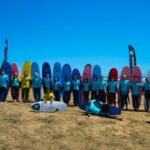
- Small groups (up to 10 people) means you’re not stuck watching from the shore
- Weather-based location choice usually means Playa del Inglés or Maspalomas near the lighthouse
- Bilingual instructors (Spanish and English) helps you learn without guessing
- All-levels course structure so beginners aren’t left behind
- Equipment and insurance included so you can focus on the surf
- Coaching that adjusts to conditions, including switching beaches when waves are too small
Where You’ll Learn Surfing in Gran Canaria (Maspalomas Lighthouse as Your Anchor)
The whole lesson starts around Faro Maspalomas, at the point where the surf school is based. Even if you’re staying elsewhere on the island, this is a helpful detail because it gives you a clear “meet here” reference tied to a famous landmark. Once you link up with the group, the instructor sorts you with a surfboard, then you head to the beach for the session.
The practical win here is that you’re not scrambling to find the right sand, the right equipment, or the right people. In surf lessons, that matters. A lot of the stress for first-timers isn’t actually surfing—it’s logistics. This format removes most of that friction early on.
If you’re staying in the south, you may also get transfer to/from your hotel. That can make the experience feel smooth and vacation-ready, especially if you’re not renting a car.
You can also read our reviews of more tours and experiences in Gran Canaria
Playa del Inglés or Maspalomas: Why the Beach Can Change
Your lesson is typically held at Playa del Inglés or Maspalomas beach, next to the lighthouse—but the exact spot can change depending on the weather and sea conditions. This isn’t just a random shuffle. Surf schools choose locations based on what the ocean is doing that morning.
Why that matters for you:
- If the waves are small, you want a beach that still gives you enough push to practice standing up and balancing.
- If the conditions are rough in one area, instructors can steer you toward where you can learn with better control.
In the real world, Gran Canaria can deliver very different surf conditions even just within the same coastal zone. Having the school adjust location gives you a better chance of getting the fundamentals rather than spending the whole time waiting for a single decent set.
The 3-Hour Flow: What Happens After You Meet
This is a 3-hour course, and the timing is usually in the morning, though it depends on sea conditions. The provider contacts you to confirm the starting time. So treat your morning plans like a flexible schedule, not a rigid one—surf works on ocean time.
Here’s the typical rhythm you’ll follow once you arrive:
- Meet at Faro Maspalomas and get grouped with your instructor and small crew
- Pick up your surfboard and get the basics of handling it
- Head to the beach where the instruction happens
- Practice with help on technique, plus plenty of time for fun so it doesn’t feel like boot camp
Because the course runs three hours, you usually get enough repetitions to feel progress. Short lessons can leave you stuck at the first step. A longer block helps you move from trying something once to trying it again with better balance and timing.
Small-Group Coaching That Keeps You From Getting Stuck
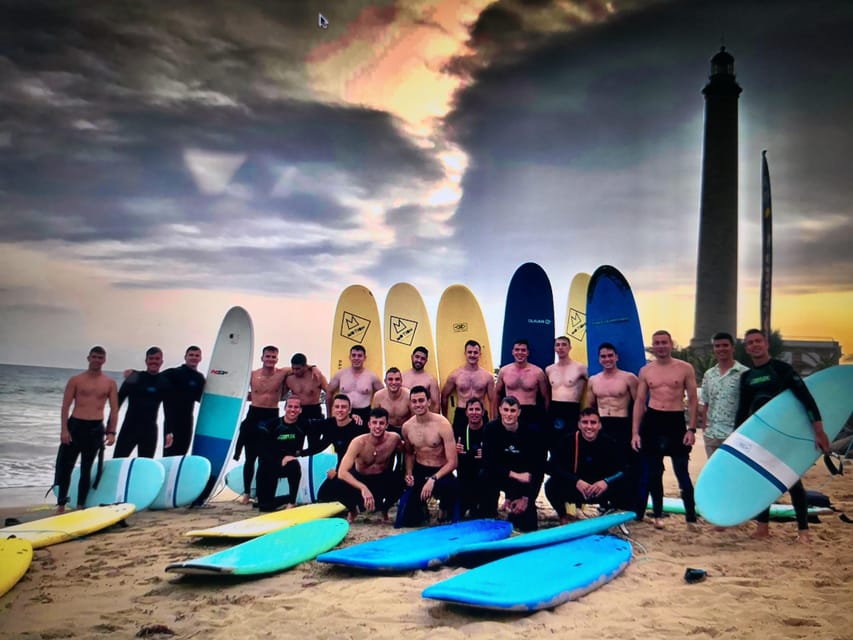
The lesson is designed for small groups—limited to up to 10 participants, and the course is described as small-group up to 8 as well. Either way, the key point is the same: you’re not in a crowd.
That small size is where the value shows up. Surf progression is slow when you’re waiting your turn. When an instructor can actually see what your body is doing—paddling, popping up, foot placement, and how you recover after wiping out—you learn faster.
The teaching style is also clearly practical: you get help whenever you need it. That matters because surfing has a handful of repeat problems that beginners run into. If you only get corrections once every few waves, you end up practicing the wrong thing for too long.
From what I’ve seen in high-quality surf instruction, the best teachers do two things well:
- They explain just enough to change your next attempt
- They stay flexible when conditions or your confidence level shift
This school’s approach seems built around that kind of instruction, and one instructor name that stands out is Tony, who’s been credited for adapting and keeping the session fun when the waves weren’t ideal.
Technique Lessons With a Real-World Goal: Move Like a Fish
The promise here isn’t about impressing anyone. It’s about learning how to handle the board and how to move with better technique so you can actually catch waves and ride them.
You’ll likely cover the fundamentals you need to turn chaos into something you can repeat:
- handling the board safely
- getting positioned for waves
- paddling and timing
- popping up and finding your stance
And you’ll do it in a way meant to keep you energized. The course description emphasizes learning good technique while still having fun. That balance matters because if you’re stiff and worried, you’ll burn out fast. If you’re confident enough to try again, your progress comes quickly.





Transfers and Getting There Without Stress
If you’re staying in the south of the island, transfer to and from your hotel is included. That’s a big deal if you don’t want to spend your surf day figuring out transport. It also reduces the chance you’ll show up late or flustered—two things that are bad for your first lesson.
If you’re not in the south, or if your hotel pickup details don’t match what the school expects, the safest plan is to treat the meeting point at Faro Maspalomas as your main anchor. One important reality check: pickup issues can happen, even when inclusion is written in the reservation. Before you go, double-check your pickup details and have the meeting point info ready. It’s the simplest way to protect your morning.
Price and Value: Is $58 Worth It?
At $58 per person for a 3-hour course, the value comes from what’s included and how that reduces extra costs:
- surf equipment is included
- instructor support is included
- insurance is included
- and for south-stay guests, transfer is included
Surf lessons can get pricey fast when you start paying separately for board rentals, transport, and basic safety coverage. Here, you’re paying for the session package. The small-group format also matters. Paying the same price but sharing an instructor with a large crowd would be less satisfying—and less effective.
So who should buy this at $58? You should book if you want structured instruction, not just a casual beach rental. If you’re the type who learns best through guidance and correction, you’ll get more from the time you spend in the water.
What’s Included (and What You Should Still Bring)
Included in the lesson package:
- transfer to/from your hotel (south island only)
- surf equipment
- instructor
- insurance
What you’ll probably want on your end (not listed in the provided info, so treat these as general surf-day basics):
- swimwear you’re comfortable getting wet in
- a towel
- sunscreen (you’ll be out in the sun, likely in the morning hours)
- water for after (and maybe a small snack plan for before)
Also, wear something you can move in. Surfing is physically demanding for the first time, and tight clothing that restricts movement can feel awkward fast.
Who This Course Is Best For
This course is built for all levels, including beginners. That’s key because beginners need more help with the basics than they need with advanced maneuvers. A small-group lesson helps you get the corrections that keep you from getting frustrated and quitting early.
You’ll likely enjoy it most if:
- you want real coaching, not just watching others
- you learn better with direct feedback
- you’re spending time in the south of Gran Canaria and want an activity that’s active but not all-day
It’s also a good choice if you’re on vacation and want a half-day plan that doesn’t turn into a production.
When to Go and How to Plan Your Morning
Starting times are usually in the morning, and the provider confirms based on sea conditions. Location can also shift between Playa del Inglés and Maspalomas next to the lighthouse.
My planning advice is simple:
- Don’t schedule a tight dinner reservation right after the lesson. You might need a little time to dry off and reset.
- Keep your morning flexible. Surf timing follows the ocean, not the clock.
- If you’re relying on transfer, make sure the pickup time and details are confirmed early enough that you can adjust if plans change.
Should You Book San Agustín Surf Lessons? My Quick Decision Guide
Book this course if you want a structured first step into surfing with small-group attention, equipment included, and instructors who work with conditions rather than fighting them. The $58 price makes sense for a 3-hour lesson when you factor in what’s included, especially insurance and—if you’re staying in the south—transfer.
I’d hesitate only if you strongly need a fixed location and start time. Since the lesson can run at Playa del Inglés or Maspalomas depending on weather, and start time depends on sea conditions, you need to be comfortable with a little ocean-based flexibility.
If you’re okay with that, you’ll likely come away with two wins: a better feel for surfing fundamentals and a session that’s built to keep you actually riding, not just trying.
FAQ
How long is the San Agustín surf lesson?
The course lasts 3 hours.
Where does the lesson usually take place?
It’s usually held at Playa del Inglés or Maspalomas beach next to the Lighthouse, though the exact location can change depending on weather conditions.
Is pickup included?
Transfer to/from your hotel is included only for guests staying in the south of the island.
How big are the groups?
It’s a small group with the activity limited to up to 10 participants.
What languages are the instructors?
The instructors speak Spanish and English.
What’s included in the price?
The package includes surf equipment, an instructor, insurance, and (for south island stays) hotel transfer.
Can I pay later or cancel if plans change?
You can reserve now and pay later, and you can cancel up to 24 hours in advance for a full refund.