REVIEW · GRAN CANARIA
Gran Canaria: Adrenaline-Filled Coasteering Experience
Book on GetYourGuide →Operated by MOJO PICON AVENTURA · Bookable on GetYourGuide
Coasteering turns the coastline into your playground, and Gran Canaria delivers the drama. I like that this tour focuses on the southwest cliffs and coastline around Puerto de Mogán, so you get real sea views, not just a scenic drive.
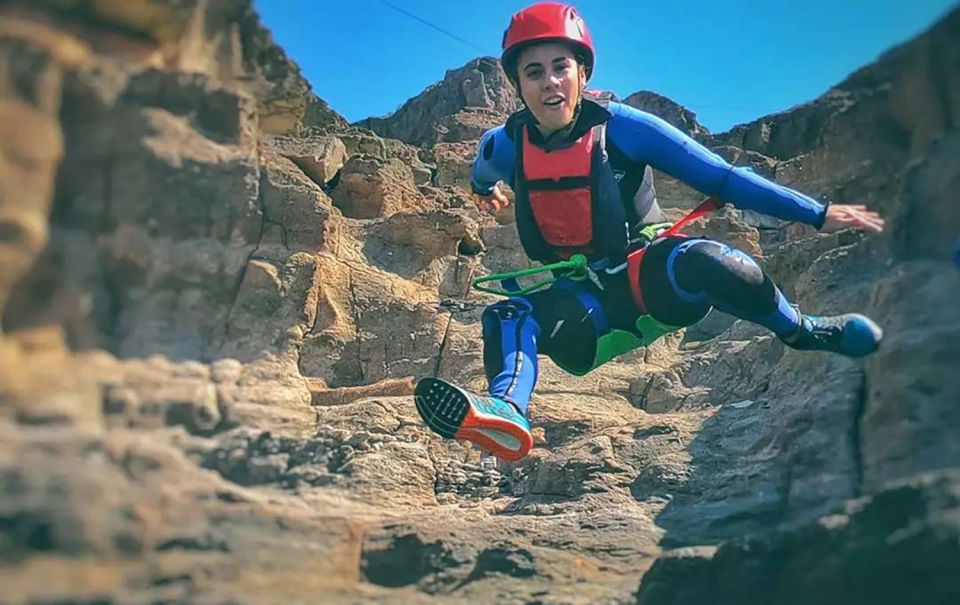
I also love the mix of actions: rock jumps, a zip line, and via ferrata climbing with steel-wire assistance. One possible drawback to plan for: depending on sea conditions, some activities can be unavailable.
In This Review
- Key Highlights at a Glance
- Coasteering in Puerto de Mogán: Why This Southwest Coast Works
- From Taurito to the Cliffs: How the 5-Hour Day Flows
- Safety Gear, Clear Instructions, and the Comfort Factor
- The Main Attractions: Jumps, Zip Line, and Via Ferrata Over the Waves
- Jumping from different heights
- Zip line: one exclusive hit of speed
- Via ferrata above the waves
- Caving and Abseiling to the Sea: The Serious Parts (and the Real Learning)
- Picnic Reset: Fuel, Flavor, and a Bit of Recovery Time
- What to Bring (and Why the Wrong Shoes Are a Bad Idea)
- Who This Trip Suits Best (and Who Should Skip It)
- Price and Value: Why $68 Can Make Sense for This Much Action
- A Quick Reality Check Before You Book
- Should You Book Mojo Picon Aventura’s Coasteering Tour in Gran Canaria?
- FAQ
- How long is the coasteering experience?
- Where does the tour start and end?
- How many people are in the group?
- What activities are included?
- Do I need climbing shoes?
- Are all activities mandatory?
- What should I bring?
- Is it suitable for kids, pregnancy, or mobility issues?
Key Highlights at a Glance
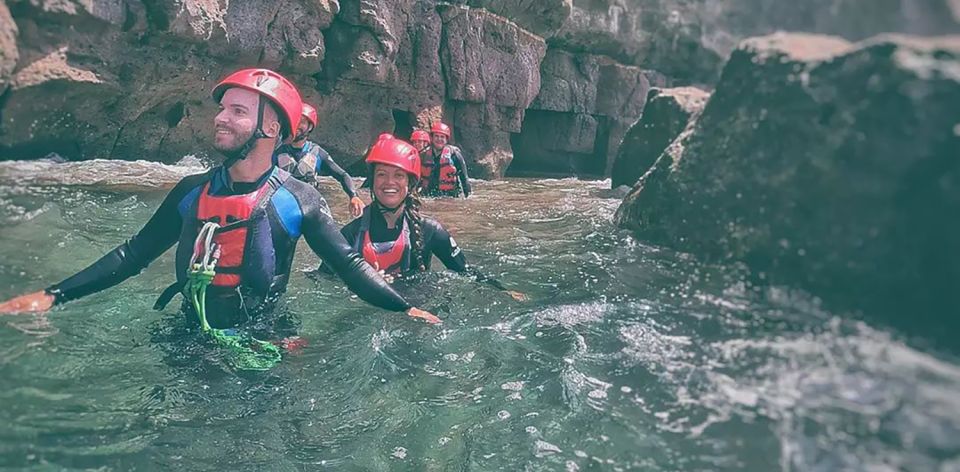
- A small group (up to 14) keeps the vibe personal and the coaching practical
- Coasteering plus multiple “by the sea” challenges like jumps, via ferrata, caving, and abseiling
- Guide support in English and Spanish so safety and technique stay clear
- Picnic included with fruit, chocolate, dried fruit, cookies, and water
- You choose your intensity because none of the activities are mandatory to continue
- Pictures included, so you can focus on the moment instead of your camera roll
Coasteering in Puerto de Mogán: Why This Southwest Coast Works
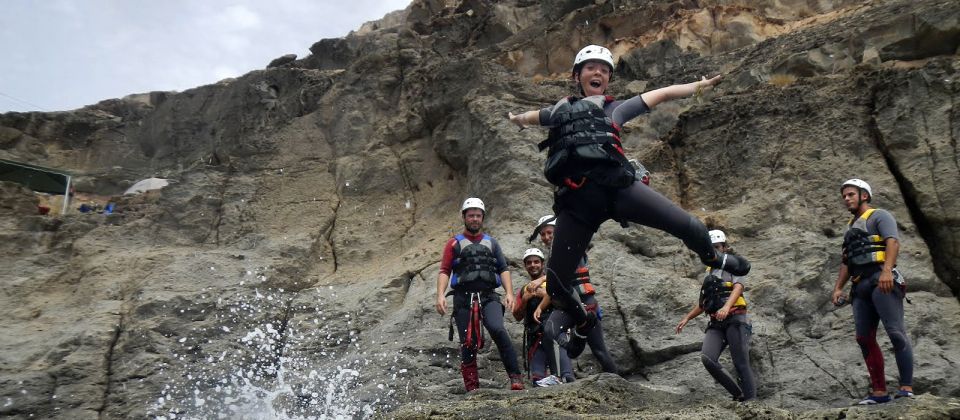
Gran Canaria’s southwest has that rocky “edge-of-the-world” feel you want for coasteering. This tour is built around descending to the coast and working along the cliffs and shoreline near Puerto de Mogán, where the sea is close enough to feel like part of the action.
What makes this area especially fun is the variety of terrain you can experience in a single morning or afternoon: jump points from different heights, sections that require careful movement along the rockline, and routes that bring you above and back down toward the water. That mix keeps it from turning into one long stunt. It’s a sequence of challenges that change your perspective from one minute to the next.
You can also read our reviews of more tours and experiences in Gran Canaria.

From Taurito to the Cliffs: How the 5-Hour Day Flows
The experience starts at the bus stop in Taurito (35138 Taurito, Las Palmas) and ends back at the same meeting point. You’ll ride down to the coast in an air-conditioned vehicle, which is a nice little quality-of-life detail on a warm Canary day.
Once you arrive, the day becomes a steady rhythm: get briefed, gear up, descend to the beach, then start moving along the coastline as the guide directs you. The total time is about 5 hours, so it’s long enough to feel like a full outing but short enough that you won’t spend all day waiting around.
The most useful way to think about the schedule is this: you’re not just getting “a show.” You’re doing a coached outdoor circuit, with rest breaks built in. If you come in with a flexible mindset, the time flies.
Safety Gear, Clear Instructions, and the Comfort Factor
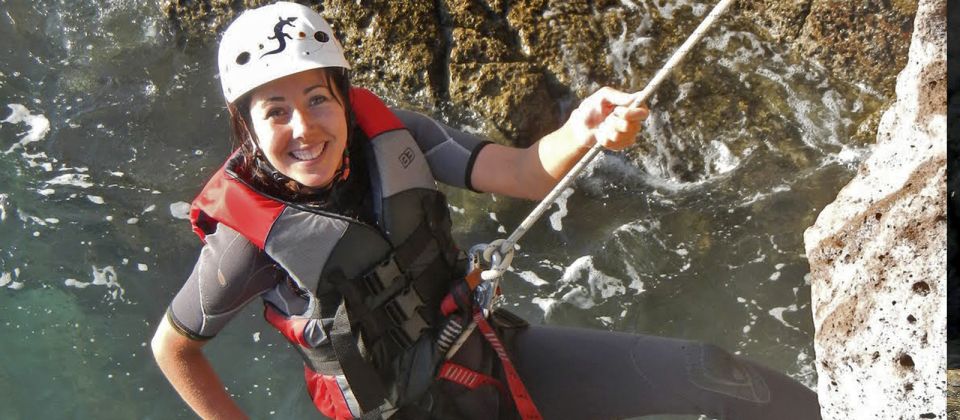
Coasteering is physical and it’s on real shoreline terrain, so safety matters. You’ll get safety equipment, and you’ll receive instructions both at the meeting area before going down and again once you’re at the beach.
A big quality-of-life point here: none of the activities are mandatory to continue. That means if your comfort level is low for a particular move—like a jump, zip line, via ferrata, or rappel style segment—you’re not forced to push through. Each person can mark their own adrenaline/difficulty level, and the guide can steer decisions from there.
In plain terms, this is how you turn nerves into manageable focus. You get to participate without pretending you’re a fearless cliff superhero. That tone also shows up in how guides work with the group. The strongest praise for the experience is consistently about guides being funny, friendly, and focused on making sure people feel at ease—especially on the parts that can scare you.
The Main Attractions: Jumps, Zip Line, and Via Ferrata Over the Waves
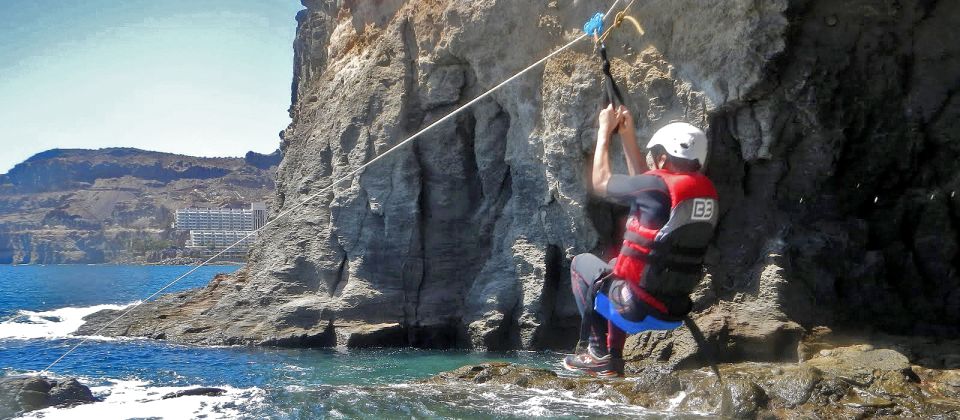
This is the part thrill seekers book for: doing multiple sea-adjacent activities in one trip.
Jumping from different heights
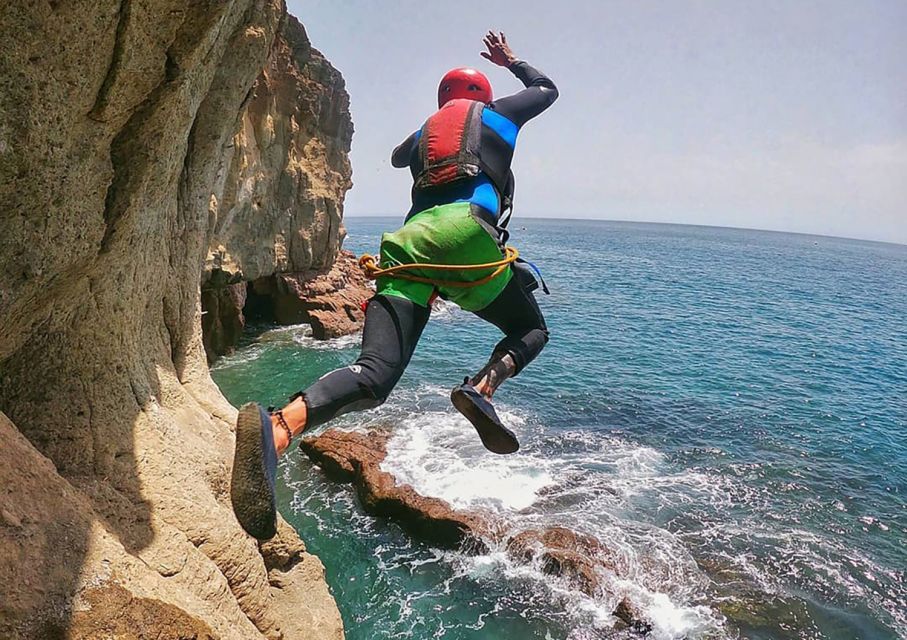
You’ll jump from several points into the sea, from different heights. The exact experience can vary with conditions, but the overall idea is the same: you’ll be positioned on the rockline, you’ll follow the guide’s safety cues, and you’ll commit when it’s your turn. The key value here isn’t just the jump—it’s the controlled decision-making. You get time to talk it through, then do it with guidance.
Practical consideration: you’ll want calm breathing and a plan for your own comfort level. If you’re anxious, that doesn’t automatically disqualify you. The tour is designed so you can choose what you attempt.

Zip line: one exclusive hit of speed
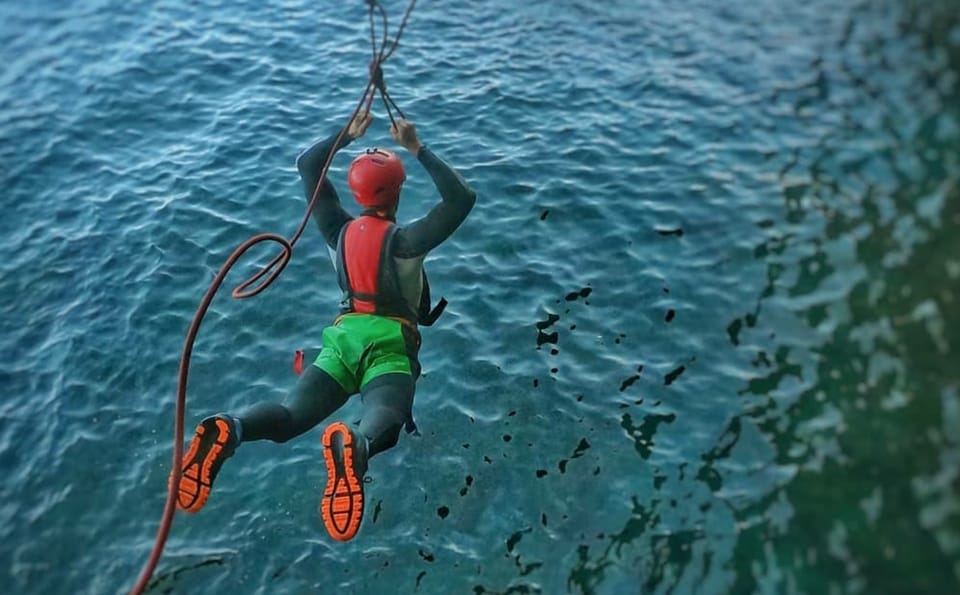
The tour includes an exclusive zip line, which is the day’s “hold on to your stomach” moment. It’s also a helpful break from constant climbing and scrambling. You shift from step-by-step movement to a single, guided glide above the coastal scenery.
Via ferrata above the waves
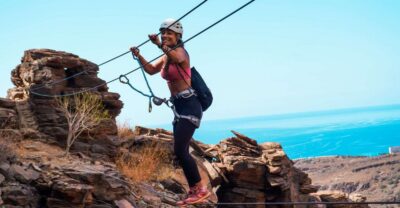
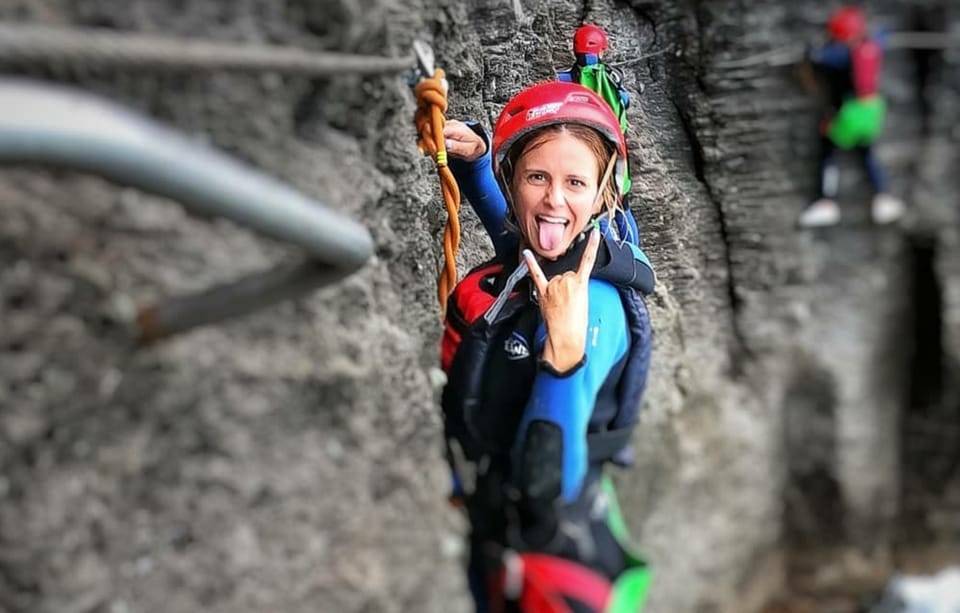
Via ferrata is climbing assisted by two steel wires. That detail matters because it changes the mental math. Instead of pure freehand climbing, you’re guided by the wire system, which tends to reduce uncertainty on difficult sections.
This is also where your guide’s role becomes really important. You’re still moving above real exposure, but you’re not left figuring things out alone. You’ll learn how to handle the sequence and keep yourself steady.
If any of these are listed as “could be unavailable” due to sea conditions, that’s not just small print. It can affect the coastline access points. So if you’re traveling specifically for one segment, go in expecting flexibility.
Caving and Abseiling to the Sea: The Serious Parts (and the Real Learning)
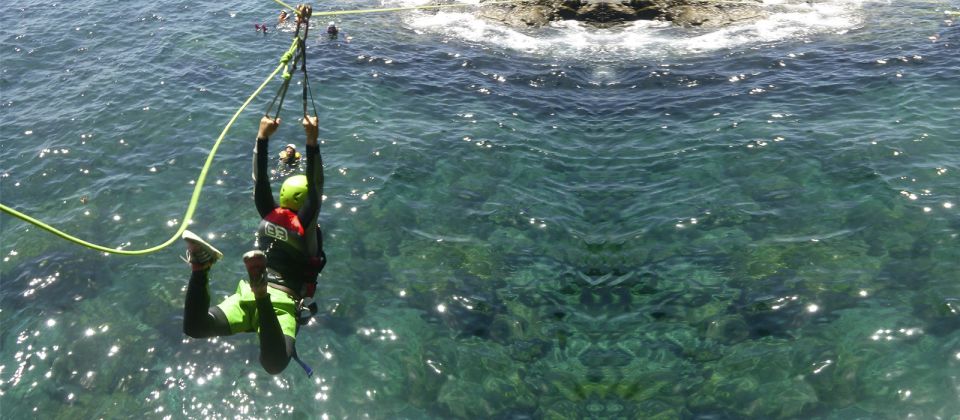
Beyond the big-ticket zip line and jumps, this coasteering tour adds smaller, more technical moments: caving and abseiling to the sea.
Caving in this context is more like exploring rugged coastal pockets and passages rather than an underground spelunking fantasy. The value is that it makes you feel the coastline from different angles. Instead of only looking out at the water, you’re moving through the rock environment that shaped it.
Abseiling (rappelling) brings you back down toward the sea and adds a clear “vertical challenge” element. You’re likely to feel that moment right away: gravity becomes part of the plan, and your technique has to be deliberate. Again, you’re not learning this solo. You’re doing it with safety equipment and guide direction.
One of the best reasons to appreciate this section is that it teaches good habits quickly: listen, move when told, and keep your pace under control. If you’ve ever watched someone rush and regret it, you know why coaching matters.
Picnic Reset: Fuel, Flavor, and a Bit of Recovery Time
Between the action parts, you get time to rest and eat. The included picnic includes fruit, chocolate, dried fruit, cookies, and water.
That might sound basic, but it’s actually smart. After jumps, climbing, and moving around on uneven rock, you need quick energy that isn’t just plain bread and bottled water. The mix here covers fast sugar (chocolate/cookies) and slower fuel (fruit/dried fruit). Plus, having the picnic provided means you aren’t forced to spend time hunting for food on a coastline day.
This rest break also gives you mental recovery. Even thrill lovers need a minute to reset before the next technical activity.
What to Bring (and Why the Wrong Shoes Are a Bad Idea)
The tour includes safety equipment, but you’re still responsible for your own comfort and grip. Here’s what you should bring:
- Swimwear
- Change of clothes
- Towel
- Closed-toe shoes (and comfortable shoes in general)
Not allowed: sandals or flip-flops. That’s a big deal. Coasteering involves rock surfaces, uneven footing, and wet conditions. If your footwear can slide or leave your toes exposed, it becomes a safety issue fast.
Also note what’s not included: climbing shoes. That doesn’t necessarily mean you need specialized gear, but you shouldn’t show up assuming the outfit list will cover footwear. Closed-toe shoes are required, and you’ll want something you trust on rocky ground.
Finally, leave valuables behind. Valuables aren’t allowed, so plan on traveling light.
Who This Trip Suits Best (and Who Should Skip It)
This tour is best for adults and active teens who want hands-on coastal adventure and don’t mind being physically challenged.
It’s not suitable for children under 8, and it’s also not suitable for pregnant women or people with mobility impairments. That’s consistent with the reality of jumps, via ferrata, caving, and abseiling—activities where exposure, balance, and movement matter.
If you’re a thrill seeker, you’ll likely love how many different techniques show up in one outing. If you’re newer to this type of adventure, you’ll still be able to join thanks to the self-marked intensity and the guide’s role. Just be honest with yourself about your comfort around heights and getting wet.
Price and Value: Why $68 Can Make Sense for This Much Action
At $68 per person for a roughly 5-hour guided adventure, the value comes from the mix of included services and the amount of coached activity you’re getting.
You’re not just paying for access to a coastline. You’re paying for:
- a guide who can work with both English and Spanish groups
- safety equipment
- a picnic with snacks and water
- insurance
- pictures included
Then add the group size limit: 14 participants max. Smaller groups usually mean more attention during technical moments and less time standing around. If you want adrenaline and you want it done with proper structure, that’s where this price starts to feel fair.
One more value angle: because some activities can become unavailable based on sea conditions, you should view the tour as a flexible coastline adventure rather than a checklist you can demand to be completed in perfect form.
A Quick Reality Check Before You Book
If the top of your priority list is guaranteed participation in every single element—zip line, via ferrata, jumps, caving, abseiling—this might not be your best match. Sea conditions can change what’s safe or accessible.
But if your goal is a guided day of coasteering-style coastline exploration with multiple thrill options, and you’re open to choosing your own intensity, this is a strong fit.
Should You Book Mojo Picon Aventura’s Coasteering Tour in Gran Canaria?
I’d book this if you want a compact, high-energy way to see Gran Canaria’s southwest cliffs and if you like the idea of doing several types of challenges with a guide beside you.
I’d think twice if you don’t want to get wet, don’t handle heights well, or you’re expecting a gentle sightseeing walk. This is active and it’s coastal terrain, not a boardwalk.
If you’re looking for a tour that mixes adrenaline with practical guidance, and includes a picnic and safety support, this one is worth your attention.
FAQ
How long is the coasteering experience?
It lasts about 5 hours. Exact starting times vary, so check availability for the schedule.
Where does the tour start and end?
The tour starts at the bus stop in Taurito (35138 Taurito, Las Palmas) and ends back at the same meeting point.
How many people are in the group?
The group is limited to 14 participants, which keeps it small.
What activities are included?
The tour includes coasteering along the coastline and cliffs, with activities such as rock jumping from different heights, an exclusive zip line, via ferrata climbing (assisted by steel wires), caving, and abseiling to the sea.
Do I need climbing shoes?
Climbing shoes are not included. You will want closed-toe shoes and comfortable footwear for rocky, wet conditions.
Are all activities mandatory?
No. None of the activities (zip line, via ferrata, jumps, rappel/abseiling, etc.) are mandatory to continue with the tour. Each person marks their own adrenaline/difficulty level.
What should I bring?
Bring comfortable shoes (closed-toe), swimwear, a change of clothes, and a towel.
Is it suitable for kids, pregnancy, or mobility issues?
It’s not suitable for children under 8, pregnant women, or people with mobility impairments.