REVIEW · GRAN CANARIA
2 Day PADI Scuba Diver Course in Puerto Rico, Gran Canaria
Book on Viator →Operated by Blue Water Diving · Bookable on Viator
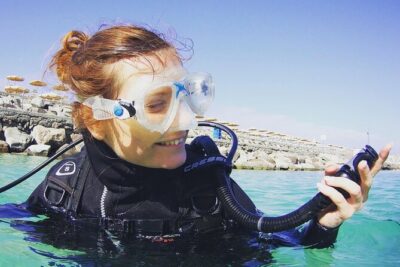
Two days to feel safe underwater. That’s the promise here, taught in a tight, beginner-friendly structure: confined water practice first, then two open-water sessions the next day with a professional instructor. I like that the course is built around real skills you can use immediately, not just time in the water—and I especially appreciate the small-group feel (max 6). One thing to plan for: food and drinks aren’t included, so you’ll want to budget and eat before or after training.
You’ll start at Blue Water Diving (Calle Olimpicos, C. Doreste y Molina, s/n, 35130 Gran Canaria, Las Palmas) at 8:30 am. Training runs roughly 9:00 am to 2:00 pm each day, and the second day shifts to a local beach for your open-water practice. It’s offered in English, and if you’re staying at a selected hotel, pickup and drop-off can be part of the package.
In This Review
- Key things to know before you book
- Blue Water Diving’s 2-day PADI plan: what $390.52 really buys
- Day 1 (roughly 9–2): confined water skills that set you up for confidence
- Day 2: local beach sessions where skills turn into real comfort
- Meet the instructors: friendly, precise, and willing to correct fast
- Equipment and safety basics: included gear, medical checks, and sensible limits
- Transfers, timing, and getting to Blue Water Diving without stress
- What to expect emotionally: from first-timer nerves to calm control
- Is this PADI scuba course worth booking for your trip?
- FAQ
- FAQ
- What time does the course start and where do we meet?
- What are the daily training hours?
- Is hotel pickup included?
- Does the price include equipment and instruction?
- Are meals included?
- What language is the course offered in?
- How many people are in the group?
- Do I need a health questionnaire before participating?
- Can I cancel for a full refund?
Key things to know before you book
- Confined water first: You’ll master core skills in a controlled setup before going outside.
- Small group size: A maximum of 6 travelers keeps attention personal.
- All equipment included: You should show up and focus on learning, not hunting gear.
- Two open-water sessions: Day 2 is where you put skills into real conditions.
- Instructor-led comfort building: Multiple reviews highlight coaching that turns panic into calm.
- Budget for meals: Food and drinks aren’t part of the price.
Blue Water Diving’s 2-day PADI plan: what $390.52 really buys
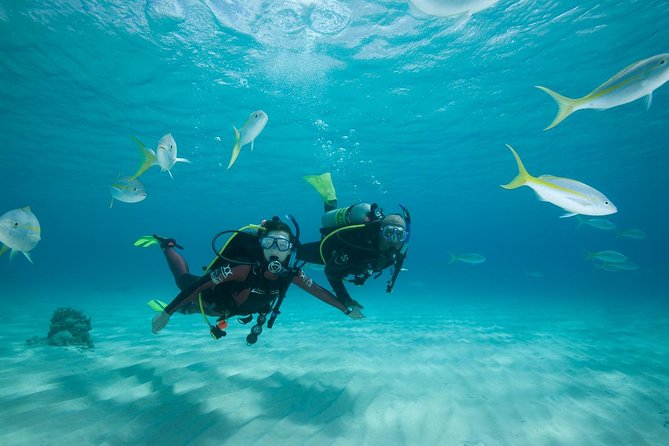
At $390.52 per person for a 2-day program, you’re paying for more than a couple of water activities. You’re buying structure: day-by-day training, professional guidance, and the full setup needed to learn safely. The value is strongest if you’re a first-timer or returning but want a clear path to confidence.
Here’s what your money covers based on the details provided:
- A professional guide/instructor
- All necessary equipment included
- Two open-water sessions
- Hotel pickup and drop-off from selected hotels only
- The course is offered in English
- A mobile ticket is used
- Group size is capped at 6 travelers
What you should mentally budget extra:
- Food and drinks
- Any extra purchases that aren’t included (and one review specifically wished they had a photo option from the water)
In short: the price makes sense when you factor in the learning time, instructor attention, equipment, and transportation for selected hotels. If you’re traveling without an eligible hotel for pickup, you might want to check how easy it is for you to get to the shop by public transport, since the meeting point is described as near public transportation.
You can also read our reviews of more scuba diving tours in Gran Canaria
Day 1 (roughly 9–2): confined water skills that set you up for confidence
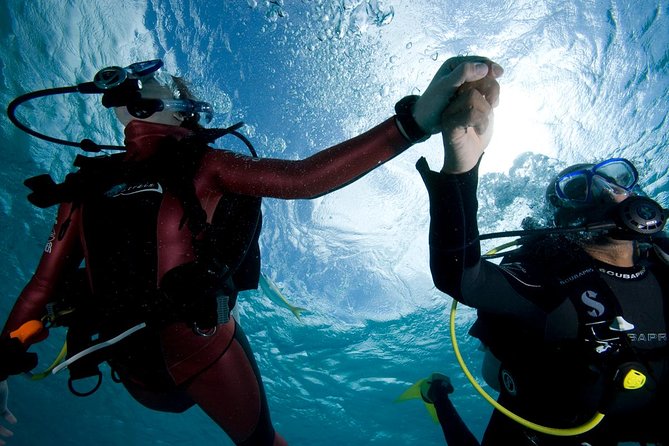
Day 1 is built like a training lab. You’ll start around 9:00 am and wrap up around 2:00 pm. The goal is simple: get your body and breathing used to the underwater world while practicing the exact skills you’ll need later.
From the course description, you begin with confined water sessions using guided instruction. In plain terms, this is where you learn:
- How to handle your equipment calmly
- How to control your breathing underwater
- How to practice core safety skills in a space where you’re not trying to solve everything at once
That matters because the second day (open-water sessions) is less forgiving. If you go in already comfortable with your breathing and basic control, you can relax and focus on the experience—wrecks, animals, and the feeling of moving through real open water.
The strongest signal in the reviews is that instruction isn’t one-size-fits-all. People mention training that feels tailored, which is exactly what you want on day 1. You’re not just “being taught”—you’re being coached until you can follow the safety steps without fear taking over.
Day 2: local beach sessions where skills turn into real comfort
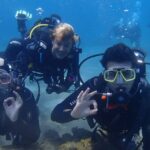
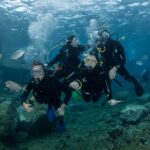
On day 2, you move to a local beach and complete two open-water sessions. The description says you’ll practice what you learned on day 1, then relax and get comfortable underwater as you apply your skills.
This is where you’ll notice the difference between:
- Knowing what to do in theory
- Doing it while you’re in open water, with natural conditions and your nerves running the show
One review mentions a student experiencing a panic moment under water on day 2. The instructor support helped the person get their head and breathing sorted so they could continue with the required safety steps for the course. That’s not just emotional support—it’s practical teaching under pressure. If you’re worried you might struggle on day 2, that review is a real comfort read. The training approach seems focused on safety and skill first, even when the moment gets scary.
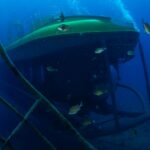
Another review highlights underwater wrecks as part of the experience. You should go in expecting you’ll see interesting seascape details and marine life when conditions allow, but the real win is that the second day isn’t just a sightseeing pass. It’s practice.
Meet the instructors: friendly, precise, and willing to correct fast
The people make this course. Multiple reviews praise instructor professionalism and warmth, with names showing up repeatedly: Eileen, Chris, Kate, Lily, Carolyn, and Caytlin.
Here’s what comes through clearly from those comments:
- Instructors explain things in a way you can actually use
- Equipment setup is adjusted so it feels right for you
- Coaching can be direct, even a bit firm, when you need it
The review calling out tough love credits Chris specifically. The message is: you’ll be pushed gently toward calm competence. That’s what good scuba training needs. If you drift into autopilot without proper technique, your safety depends on it. If you’re overly tense, it also affects how you breathe and control yourself.
Other reviews mention instructors bringing students from beginner level to feeling comfortable and calm underwater, using attention to detail. So if you’re the type who learns best from step-by-step feedback, you’re in the right place.
Equipment and safety basics: included gear, medical checks, and sensible limits
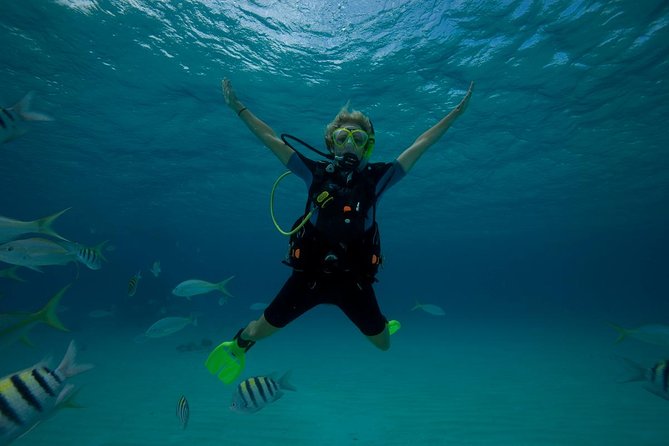
A big plus is that all necessary equipment is included. That removes a common first-timer headache. You don’t have to guess what you need, rent gear, or worry your setup isn’t right.
But the course also takes safety seriously with rules you should plan around:
- You’ll complete a health questionnaire prior to diving
- Some conditions (examples given include asthma and heart conditions) may prevent you from participating, so you should consult your doctor
- Diving within 18 hours of flying is not recommended
- Service animals are allowed
- Most travelers can participate, but you still need that health screening first
If you’re coming from another country or doing a flight connection, the 18-hour note matters. It’s not about being inconvenient—it’s about your body adjusting to pressure changes safely.
The group size cap (max 6) also helps here. In smaller classes, instructors can watch you more closely while you practice safety skills and breathing control.
You can also read our reviews of more tours and experiences in Gran Canaria
Transfers, timing, and getting to Blue Water Diving without stress
Timing is consistent:
- You meet at 8:30 am at Blue Water Diving
- Training runs about 9:00 am to 2:00 pm each day
- Day 2 includes travel to a local beach for your two open-water sessions
- The experience ends back at the meeting point
Hotel pickup and drop-off is included for selected hotels only. If you’re not in that pickup zone, you’ll want to plan how you’ll get yourself to the shop. The listing notes the area is near public transportation, which is helpful if you prefer to move on your own.
Also, the course is offered in English, which is a big deal if you want clear coaching with minimal translation friction.
What to expect emotionally: from first-timer nerves to calm control
Let’s be honest: day 1 is easier than day 2 for a lot of people, and nerves are normal. One review specifically describes a panic under water moment on day 2 that was handled through coaching from Chris—focus on breathing, safety requirements, then continuing the course.
So if you’re thinking, I’m not sure I’ll feel calm underwater, know this: the training doesn’t ignore that reality. It addresses it directly. The goal isn’t forcing you to pretend you’re fearless. It’s helping you regain control of breathing and technique so you can meet safety steps.
That’s why the confined water start is so important. It’s giving you a foundation you can lean on when you’re outside in open water.
Is this PADI scuba course worth booking for your trip?
I’d book it if you want:
- A beginner-friendly, guided path with confined water practice first
- Professional instruction and equipment included
- A small group setting (max 6) where you’re not lost in a crowd
- Two open-water sessions so you get real underwater experience, not just “practice only”
You might think twice if:
- You’re unsure about eligibility due to medical conditions and haven’t checked with a doctor
- You’re flying in and can’t respect the 18-hour recommendation
- You hate planning for meals (since food and drinks aren’t included)
If your goal is learning the basics well, feeling safe, and leaving with confidence to keep diving or doing more training later, this course fits. If your goal is purely one-time sightseeing, you might find the structured focus a bit more “learning mode” than casual fun. But most people who choose this kind of course are exactly there for the coaching.
FAQ
FAQ
What time does the course start and where do we meet?
The meeting point is Blue Water Diving on Calle Olimpicos, C. Doreste y Molina, s/n, 35130 Gran Canaria, Las Palmas, Spain. The start time is 8:30 am.
What are the daily training hours?
You start approximately 9:00 am and finish approximately 2:00 pm each day.
Is hotel pickup included?
Hotel pickup and drop-off are included only for selected hotels.
Does the price include equipment and instruction?
Yes. The course includes a professional guide and all necessary equipment. Two open-water sessions are also included.
Are meals included?
No. Food and drinks are not included.
What language is the course offered in?
The course is offered in English.
How many people are in the group?
The experience has a maximum of 6 travelers.
Do I need a health questionnaire before participating?
Yes. All participants must complete a health questionnaire before diving, and some pre-existing conditions may prevent you from participating.
Can I cancel for a full refund?
Yes. Free cancellation is available up to 24 hours in advance of the experience for a full refund.