REVIEW · GRAN CANARIA
Agaete: Gran Canaria Coasteering. Marine Ferrata and Zipline
Book on GetYourGuide →Operated by RockNatour · Bookable on GetYourGuide
This is coasteering in Gran Canaria where the coastline forces you to pay attention. You’ll mix hiking along cliffs, abseiling, sea-level climbing, optional jumps, and a snorkel stop that puts the ocean life right in front of you. The route is designed to show the island’s volcanic setting while you move through it, not just look at it from a distance.
I especially like the hands-on mix: abseil with ropes using the safe setup, then shift to sea climbing like you’re part of a small team. And I really like the human factor—based on past trips, the guide Pablo is the kind of coach who explains clearly, keeps the mood light, and stays focused on safety.
One drawback to consider: this is not a sit-and-watch tour. If you’re afraid of heights, have vertigo, or you struggle with fitness, you’ll feel every step and every exposure.
In This Review
- Key things I’d circle before you book
- Coasteering in Agaete: How the day actually unfolds
- Where you meet: COMSILIENCE and the Playa de Caleta area
- Who this tour fits (and who should skip it)
- Gear and clothing: what matters on a sea route
- Stop by stop: the cliff hike and the aboriginal cave
- Abseiling down to the coast: the moment you feel the ocean up close
- Zipline and the sea-level route: marine Via Ferrata energy
- Optional jumps from 12 meters and the snorkel payoff
- Photos and snacks: small extras that change the day
- Price and value: what $79 buys you in real terms
- Weather and sea reality: plan for wind and wet
- Should you book this Agaete coasteering tour?
- FAQ
- What is the duration of the coasteering tour?
- How much does it cost per person?
- Where do I meet, and where does the tour end?
- Is hotel pickup included?
- How big is the group?
- What languages are the instructors?
- What safety gear and water gear are included?
- Do I have to jump into the ocean?
- What should I bring with me?
- Who is the tour not suitable for?
Key things I’d circle before you book
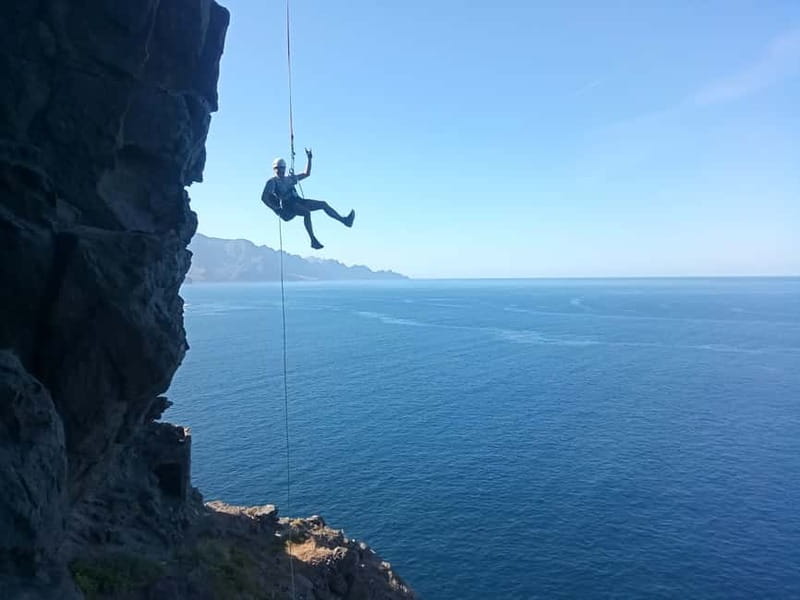
- Abseiling and climbing with real safety gear (harness, helmet, wetsuit) and a professional guide
- Marine Via Ferrata above the sea plus a zipline segment built into the Agaete portion
- Snorkel time in a cliff-framed bay, followed by a finish at a wild beach
- A complete coasteering route that keeps moving instead of repeating the same view
- Free photo report so you’re not stuck playing cameraman all day
- Small groups capped at 8, which matters for instruction and attention
Coasteering in Agaete: How the day actually unfolds
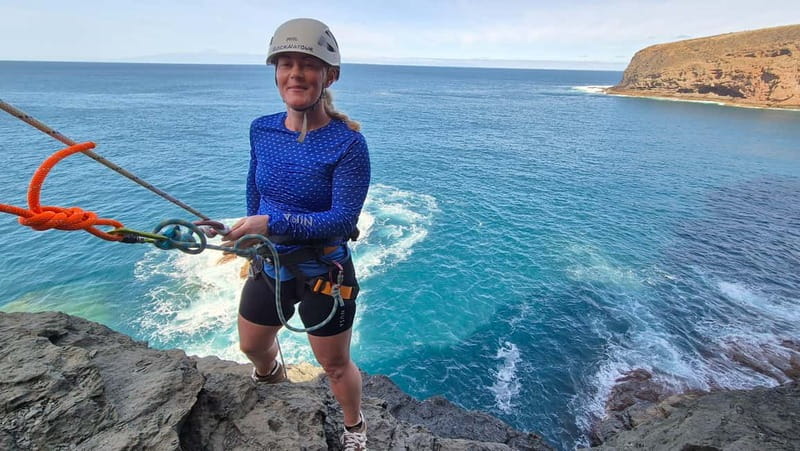
Agaete coasteering is a very specific kind of active day. You start on land, but you never fully leave the ocean behind. Even when you’re hiking, the cliff edges and rock textures remind you this coast was shaped by volcanic activity and lots of time under sea pressure. Then, once you drop toward the water, the pace changes fast.
The tour blends two worlds that most people keep separate: climbing/rope work and ocean time. You’ll hike to a high point, use the ropes for controlled descents, and then move along the sea with climbs and a chain pass. After that comes the reward phase—jumping is optional, and snorkeling is the calm-down moment where you can slow your breathing and just watch.
This is the sort of day that feels different from a standard sightseeing loop. You’ll be in motion for most of the experience, and you’ll spend more time using your body than taking photos. That’s part of the value.
You can also read our reviews of more tours and experiences in Gran Canaria.

Where you meet: COMSILIENCE and the Playa de Caleta area
You’ll meet at the parking close to the roundabout of Playa de Caleta (Agaete), and the tour base is listed as COMSILIENCE with the activity ending back at the same meeting point. That matters because it’s one less thing to plan: no long bus rides needed, and you return to where you started.
The tour runs about 5 hours, and starting times vary, so check availability for the slot that matches your schedule. Since there’s no hotel pickup or drop-off, plan to get yourself there on time—this is a good one for renting a car, using local transport, or arranging a simple taxi ride.
The vibe is outdoors and gear-based. Come prepared and you’ll waste less time figuring out what goes where.
Who this tour fits (and who should skip it)
This is built for people who can handle heights and controlled exposure near cliffs. The tour is limited to participants not suitable for children under 16, people over 55, anyone pregnant, anyone with back problems, people with mobility impairments, non-swimmers, and people with low fitness. It’s also specifically not for those afraid of heights or with vertigo.
Also take the weight limit seriously: it’s not suitable for people over 243 lbs (110 kg).
If that sounds strict, it is. But it’s also honest. Coasteering and rope work aren’t about bravery theater. They’re about safe movement on rock and close to water. If you’re a confident swimmer and you can do stairs, uneven footing, and crouching for gear, you’ll likely enjoy the day.
Gear and clothing: what matters on a sea route
The tour includes a full safety and water setup: harness, helmet, wetsuit, and a snorkel kit, plus insurance, a snack, and pictures. Having gear included is part of why the price makes sense—rope and ocean activities require the right equipment, and you don’t want to hunt for it last minute.
For what you bring, focus on comfort and survival:
- Wear hiking boots or sports shoes and sports clothing.
- Bring a towel, sunscreen, water, and breathable layers.
- Tight clothes are okay, but you’ll save items in dry bags, and space is limited.
- Bring a jacket if you tend to get cold on windy coastal paths.
- Don’t bring shorts—rock contact can lead to scratches.
One practical tip: this day is wet at points. If your shoes are slippery, you’ll notice. If your socks aren’t secure, you’ll notice too. Give your body good grip and fewer distractions.
Stop by stop: the cliff hike and the aboriginal cave
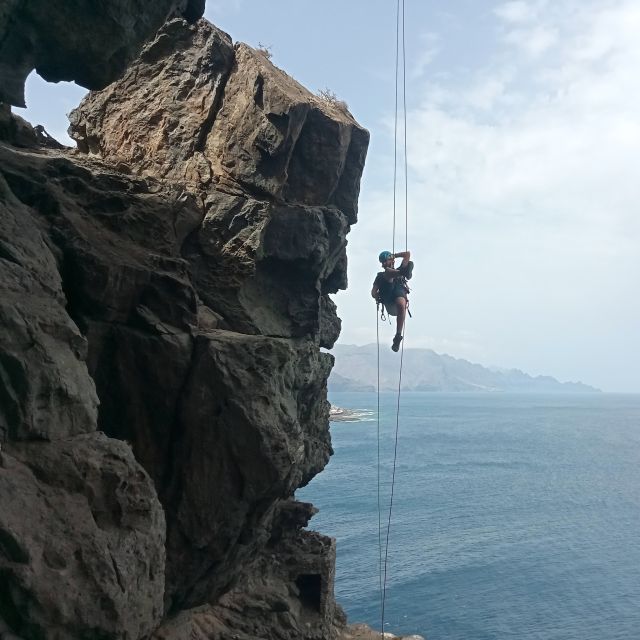
Before ropes and water, you start with a warm welcome and a safety briefing, plus all the equipment prep. Then you hike along the cliff, working up to a high point where you’ll encounter an ancient aboriginal cave. Your guide shares what it means in the island story—why it matters, and how people used places like this long before modern tourism.
This part isn’t just a warm-up. It sets the tone: you’re walking with the ocean in your peripheral vision, on terrain that can be uneven. It also gives your body time to wake up before the adrenaline moments.
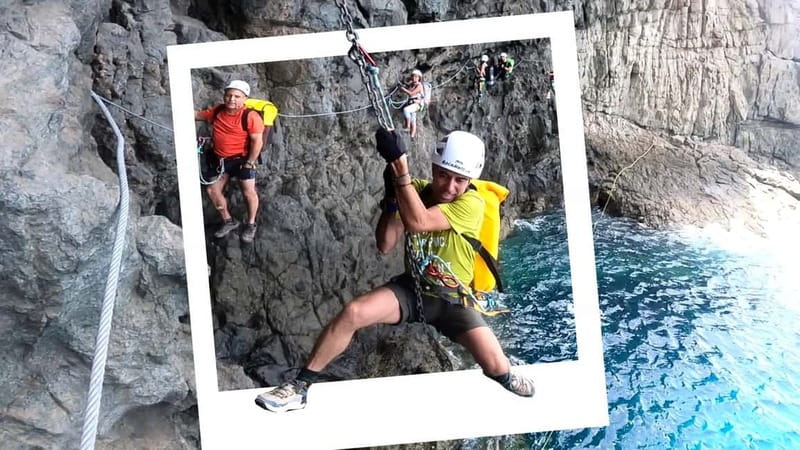
After the cave area, you continue along the cliffside to reach the top of a rock formation with panoramic views over Agaete and a hidden beach. Then you descend toward the coast using abseiling with ropes and the safest equipment they provide.
If you’re the type who calms down once you know what comes next, you’ll appreciate that the guide keeps things structured—move, brief, test, go.

Abseiling down to the coast: the moment you feel the ocean up close
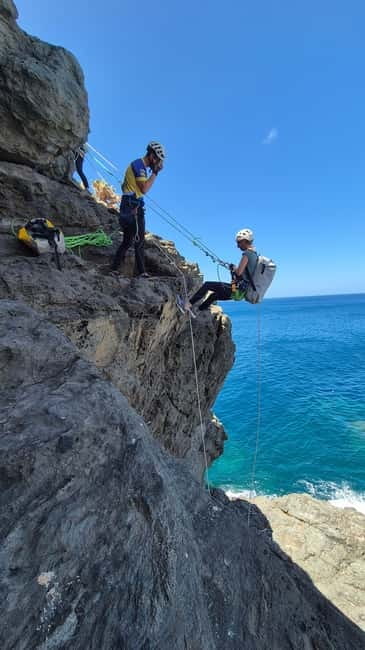
Abseiling is the signature move on this tour. You’re not just using ropes as a novelty. You’re learning a controlled descent while staying attached and monitored by your guide.
This is also where the tour’s value shows. Most people pay for guides because they know how to keep you safe on the specific rock and specific coastline. Here, the setup includes harnesses and helmets, plus the tour is led by a professional guide, with insurance included.
Your job is simple: listen, follow instructions, and move carefully. Your reward is dramatic perspective. From the top, you see the coastline as a whole. From the descent, you see the rock-water boundary up close—where waves hit and recede, where footing can change by a few inches, and where you start understanding why the route is planned the way it is.
Zipline and the sea-level route: marine Via Ferrata energy
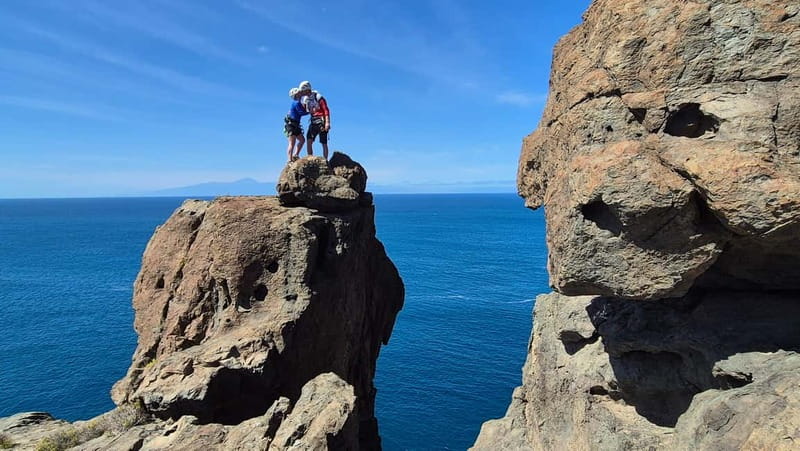
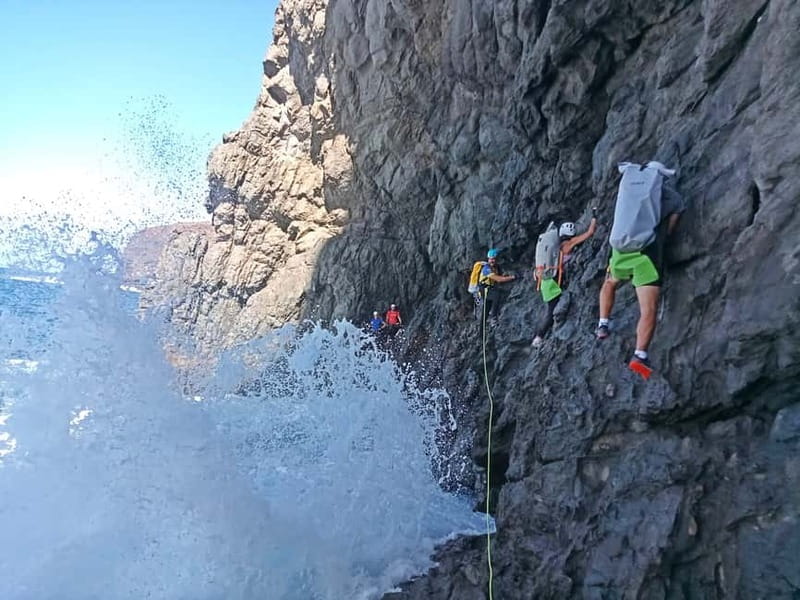
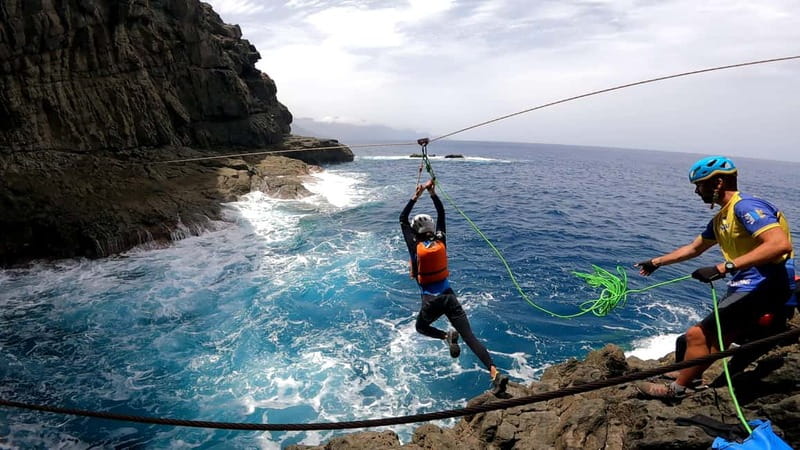
After the initial hiking and rope work, you’ll transition into the Agaete part that includes a zipline plus the route elements over and along the water. The highlight here is the marine Via Ferrata, which means you’ll climb above the sea on a route that’s built for vertical movement while staying anchored.
Then comes the sea-level climbing stretch, including the thrilling chain pass segment. That phrase matters because it signals a specific challenge: you’ll rely on handholds and the guide system while moving across areas that feel exposed.
If you’ve never done anything like this, start with the mindset that it’s technique-based, not strength-based. The guide does the heavy lifting on safety choices, and you do the heavy lifting on staying calm and placing your feet right.
You’ll likely feel your adrenaline rise, especially when the route keeps you close to open water and the ocean sound fills the background.
Optional jumps from 12 meters and the snorkel payoff
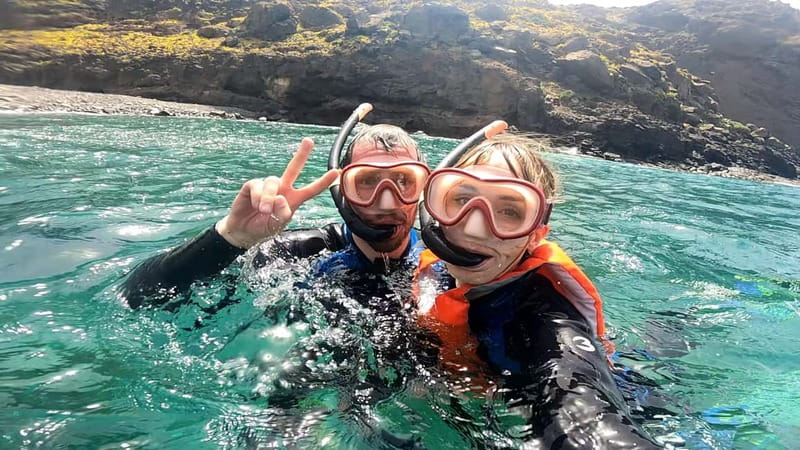
At coastal level, the tour shifts into ocean mode. If you love the idea of jumping, you’ll get a spot where you can jump from about 12 meters—and the jump is always optional. The important word is optional. You can choose not to jump and still complete the rest of the route as planned.
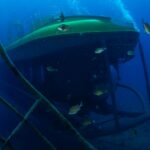
Then you finish the ocean phase with snorkeling in a bay surrounded by impressive cliffs. This is where the day stops being about nerves and turns into wonder. With your included snorkel kit, you can admire what’s happening underwater while the cliffs frame your view from above.
After snorkeling, you reach a wild beach finish area. That last stretch is a nice reset. You’ll come out of the water with salt on your skin, gear properly stowed, and the sense that you earned the quiet moment.
Photos and snacks: small extras that change the day
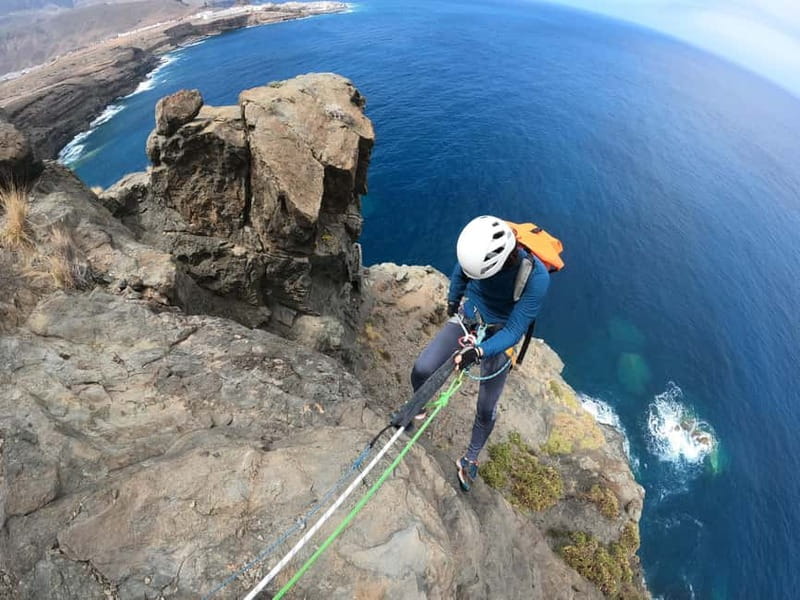
It’s easy to underestimate how much photos matter on an action tour. Here, you get a free photo report, which means you can look back at the moves you did instead of only remembering the blur of adrenaline.
A snack is included too. On a 5-hour coasteering day, that’s not a gimmick. It helps you avoid the crash that makes the last stages feel harder than they should.
And if you connect with the guide—Pablo seems to have a strong reputation for this—your stress level can drop. Clear coaching plus a bit of humor goes a long way when you’re trusting ropes and climbing routes.
Price and value: what $79 buys you in real terms
At $79 per person, you’re paying for more than a guide walking beside you. You’re paying for:
- specialized safety gear (harness, helmet, wetsuit)
- a snorkel kit
- insurance
- instruction and supervision
- a snack
- and a free photo report
In other words, you’re paying to remove friction from a complicated day. Without this kind of organized setup, you’d spend time and money figuring out gear and logistics, and you’d still be missing the local coaching that makes the route safer and smoother.
Is it cheap? No. But it’s fair for a tour that includes rope work, climbing, and ocean time—plus a small group size limited to 8.
Weather and sea reality: plan for wind and wet
Coasteering depends on conditions in a plain way: wind, waves, and water movement affect comfort and safety. Even when everything goes well, you’re on a coast, and you’ll get splashed and wet during parts of the route.
So prepare like you’re doing an active beach day plus climbing. Bring water, sunscreen, a towel, and breathable layers. If you tend to run cold, pack that jacket. And when the guide speaks, treat it as the final word for how the day plays out.
Should you book this Agaete coasteering tour?
Book it if you want an active day with structure: abseiling, marine Via Ferrata climbing, zipline, optional jumps, and snorkeling, all in one loop that doesn’t waste time.
Skip it if any of these are true:
- you’re afraid of heights or have vertigo
- you’re not comfortable in water and you can’t swim
- you have mobility limitations, back issues, or you’re outside the age and weight suitability limits
- your fitness level is low enough that uneven footing and sustained movement would be a problem
If you’re in the sweet spot—willing to be challenged, ready to listen, and excited by the ocean close-up—this is exactly the kind of Gran Canaria day that sticks.
FAQ
What is the duration of the coasteering tour?
The tour lasts about 5 hours. Starting times vary, so you’ll want to check availability for the slot you want.
How much does it cost per person?
The price is $79 per person.
Where do I meet, and where does the tour end?
You meet at the parking close to the roundabout of Playa de Caleta in Agaete (COMSILIENCE). The tour ends back at the same meeting point.
Is hotel pickup included?
No. Hotel pickup and drop-off are not included.
How big is the group?
It’s a small group limited to 8 participants.
What languages are the instructors?
The instructor speaks English and Spanish.
What safety gear and water gear are included?
Included gear includes a harness, helmet, wetsuit, and a snorkel kit.
Do I have to jump into the ocean?
No. Jumping is optional, including the option to jump from about 12 meters.
What should I bring with me?
Bring swimwear, a towel, sunscreen, water, breathable clothing, and sports shoes/sportswear. A jacket could be necessary.
Who is the tour not suitable for?
It’s not suitable for children under 16, pregnant women, people with back problems, mobility impairments, fear of heights, vertigo, non-swimmers, people over 243 lbs (110 kg), and people with low level of fitness. It’s also not suitable for people over 55 years.