REVIEW · GRAN CANARIA
Full-Day Tour Exploring History, Nature and Aloe Vera Farm
Book on Viator →Operated by VIMOTIONS · Bookable on Viator
A full-day loop through Gran Canaria’s north and center hits hard. You’ll roll from historic towns into protected nature, then finish with an aloe vera farm visit. It’s a good way to get your bearings fast without wrestling winding roads.
I especially like the mix: Guayadeque’s cave dwellings and the big “wow” stop at Roque Nublo give you both culture and dramatic volcanic scenery. I also like that you’re not doing logistics—pickup from the south and a guide keep the day flowing.
One thing to consider: this is a long day with quick stops (lots of time on the vehicle), and the aloe stop can feel more like a sales visit than a hands-on class depending on your tolerance for store-style sightseeing.
In This Review
- Key highlights at a glance
- Price and what you’re actually buying for $59.61
- Pickup, timing, and why this day can feel longer than 7 hours
- The guide’s job: connecting caves, villages, and volcanic rock
- Stop 1: Agüimes and Guayadeque caves (history you can walk toward)
- Stop 2: Arucas for rum and banana country (quick hit, local flavor)
- Stop 3: Teror and the Basilica of Nuestra Sra del Pino (Canary Island devotion)
- Stop 4: Valleseco’s protected natural area and time to breathe
- Stop 5: Roque Nublo (the “one stop you remember” crag)
- Stop 6: Fataga aloe vera farm visit (learn it, but manage your expectations)
- Lunch reality: not included, but there’s usually a set-menu option
- Transportation comfort: windy roads, big vehicles, and how that affects your photos
- Who this tour is best for
- Small booking tips that actually matter
- Should you book this Gran Canaria full-day tour?
- FAQ
- What time does the tour start?
- Is pickup included, and where does it run from?
- How long is the tour?
- Is lunch included in the price?
- What’s included besides transport?
- How big is the group?
- What if the weather is bad?
Key highlights at a glance
- Guayadeque Valley: caves tied to the first pre-Hispanic settlers, in a protected natural setting
- Roque Nublo: a volcanic crag linked to island worship, plus sweeping views from a protected area
- Village variety: Agüimes, Teror, Arucas and Valleseco each bring a different feel
- One guided narrative: you get a running history/nature commentary across the day
- Aloe vera farm visit: learning about uses, but plan for a commercial component
- Pickup included in the south: less driving pressure, more time for photos and short walks
Price and what you’re actually buying for $59.61
At $59.61 per person, you’re paying for more than a bus ride. You’re buying time on a guided route that strings together several of Gran Canaria’s most recognizable interior-and-north sights—plus the convenience of being collected and dropped back in the south.
This is also a value play if you don’t want to plan your own driving route. The day includes a local guide for the entire trip and an aloe vera farm visit, which matters because farm stops usually cost extra on their own when you arrange them separately.
The trade-off is that you’re funding a “many stops” format. If you want deep time in one place—long hikes, long lunch breaks, or museum-level detail—this isn’t that kind of tour.
You can also read our reviews of more historical tours in Gran Canaria
Pickup, timing, and why this day can feel longer than 7 hours
The tour is listed at about 7 hours, but real-world timing depends on where you’re picked up. Transfer is offered from hotels in the south, with pickup windows roughly between 09:00 and 10:30. You’ll meet up earlier than your “start time” if your hotel is on the edge of the pickup zone.
From the experience reports I’ve seen for this kind of itinerary, expect a full, packed day—often running closer to early morning through late afternoon once you include the drive from pickup points. That’s why snacks, water, and shoes you can walk in really matter.
Also, even if you’re part of a smaller group overall, you may still spend a lot of the day on a coach. That’s great for comfort on bumpy mountain roads, but it does mean short stop times and a lot of “see it, photograph it, move on.”
The guide’s job: connecting caves, villages, and volcanic rock
What makes this tour work is the continuity. A guide keeps linking the dots between:
- early settlement history (and what’s still visible),
- how the island developed around specific towns and landscapes,
- and why certain natural sites matter culturally.
Guides listed for departures include people like Tom, Miguel, Maribel, Simone, Angel, and Simone’s driving team counterparts (I’ve seen names mentioned such as Manolo and Alfredo in the same context). Different guides bring different pacing, but the best versions of this tour share the same goal: keep you moving while still giving you the story behind the scenery.
If you’re sensitive to fast pacing, pick your expectations carefully. You’ll get explanations, but the itinerary doesn’t slow down for long lectures.
Stop 1: Agüimes and Guayadeque caves (history you can walk toward)
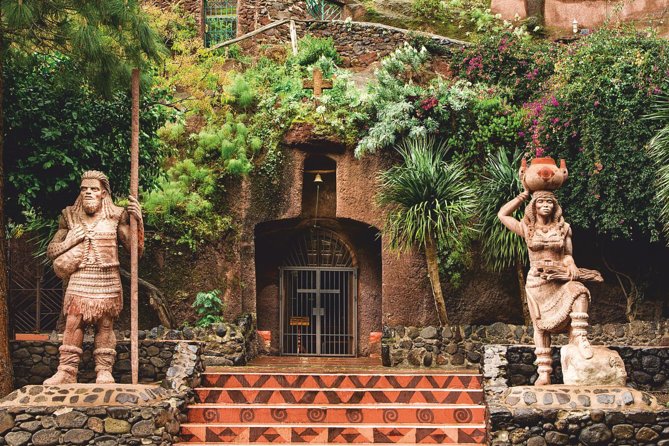
Your first stop is Casco Historico de Agüimes, a village area known for being an ancient aboriginal settlement. This is the moment where the tour’s historical angle becomes real: you’re not just looking at buildings, you’re stepping into a town shaped by deep time.
Then you move to Guayadeque Valley, declared a Natural Monument in 2000. The standout here is the cave-dwelling story: cave homes connected to the first pre-Hispanic inhabitants and still used today. Even if you’re only there for about an hour, it’s a powerful introduction to how people adapted to the island’s geology.
What I’d love about this stop: it gives you a sense of scale and continuity fast.
What to watch: if you’re hoping for an extended cave exploration, the time is limited. You’ll likely get a look, some context, and a chance to take photos and absorb the setting.
Stop 2: Arucas for rum and banana country (quick hit, local flavor)
Next comes Arucas, known for local rum and banana cultivation. This is less about one historic monument and more about catching a slice of the island’s agriculture-and-industry identity in a short visit.
You’ll have roughly an hour. That’s enough to get a feel for the town vibe and maybe do a quick browse, but not enough to turn it into a slow wander.
If you like food and local production stories, this stop adds color to the day.
If you want museums or guided tastings, you may leave wanting more.
You can also read our reviews of more tours and experiences in Gran Canaria
Stop 3: Teror and the Basilica of Nuestra Sra del Pino (Canary Island devotion)
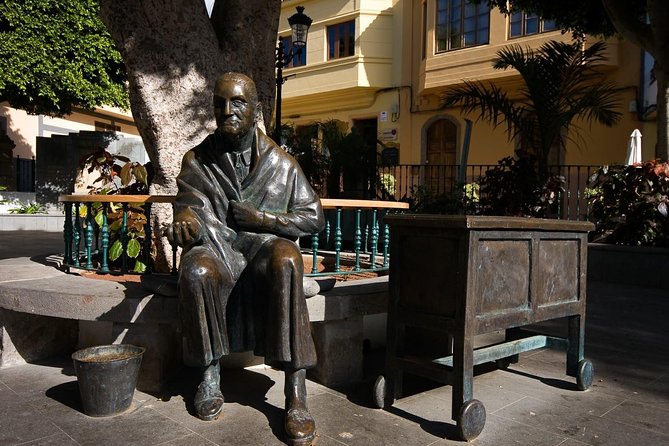
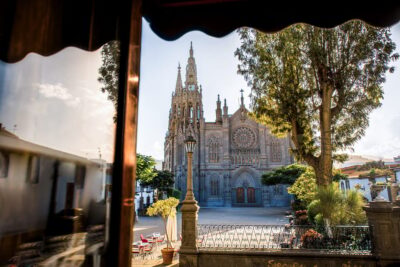
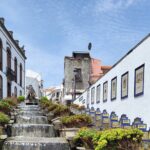
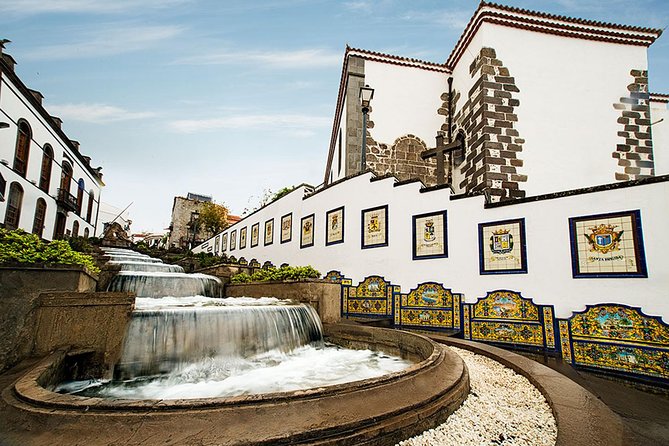
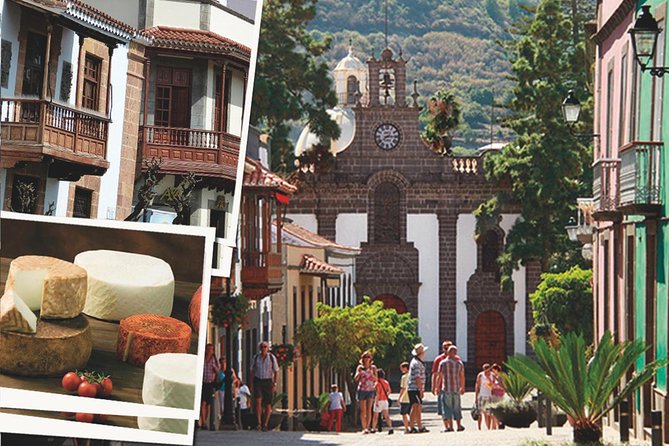
Teror is next, with about an hour to explore. The centerpiece is the Basilica of Nuestra Sra, Del Pino, patron saint of the Canary Islands deanery. The basilica is framed by stately homes and palaces built in a Canarian style, so even if you’re not inside for a long time, you’ll see the town’s traditional character.
Teror is a classic example of how Gran Canaria’s interior towns feel different from the coast. The streets and architecture help you understand the island as lived-in, not just photographed.
Potential drawback: this stop is short. If you’re the type who likes lingering in one village square, you might feel the clock.
Stop 4: Valleseco’s protected natural area and time to breathe
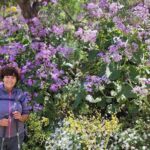
Then you get Valleseco, one of the more “nature-forward” stops. The key detail here is that about 80% of its territory is a Protected Natural Area, and the area is characterized by overflowing vegetation.
You’ll get around two hours, plus free time to walk through the streets and have lunch (lunch isn’t included in the base price). This is the stop where the day can reset. It’s easier to stretch your legs, enjoy cooler-feeling mountain air if the weather cooperates, and take in the town’s relationship to the surrounding protected area.
My practical tip: treat Valleseco like your buffer stop. Use the extra time to refuel—water, snacks, a bathroom break—so you’re not running on fumes for the rest of the day.
Stop 5: Roque Nublo (the “one stop you remember” crag)
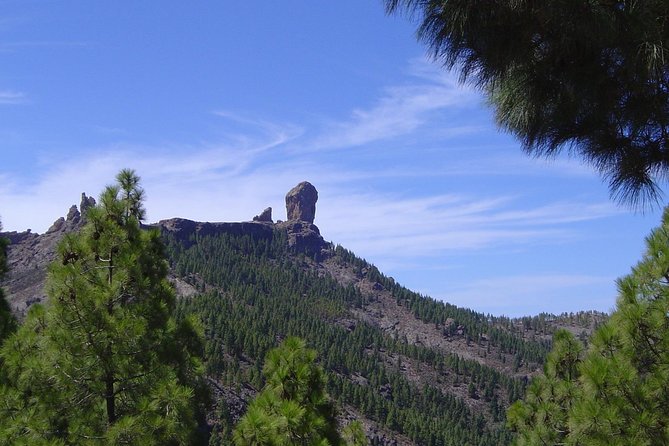
If you care about big volcanic shapes, this is the star. You’ll stop at Roque Nublo, described as one of the largest natural crags in the world. It rises about 80 meters above its base.
More than size, it’s significance. The area is tied to islanders’ cultural memory, including use as an ancient place of worship for aborigines. The surrounding area has been protected—first as a protected natural area in 1987, then a rural park seven years later.
This is the stop where the coach drops you near viewpoint opportunities, and you’ll likely feel that classic “pause and stare” moment. Even with short timing, Roque Nublo delivers drama.
What to watch: weather matters. If clouds roll in, you may lose the sweeping views that make this stop feel worth it. The tour requires good weather, and the operator may switch dates if conditions are bad.
Stop 6: Fataga aloe vera farm visit (learn it, but manage your expectations)
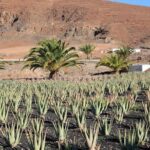
Finally, you reach Fataga area. The region is known as the Valley of the Thousand Palm Trees, but you won’t necessarily get a sightseeing stop there. Instead, you go to an aloe vera property.
This is the “learning” portion: you’ll hear about the uses and properties of aloe vera, often framed as a miracle plant and as a crop with growing importance on the Canary Islands.
Here’s the balanced part. Aloe is interesting, but the farm stop can land differently depending on what you expect. Some experiences on this kind of visit can feel like an infomercial or a store drop-off disguised as sightseeing. If you’re the type who likes science-y explanations with practical demonstrations, you may want to keep your expectations flexible.
How to make this work for you: go in curious, not convinced. If you want to buy products, this is where you’ll likely find them, but don’t count on a deep production tour unless that’s what’s actually being shown during your session.
Lunch reality: not included, but there’s usually a set-menu option
Lunch is not included in the tour price. You’ll have time at Valleseco and the day includes a lunch opportunity where a local restaurant offers a set menu.
In the field reports I’ve seen attached to this tour style, lunch has been described as a 3-course meal with a drink for around €12–€13, but it’s tied to one restaurant stop. That’s a good deal if you’re fine with that option. If you prefer flexibility, bring a sandwich or plan to snack between stops.
My practical take: budget for lunch even if you skip it from the start. The day is long enough that you’ll want real food at some point.
Transportation comfort: windy roads, big vehicles, and how that affects your photos
This route goes through mountainous interior roads, and you should expect tight curves and stop-and-go driving. This is exactly the sort of day where a careful driver matters. Names like Alfredo and Manolo come up in connection with steady mountain driving and good navigation.
On the vehicle side, some departures are described as coach-based, and that affects viewpoints:
- Great views happen when the bus positions you well.
- When you’re stuck in a line of traffic, you’ll mostly see scenery through glass rather than from pull-offs.
Still, the upside of a coach is you don’t have to concentrate on roads. You can store your energy for the viewpoints.
Who this tour is best for
This is a strong choice if:
- you’re on Gran Canaria for a limited time and want a broad overview,
- you don’t want to drive in the interior,
- you like a guided story connecting multiple towns and natural sites,
- you’re okay with short stop windows in exchange for variety.
It’s less ideal if:
- you want long hikes or lots of unstructured time in fewer places,
- you dislike store-heavy stops,
- you’re easily overwhelmed by long sitting time on a coach.
Small booking tips that actually matter
A few planning moves will make this day smoother:
- Bring comfortable walking shoes. Even “free time” includes sidewalks, uneven ground, and viewpoint paths.
- Pack water and something small to snack on, since lunch isn’t included.
- Wear sun protection. The day can include open-air viewpoints where shade is limited.
- If aloe product shopping is not your thing, treat the aloe stop as a cultural pause, not a deep technical workshop.
- If the weather is iffy, remember the tour depends on good conditions for the nature stops.
Should you book this Gran Canaria full-day tour?
I’d book it if you want a high-coverage day: caves in Guayadeque, a classic town stop in Teror, the big crag at Roque Nublo, plus the aloe farm finale. It’s also a smart choice when you’re staying in the south and want pickup without building your own route.
I wouldn’t book it if you’re chasing slow travel, long museum time, or a guaranteed hands-on aloe vera production lesson. The format is built for seeing lots of places, not lingering.
If you can handle a packed schedule and you’re okay budgeting for lunch, this tour is a practical way to understand Gran Canaria beyond the beach.
FAQ
What time does the tour start?
The tour starts at 9:00 am, and the pickup transfer usually takes place roughly between 09:00 and 10:30 for hotels in the south of Gran Canaria.
Is pickup included, and where does it run from?
Yes. Pickup and drop-off in southern Gran Canaria are included, either from your hotel or the nearest pickup point.
How long is the tour?
The duration is listed as about 7 hours, but the full day can feel longer once you include pickup and travel time.
Is lunch included in the price?
No. Lunch is not included. You’ll have free time for lunch during the day, and there is a lunch option available at a restaurant stop.
What’s included besides transport?
Included items are the guide, transfer, the aloe vera farm visit, and insurance.
How big is the group?
This tour has a maximum of 40 travelers.
What if the weather is bad?
The experience requires good weather. If it’s canceled due to poor weather, you’ll be offered a different date or a full refund.