REVIEW · GRAN CANARIA
Premium Surf Course in Gran Canaria
Book on Viator →Operated by Pro Surfing Company · Bookable on Viator
One good morning and you’re standing up. This beginner surf course in Playa del Inglés is built around a simple plan: safety first, then real wave time with a certified instructor and a small group. I like that they choose the best beach for your level based on conditions, not just the closest spot on a map. I also like the care in the teaching, including a sand-based briefing that helps you understand what to do before you hit the water. One drawback to plan around: you should have at least moderate fitness, and it is not recommended for kids under 8.
You’ll start at 8:30 am at the Eurocenter surf shop in Playa del Inglés, then get driven about 10 minutes to the day’s surf beach. Expect a short theory lesson on sand, then around 2 hours in the water with constant coaching. The sessions are in English, and the vibe is friendly but serious about safety, including clear guidance that’s easy to follow even if it’s your first time.
Because the beach can change day to day, it’s smart to be flexible and pack like you’re going to the ocean. Bring a towel, sunscreen, and dry clothes so you’re comfortable after the session. If you’re hoping for private instruction or guaranteed surf spots, you may want to look at other options.
In This Review
- Key Highlights You’ll Actually Feel
- Surf in Gran Canaria Without the First-Timer Friction
- Morning Plan: Eurocenter at 8:30, Then the Right Beach
- Safety Briefing and Beach Theory That Helps You Stand Up
- Two Hours in the Water: Coaching That Adjusts to You
- Where You’ll Surf: Playa de San Agustín and More
- Gear, Insurance, and Snacks: The Small Stuff That Makes It Easy
- Price and Value: What $77.40 Gets You
- Who This Is Best For (And Who Might Feel Mismatched)
- Quick Reality Check: Photos and Extra Costs
- Should You Book This Surf Course?
- FAQ
- Where do I meet for the surf course?
- What time does the experience start and end?
- How long is the total experience?
- Do I need any surfing experience?
- Is pickup and drop-off included?
- What beaches might we go to?
- What’s included in the price?
- What should I bring?
- Is the course offered in English?
- Can I cancel for a full refund?
- Is it suitable for children?
Key Highlights You’ll Actually Feel

- Small groups (max 6) mean more attention while you learn
- Hotel pickup and drop-off in south Gran Canaria keeps the day stress-free
- Two hours of water time after a beach safety briefing
- Beginner-friendly coaching, including split sub-groups by experience level
- Certified instructors + insurance coverage for peace of mind
- Quality surf gear included: wetsuit and board for the day
Surf in Gran Canaria Without the First-Timer Friction
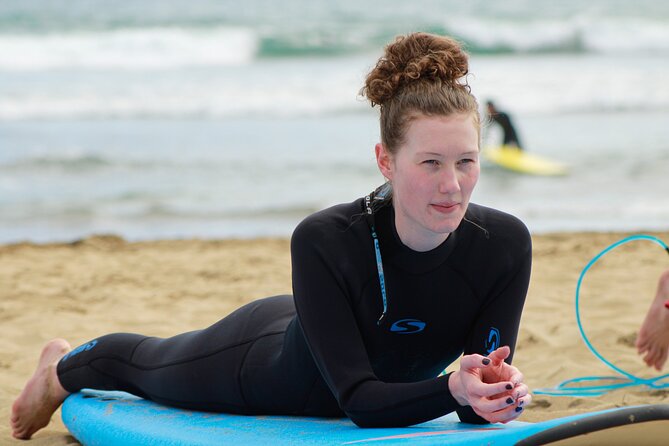
Gran Canaria is a great place to learn because the coastline offers options. When waves and conditions change, this course adjusts by heading to the most suitable beach for beginner surfing. That matters for first timers, because the goal isn’t just to go in the water. The goal is to practice safely where you can actually improve.
This is a full coaching session, not a quick rental. You’ll get a structured start on land, then a long block in the water where the instructor can correct your stance, timing, and paddling. The result is that the day feels like progress, not random flailing.
Also, the small-group setup is a big deal. With fewer people, you spend less time waiting and more time getting feedback that you can use immediately.
You can also read our reviews of more tours and experiences in Gran Canaria.


Morning Plan: Eurocenter at 8:30, Then the Right Beach
Your day starts at 8:30 am at Surf Gran Canaria / Pro Surfing Company / Surf SchoolGran Canaria, inside the Centro Comercial Eurocenter (Av. de Moya, 6), local 80 in Maspalomas. From there, you’ll get your wetsuit and surf equipment before heading out.
Then you ride together in a shuttle for about 10 minutes to the best beach for the day. Depending on surf conditions, you might go to places like Playa del Inglés, San Agustín, Faro de Maspalomas, or sometimes the east coast. The point is simple: beginner waves aren’t always in the same location at the same time, so the program aims to match you with what works that morning.
You’re back at the shop around 12:30 pm, which fits the total time of about 3 hours 45 minutes. That’s a nice chunk of the morning to call done, leaving the rest of your day open for food, beaches, and wandering.
Safety Briefing and Beach Theory That Helps You Stand Up
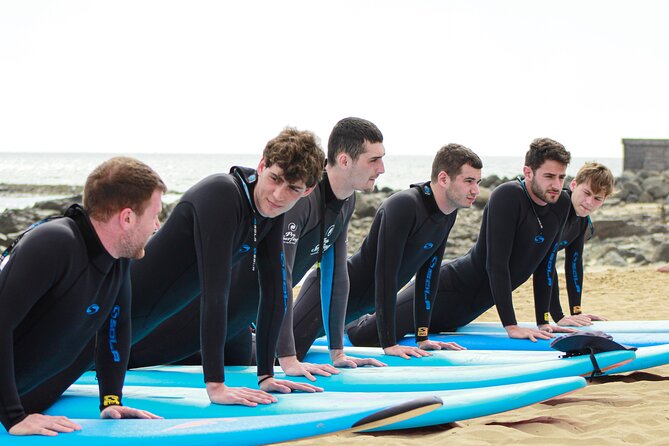
Before you enter the water, the instructor leads a safety briefing and a short theory lesson right on the sand. This isn’t just rules and warnings. It’s about teaching you the basics in a way that makes your first sessions safer and more effective.
What I like here is that you’re not guessing. The sand lesson gives you a mental checklist for what to do next: how to handle your board, how to move around near the water, and how to approach the waves with more control. Then you get coaching in the water to connect the lesson to reality.
One detail that shows they take beginners seriously: the group can be split into sub-groups by experience level. That means if you’re a true beginner, you should get a more thorough briefing before you’re thrown into the fun part.
Two Hours in the Water: Coaching That Adjusts to You
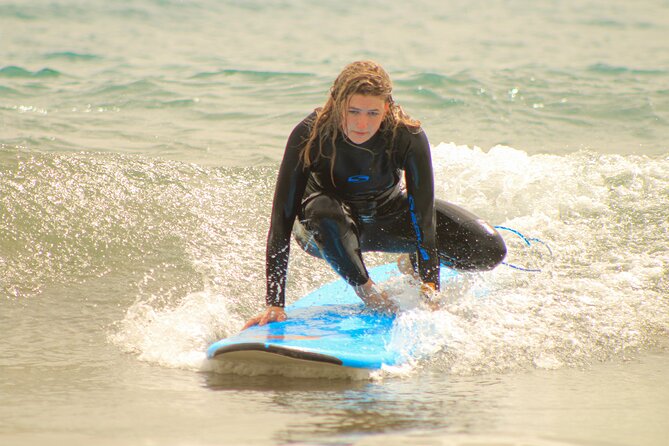
Once you’re in, the day shifts into practice mode. You’ll have about 2 hours surfing with constant instructor support. This is where the course earns its name as a proper surf school.
The teaching approach focuses on adjusting to each person’s level. In practice, that tends to look like the instructor watching your technique and giving specific tips that help immediately—things like where to look, how to position your body, and how to time your start.
You can also expect a mix of humor and seriousness. That balance matters. Learning to surf is physical and a little intimidating at first, and humor helps you relax while safety reminders keep things grounded.
And since this is a maximum of 6 travelers, you’re not competing for attention. Small-group instruction helps you get repeated feedback instead of a one-time lecture.
Where You’ll Surf: Playa de San Agustín and More
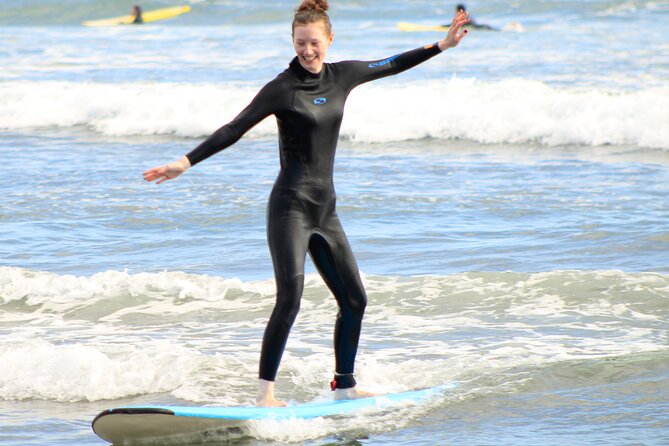
The course can operate from different beaches depending on conditions. One listed common stop is Playa de San Agustín, and it makes sense for beginners because it’s known for being a practical option for learning days.
The bigger point is that the operator chooses the beach based on wave conditions, not just convenience. In other words, the day is planned to improve your chances of catching surf that matches a beginner’s needs.
If you’re the type who hates surprises, this is the trade-off: you might not know your exact beach until the morning. But that flexibility is exactly what helps the instruction stay beginner-friendly.



Gear, Insurance, and Snacks: The Small Stuff That Makes It Easy
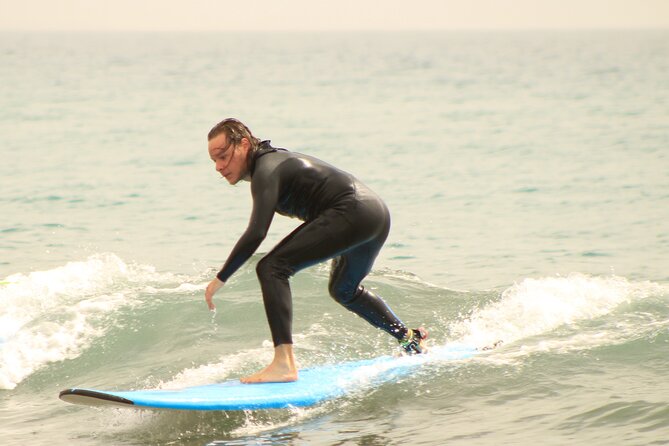
Everything you need is included. You’ll get full surf equipment, including a surfboard and wetsuit. That removes two common pain points: having to rent gear on your own and showing up underprepared.
There’s also insurance coverage, which is a big comfort factor when you’re learning something physical and ocean-based. It’s one less thing to worry about while you focus on balance and wave timing.
For food and hydration, you’ll have water and snacks. Some packages may include a snack like an energy bar, but the consistent theme is that you’re not sent off hungry. You’ll also get a short break after the water session before you head back.
What to bring is straightforward:
- Towel
- Sunscreen
- Dry clothes for after
- A willingness to get a little sandy
Bring your patience too. The first attempts can be wobbly. That’s normal. The coaching is there to shorten the learning curve.
Price and Value: What $77.40 Gets You
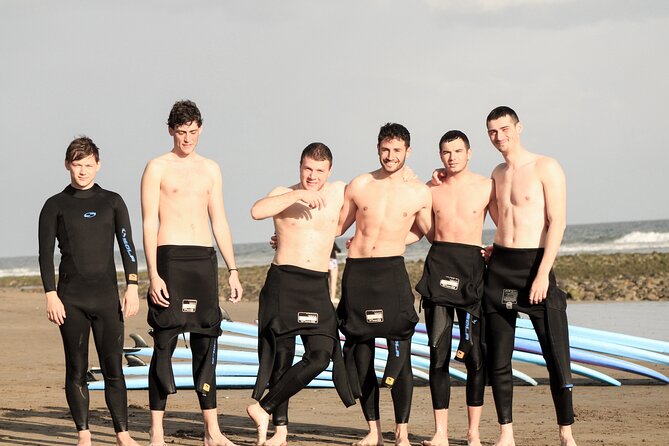
At $77.40 per person for about 3 hours 45 minutes, this course sits in the reasonable range for guided surf instruction in a tourist area. The value comes from what’s included, not just the time.
You’re getting:
- Certified surf instruction and safety guidance
- A structured lesson on sand
- Around 2 hours in the water
- Equipment rental (board + wetsuit)
- Insurance coverage
- Hotel pickup and drop-off in the south area
For many people, the pickup is the hidden win. If you’ve already been dealing with buses and transfers in Gran Canaria, having a team collect you and bring you back is a big quality-of-life upgrade.
The course is also a limited group setup, which usually means better coaching than big, chaotic sessions. If you’re a beginner, that’s where the extra cost tends to pay off.
One note on timing: it’s often booked about 11 days in advance on average. If you’re traveling in peak weeks, booking earlier helps you lock in the start time you want.
Who This Is Best For (And Who Might Feel Mismatched)
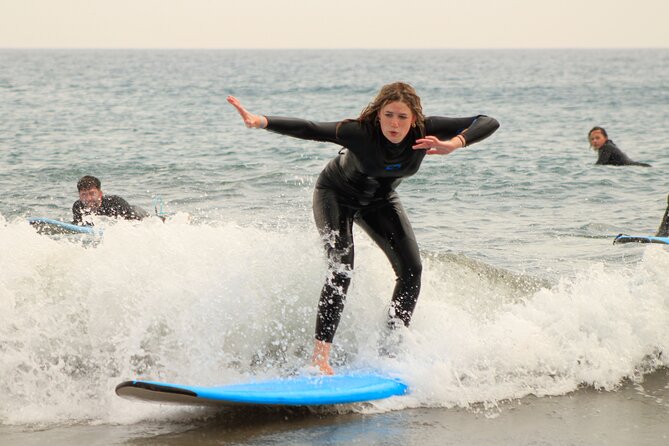
This is designed for first timers. It’s clearly positioned as no experience necessary, and the sand briefing plus beginner coaching fits that goal. If you want a relaxed but guided introduction to surfing, this is a strong match.
It’s also a good choice if you like the idea of small groups and learning at a pace that suits your skill level. The instructors can split the group by experience, so you’re less likely to feel left behind.
It may not be the best fit if:
- You’re traveling with kids under 8
- You expect gentle sightseeing with minimal physical effort
You’ll be using your legs and core on a board, so moderate fitness helps.
If you have a shoulder or back issue, you might want to think carefully before booking, since paddling and balance are part of the deal.
Quick Reality Check: Photos and Extra Costs
Souvenir photos are available to purchase. That’s common for these kinds of courses, and it’s worth knowing up front so you’re not surprised at the end if you want extra memories.
Also, you might get great action shots during the session. In one example from an instructor’s work, a guest mentioned a Nikon D7000 used for additional images. That’s not guaranteed from the course details, but it hints at the kind of attention to documentation you may see.
Should You Book This Surf Course?
If you’re new to surfing and you want a day that mixes safety, coaching, and actual water time, I’d book it. The combination of small group size, a structured sand lesson, and about 2 hours in the water is exactly what beginners need to start improving fast.
You’ll enjoy this most if you’re staying in south Gran Canaria and want the convenience of pickup and drop-off. It’s also a solid pick if you speak English and want a course that clearly explains what to do before you try it.
Skip it only if you’re looking for a guaranteed beach location, private lessons, or a very low-effort activity. Ocean days depend on conditions, and this program works around that reality.
FAQ
Where do I meet for the surf course?
You meet at Surf Gran Canaria / Pro Surfing Company / Surf SchoolGran Canaria at Av. de Moya, 6, Centro Comercial Eurocenter, local 80, 35100 Maspalomas, Las Palmas, Spain.
What time does the experience start and end?
It starts at 8:30 am and typically ends back at the meeting point around 12:30 pm.
How long is the total experience?
The duration is about 3 hours 45 minutes (approx.).
Do I need any surfing experience?
No experience is required. It’s suitable for first-time surfers.
Is pickup and drop-off included?
Yes, pickup and drop-off are included for the south Gran Canaria area.
What beaches might we go to?
Depending on wave conditions, you could surf at Playa del Inglés, San Agustín, Faro de Maspalomas, or sometimes the east coast.
What’s included in the price?
Equipment (surfboard and wetsuit), a certified surf instructor, a safety tutorial and beach theory lesson, about 2 hours in the water, insurance coverage, and water and snacks.
What should I bring?
Bring a towel, sunscreen, and dry clothes.
Is the course offered in English?
Yes, it’s offered in English.
Can I cancel for a full refund?
You can cancel for a full refund if you cancel at least 24 hours before the experience’s start time.
Is it suitable for children?
It is not recommended for kids under 8 years old.