REVIEW · GRAN CANARIA
PADI Rescue Diver Course in Gran Canaria
Book on Viator →Operated by Blue Water Diving · Bookable on Viator
Rescue skills matter long after the course. This PADI Rescue Diver training in Gran Canaria turns emergency response into real practice over two focused days. I especially like the hands-on scenario work at Amadores and the professional coaching from instructors like Chris and Kate. One thing to factor in: food and drinks aren’t included, so you’ll want to plan around that.
I also like how this runs with a tight group size (max 6 travelers) and starts at a clear meeting point near public transport, so logistics feel low-stress. The training is aimed at divers who already hold PADI Open Water, so you’ll spend less time on basics and more time on calm, correct decisions when things go sideways.
In This Review
- Key Points at a Glance
- PADI Rescue Diver in Gran Canaria: Amadores and Puerto Rico basics
- What the 2-day plan actually looks like
- Day 1: skills in Amadores bay or an onsite pool
- Day 2: two rescue scenarios at Amadores Beach
- Self-rescue and unresponsive diver response: why this course is worth your time
- The instructor team matters: Chris, Kate, and a safety-first vibe
- Price and value: is $397.58 a smart deal?
- Practical logistics: start time, meeting point, transport, and the “small group” effect
- Health questionnaire, flying timing, and who should reconsider
- Should you book this PADI Rescue Diver course in Gran Canaria?
- FAQ
- FAQ
- Do I need PADI Open Water certification to join?
- How long is the PADI Rescue Diver course?
- What time does the course start?
- Where does the experience begin and end?
- Is hotel pickup included?
- What’s included in the price?
- What’s not included?
- Is there a health check or flying restriction?
Key Points at a Glance
- Two-day structure with theory plus practical rescue skills
- Day 1 in the Amadores bay or a pool for technique and control
- Day 2 at Amadores Beach for two rescue scenarios
- Max 6 travelers, which helps you get individual attention
- Hotel pickup/drop-off for selected hotels (not every property)
- Insurance and required PADI materials/certification fees included
PADI Rescue Diver in Gran Canaria: Amadores and Puerto Rico basics
Gran Canaria has a way of making scuba training feel like a vacation, not a chore. This course is based out of the Puerto Rico area (Las Palmas), with your main training area centered around Amadores—starting with theory and skills, then moving into proper scenario drills.
Your official start time is 9:00 am, and the meeting point is the Euronet ATM Manixa, at C. Doreste y Molina, 18, 35130 Puerto Rico, Las Palmas, Spain. The activity ends back at the same meeting point, which keeps the day simple when you’re switching from training back to exploring.
If you’re choosing this because you want good value, I like that the course includes the practical stuff that often costs extra elsewhere: required PADI materials, certification fees, and insurance. That means you’re not doing surprise math mid-trip.
You can also read our reviews of more tours and experiences in Gran Canaria.

What the 2-day plan actually looks like
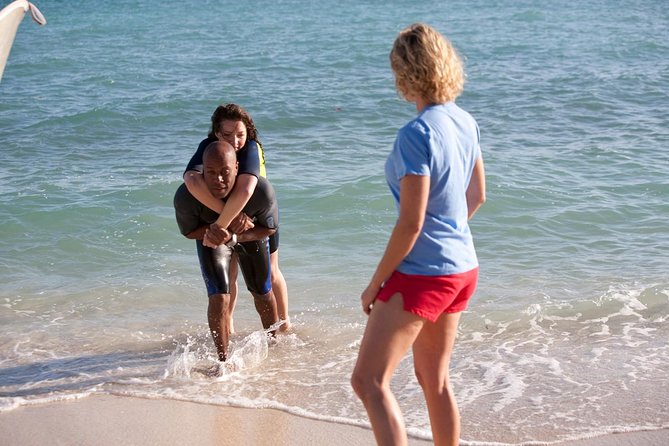
This is a 2-day PADI Rescue Diver course designed for divers who already have their PADI Open Water certification. Over the two days, you’ll work through self-rescue and emergency response techniques, then apply them in realistic scenario practice.
Day 1: skills in Amadores bay or an onsite pool
Day 1 is where you build the foundation. The course team will show you the skills—either in the local bay of Amadores or in an onsite pool, depending on conditions and setup.
That split matters. A pool day usually means more controlled practice (great if you want to get movements and timing right). A bay day can add real-world factors like current and natural conditions, helping you adapt faster. Either way, the goal is the same: you learn and repeat the steps until they feel automatic.
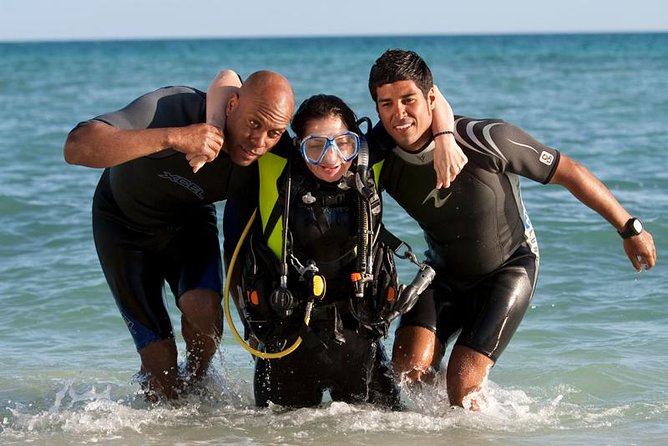
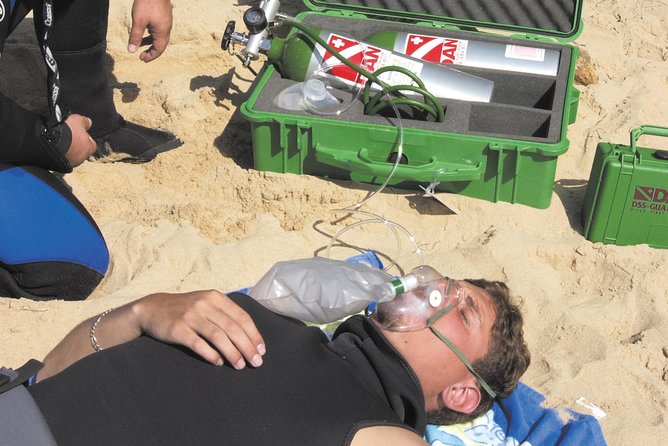
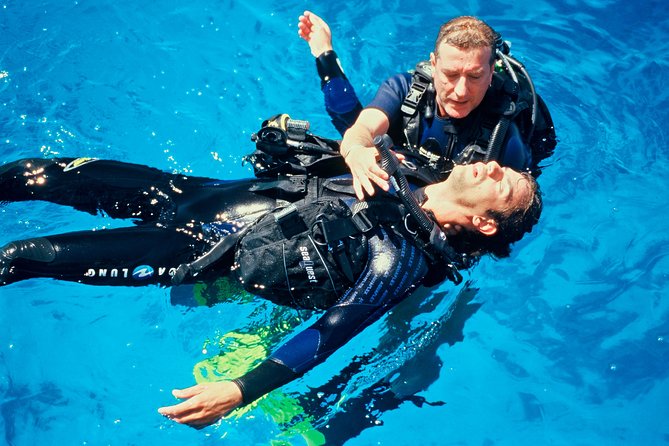
You’ll cover self-rescue skills and how to deal with an unresponsive/unconscious diver, both in the water and on the surface. Expect a mix of explanation, drills, and practice so you’re not just memorizing procedures.
Day 2: two rescue scenarios at Amadores Beach
Day 2 is more “showtime,” but still in a safe, instructor-led environment. You head to Amadores Beach and complete two rescue scenarios.
These scenarios are the part most people remember because they force you to think under pressure: you have to recognize the problem, manage your actions, and follow the correct response steps. The training is structured so you’re not thrown into chaos—you’re guided through realistic practice designed to build confidence.
If you’ve ever worried about freezing during an emergency, this is exactly the antidote. You train for the moment you hope never happens, while staying within a controlled learning setting.
Self-rescue and unresponsive diver response: why this course is worth your time
Open Water is a strong start, but rescue training is where your mindset changes. Instead of only focusing on enjoying your own comfort underwater, you learn how to respond when someone else needs help.
Here’s what the course explicitly prepares you to handle:
- Self-rescue techniques (so you can recover and stabilize when something goes wrong for you)
- Response to an unresponsive/unconscious diver both underwater and on the surface
- Emergency procedures taught through simulated rescue situations
What I like about this approach is that it’s practical. Emergency response isn’t about heroics—it’s about correct steps, staying calm, and using the right procedure at the right time. You’ll spend your time on the decisions that reduce risk for both you and the person you’re assisting.
And because this is taught over two days, you get continuity. You’re not learning the skills one afternoon and then forgetting them before scenario day. You build, practice, then apply.


The instructor team matters: Chris, Kate, and a safety-first vibe
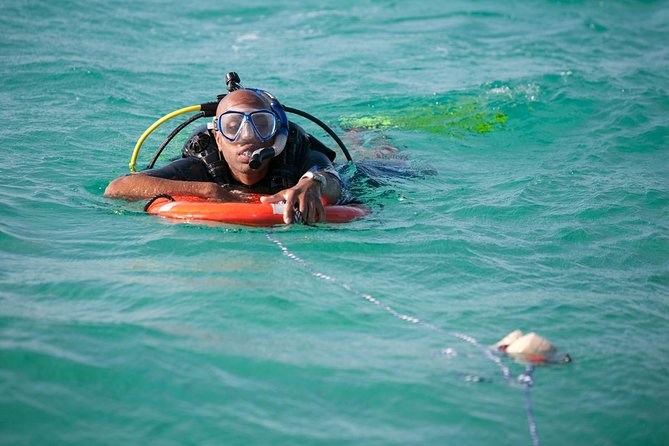
A rescue course lives or dies on instruction quality. The good news: the teaching team at this center has a strong reputation for clear communication and professional, friendly training.
In past experiences with the instructor team, Chris has been specifically praised for teaching rescue requirements in a professional yet approachable way. Kate has also been highlighted for making logistics easy and clear, plus offering a caring, customer-focused presence before you even hit the water.
That combination matters for a course like this. You need both:
- technical clarity so you understand what you’re doing and why
- a supportive atmosphere so you don’t feel embarrassed when you need repetition
From what’s shared about their training, the atmosphere is not just “rules and drills.” It’s safe and fun, with instructors who explain things in a way you can apply immediately.
Price and value: is $397.58 a smart deal?
The price listed is $397.58 per person, and on the surface that can sound like a lot for a short course. In practice, it’s easier to judge when you look at what’s included.
This package includes:
- Professional guide
- Hotel pickup and drop-off (selected hotels only)
- Required PADI materials and certification fees
- Insurance
What’s not included:
- Food and drinks
So your main variable cost is meals. Everything else that typically adds up—certification fees, materials, and insurance—is already folded into the price. For a two-day course, that’s a strong value structure.
Also, the course size is limited to 6 travelers, which usually means better attention and smoother scenario work. You’re paying partly for that personal coaching time, not just for the location.
If you’re comparing alternatives, I’d treat it like this: you’re buying time with qualified instructors, plus the documentation and insurance that come with proper certification steps—not just a couple of training hours.
Practical logistics: start time, meeting point, transport, and the “small group” effect
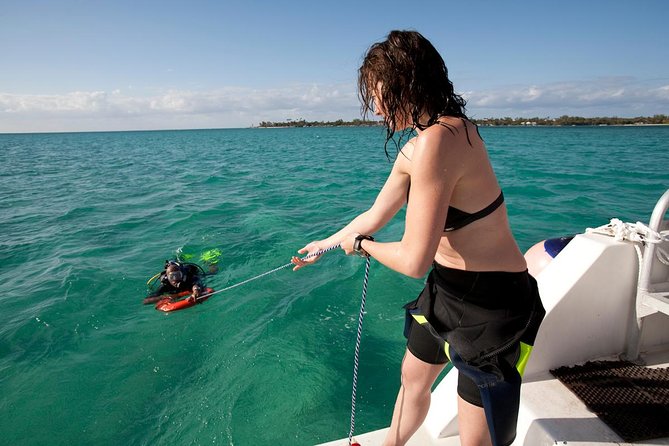
Here’s the practical side you’ll care about when your schedule is tight.
- Start time: 9:00 am
- Meeting point: Euronet ATM Manixa, C. Doreste y Molina, 18, 35130 Puerto Rico
- End: back at the meeting point
- Group size: max 6 travelers
- Ticket type: mobile ticket
- Transport: near public transportation
That “back to the meeting point” detail is underrated. After two days of scenario work, you don’t want extra transfers or complicated routing. This setup keeps the day-to-day friction low, so you can actually enjoy Gran Canaria between training blocks.
The pickup and drop-off is also helpful, but it’s not universal. Pickup is available for selected hotels only, so if your hotel isn’t listed, you’ll likely meet at the scheduled point instead.
Health questionnaire, flying timing, and who should reconsider
This course requires responsible medical screening, and it’s spelled out clearly.
A few rules you should take seriously before booking:
- You must complete a health questionnaire prior to diving.
- If you have pre-existing medical conditions (examples given include asthma and heart conditions), you may not be cleared to participate—talk to your doctor.
- Diving within 48 hours of flying is not recommended.
Also, the activity requests a moderate physical fitness level. That doesn’t mean “train like an athlete,” but you should be ready for active participation during skills and scenario practice.
Finally, you must bring evidence of your certification. The course requires proof for anyone wanting to participate in a certified session.
If any of these apply to you, I’d handle it early. The course is too important to rush paperwork at the last minute.
Should you book this PADI Rescue Diver course in Gran Canaria?
Book it if:
- you already have PADI Open Water and want the next step that improves real safety skills
- you want scenario practice (two rescue scenarios on Day 2) rather than just classroom talk
- you like a small group format where you get focused help
- you appreciate value that includes materials, certification fees, and insurance
Think twice or ask questions first if:
- you rely on full board meals included in your activity (food and drinks are not included)
- your hotel isn’t one of the selected pickup locations
- you’re within 48 hours of flying, or you’re unsure about medical clearance
- you don’t have proof of your dive certification
FAQ
FAQ
Do I need PADI Open Water certification to join?
Yes. You need to already be certified with PADI Open Water, and you’ll be asked for evidence of dive certification.
How long is the PADI Rescue Diver course?
It runs for about 2 days.
What time does the course start?
It starts at 9:00 am.
Where does the experience begin and end?
It begins at Euronet ATM Manixa, C. Doreste y Molina, 18, 35130 Puerto Rico and ends back at the same meeting point.
Is hotel pickup included?
Hotel pickup and drop-off is included for selected hotels only.
What’s included in the price?
Included items are a professional guide, hotel pickup/drop-off (selected hotels), required PADI materials and certification fees, and insurance.
What’s not included?
Food and drinks are not included.
Is there a health check or flying restriction?
Yes. You must complete a health questionnaire. Diving within 48 hours of flying is not recommended, and some medical conditions may prevent you from diving. You should consult your doctor if you have concerns.