REVIEW · GRAN CANARIA
Gran Canaria: Cliff Climbing Via Ferrata Trip by Maspalomas
Book on GetYourGuide →Operated by Yukan Outdoor Gran Canaria · Bookable on GetYourGuide
If you want adventure with structure, this via ferrata trip nails it. You’ll learn on a marked iron-step route with a safety line, then get rewarded with cave moments, a 60-meter suspension bridge, and an adrenaline swing finish.
I especially like how guided it feels from the start. The setup includes the full safety kit (harness, helmet, ferrata gear), and the walk-in through the valley sets the stage with that western-movie feel people rave about.
One thing to weigh: this is about heights and concentration. If you have vertigo or a strong fear of heights, the bridge and exposure can be a deal-breaker.
In This Review
- Key highlights at a glance
- Getting In Gear Near Bahía Feliz
- The 30-Minute Walk Through the Valley (Yes, It Looks Cinematic)
- Via Ferrata Basics: You Don’t Need Prior Climbing
- What the safety system feels like in practice
- The Climb Itself: Iron Steps, Cave Moments, and Big Exposure
- Cross the 60-Meter Suspension Bridge (The Mental Checkpoint)
- The Highest Swing Finish: Big Reward, Short Aftertaste
- What You’re Really Paying For (It’s Not Just the Climb)
- Who Should Book This Via Ferrata Trip
- What To Bring (So You Don’t Feel Underprepared)
- Should You Book? My Take
- FAQ
- How long is the Gran Canaria via ferrata trip?
- Where is the meeting point?
- Do I need prior climbing experience?
- What climbing gear is included?
- Is transportation included?
- What language are the instructors?
- How big is the group?
- What should I bring with me?
Key highlights at a glance
- Small group size (up to 10) for more personal attention on the climb
- Full safety kit included: harness, helmet, ferrata kit, plus insurance
- A western-movie-style valley walk before you even start climbing
- Medium-level via ferrata that’s learnable with guide instruction and rope help
- 60-meter suspension bridge and cave exploration for real variety
- Finish with the island’s highest swing for a big, memorable payoff
Getting In Gear Near Bahía Feliz
The trip starts in Bahía Feliz, at the ground parking area close to the bus stop (meeting point is pinned here). You’re not just “show up and go”—the first stage is about getting set up right.
Once you meet your guide, you’ll get your safety equipment: harness, helmet, and ferrata kit. You’ll also receive a torch, a snack, and you’ll get photos afterward. That matters because via ferrata isn’t the kind of activity where you want to improvise. They set you up so you can focus on learning your movement and staying calm.
Most groups go out in English and Spanish (so you should be fine if you speak either). And since it’s limited to 10 participants, you’re less likely to get stuck waiting while someone else figures out gear or knots. In the reviews, multiple guides are praised for being patient—people call out instructors like D, Ari, Manuel, Aron, and Di by name—so it’s worth mentally bookmarking that this is meant to be beginner-friendly with real support.
One practical note: transportation isn’t included. If you’re staying in Las Palmas or the south, plan your own ride to the meeting point so you don’t arrive rushed.
You can also read our reviews of more tours and experiences in Gran Canaria.

The 30-Minute Walk Through the Valley (Yes, It Looks Cinematic)
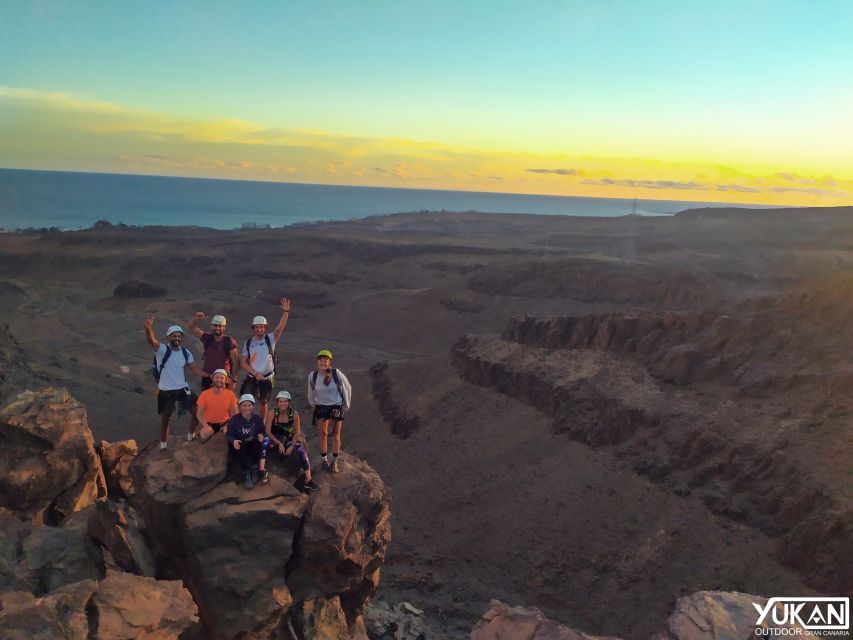
Before the climbing starts, you’ll walk for about 30 minutes across the valley to reach the via ferrata access point. This isn’t random hiking. It’s paced so you get comfortable, warm up a bit, and settle into the day.
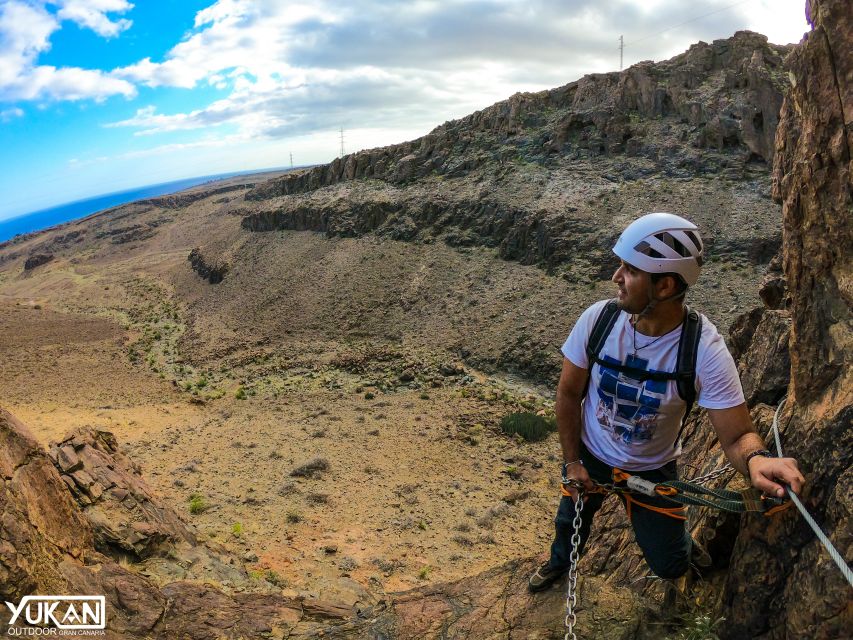
The terrain has that western-movie vibe people mention: wide open views, dusty tones, and a sense of being on a film set rather than just in the Canary Islands. It also helps you mentally transition from holiday mode into climb mode. By the time you reach the rock wall, you’re ready instead of startled.
Along the way, you can expect the guide to set expectations: how the system works, how you’ll move, and what will happen if you need help. Reviews mention the guides explain rules clearly and keep things calm when people feel nervous—so this walk is also where the fear factor gets managed early.
Consideration: wear proper shoes. You’ll want hiking-style grip, not flip-flops or lightweight slippers. Sun is also a factor, so sunscreen and water matter.
Via Ferrata Basics: You Don’t Need Prior Climbing
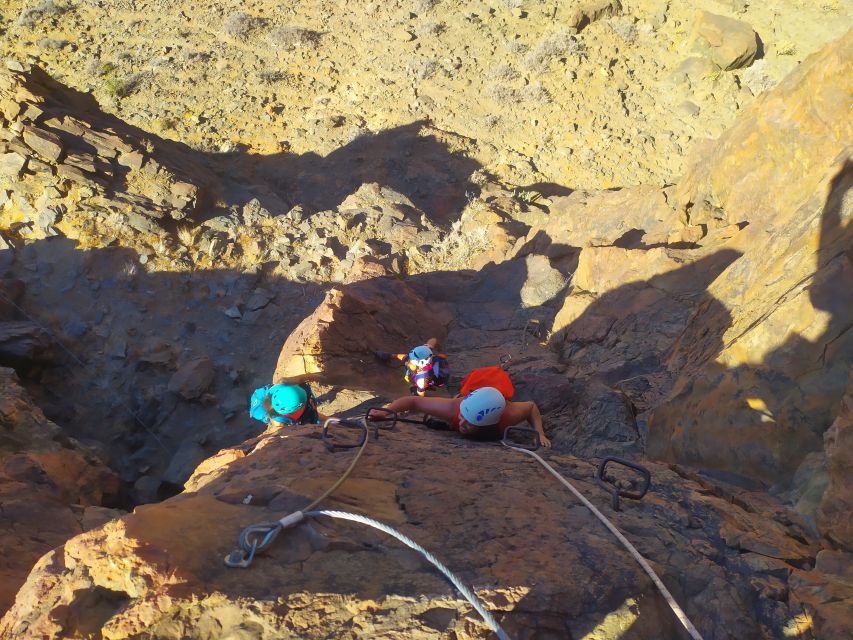
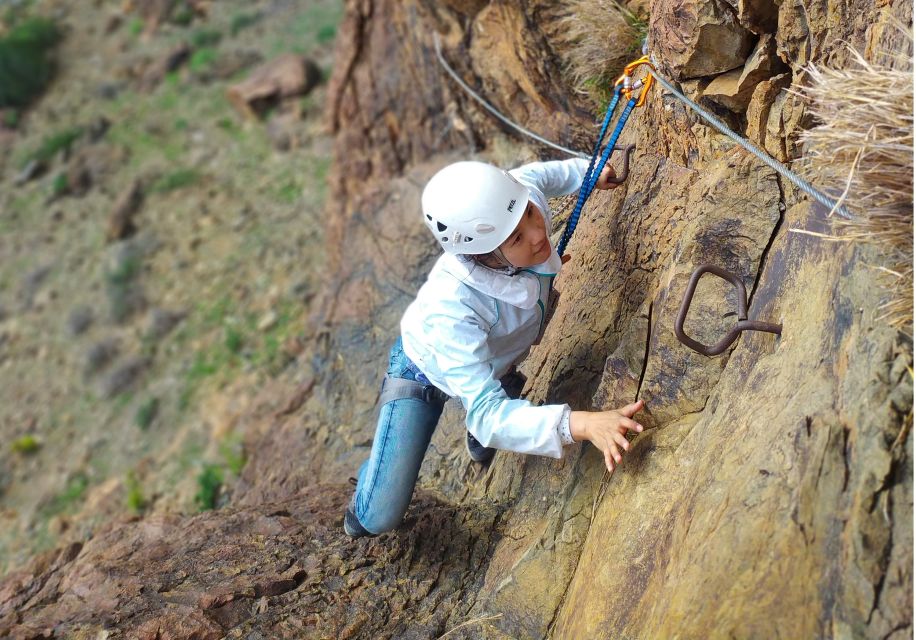
Via ferrata is the “gateway” to climbing that still feels like a real cliff adventure. Instead of free climbing, you move along a route with iron steps and a safe line, so you use your hands and feet—but the hardware is there to keep things controlled.
Before you start, your guide will teach technique. You’ll learn how to place your feet, how to handle the route when it gets awkward, and how the safety system connects so you stay clipped in. People in the reviews highlight that guides help you choose safer foot placements, and they encourage you when your confidence dips.
The route is described as medium-level, which usually means: challenging enough to feel earned, but structured enough that you aren’t guessing your way up. Reviews also add useful detail: there’s an option to make it harder or easier at points—by using installed rungs versus gripping more of the rock itself. If you’re struggling, some sections can be assisted with extra rope support.
What the safety system feels like in practice
This isn’t “free” climbing where one mistake can get scary fast. Several reviews emphasize that you’re always secured—people mention a double carabiner setup and being clipped in on the via ferrata lines. That reassurance changes everything if you’re new. You’re still responsible for your movement, but the feeling is: the system is working with you.
If you’re fitness-limited: you still need normal fitness for the effort and balance. Reviews also call out that arm strength helps, but it’s not an all-out gym workout. Think of it as steady movement plus concentration, with rests built in by the nature of the route and guide support.
The Climb Itself: Iron Steps, Cave Moments, and Big Exposure
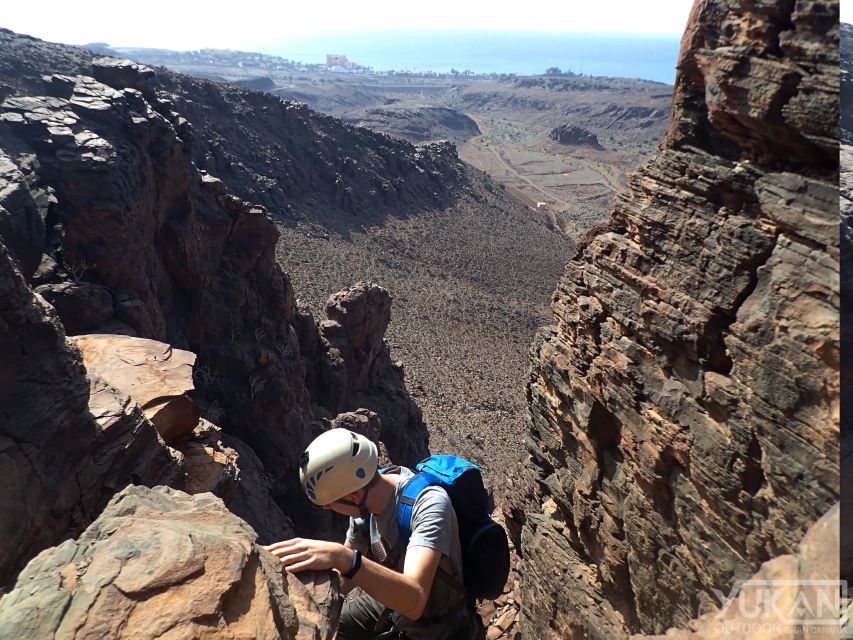
Once you reach the start, you’ll begin ascending the rock using the installed features. A common detail from the reviews: the via ferrata portion is roughly 65 meters. That’s long enough to feel like a full activity, not a quick photo stop.
During the climb, you’ll explore caves in the route. That’s one of the standout “variety” elements. It breaks up the monotony of purely vertical exposure and adds a different texture to the experience—darker, cooler spots where you still have to stay focused on where you’re stepping.
This is also where the height shows up. If you’re okay with exposure, the views and the sense of altitude are part of the magic. If you aren’t, this is where you’ll feel it most: the balance demands and the psychology of looking down can spike nerves fast.
And still, people repeatedly report feeling safe because guides stay close, help at key moves, and manage pacing. Names like Manuel, Ari, D, Aron, and Di appear in reviews with the same theme: patient guidance, calm instruction, and steady reassurance when someone worries.
Small but important tip: bring water you can actually carry comfortably. One review warns about the “heavy 2L in one backpack” mistake—less weight on your back helps you focus during stops and movements.


Cross the 60-Meter Suspension Bridge (The Mental Checkpoint)
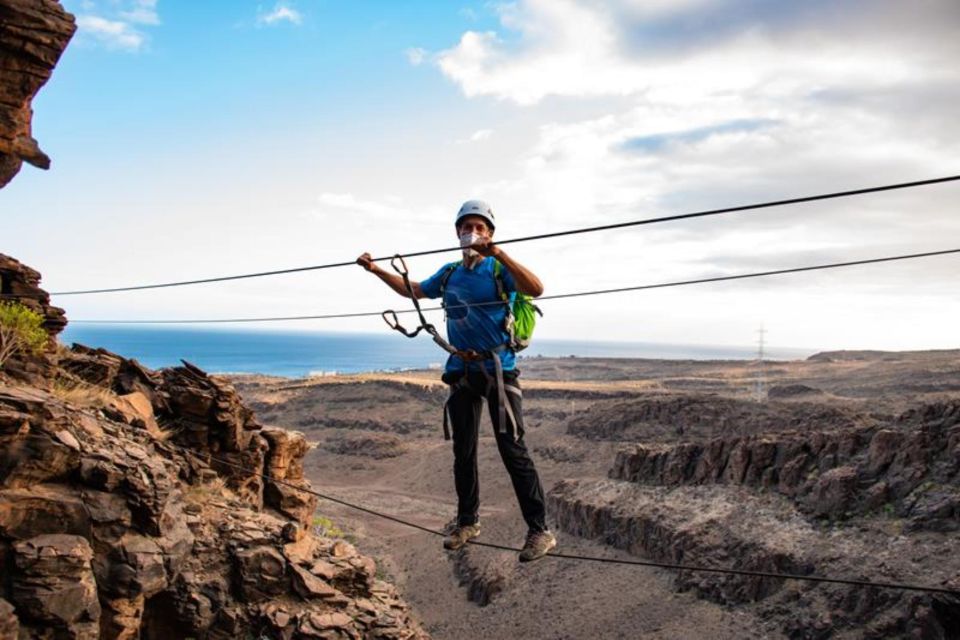
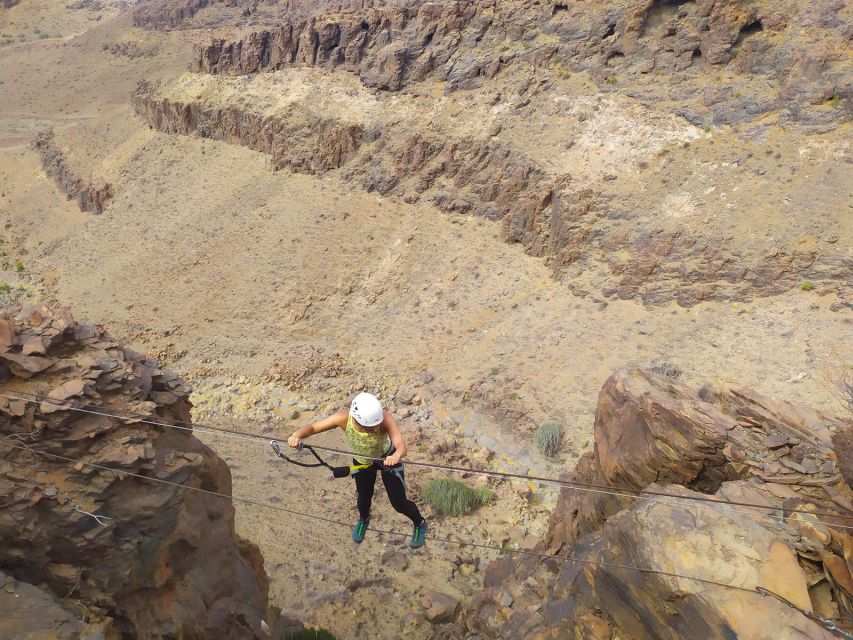
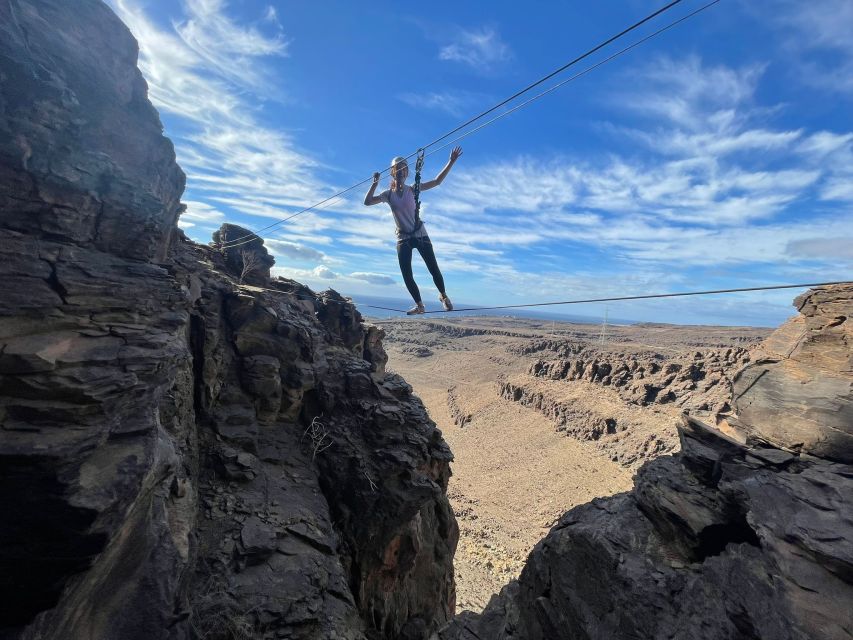
Halfway through the route, you’ll hit the suspension bridge at 60 meters high. This is one of the “whole trip in a single moment” pieces because it’s where the adventure becomes unmistakable.
Technically, it’s part of the climbing experience, not a scenic detour. Mentally, it’s a checkpoint. You’re secured, but you’re walking on a structure with that sway-and-exposure feeling. If you can handle this, the rest of the climb tends to feel more like progress than survival.
This bridge also contributes to why the trip feels more than just climbing. It blends climbing, walking, and controlled thrills in one compact 4-hour package.
If you’re worried about heights: don’t gamble. The activity isn’t suitable for people afraid of heights or with vertigo. Even if you can do the first sections, the bridge can be the moment you realize it’s too much.
The Highest Swing Finish: Big Reward, Short Aftertaste
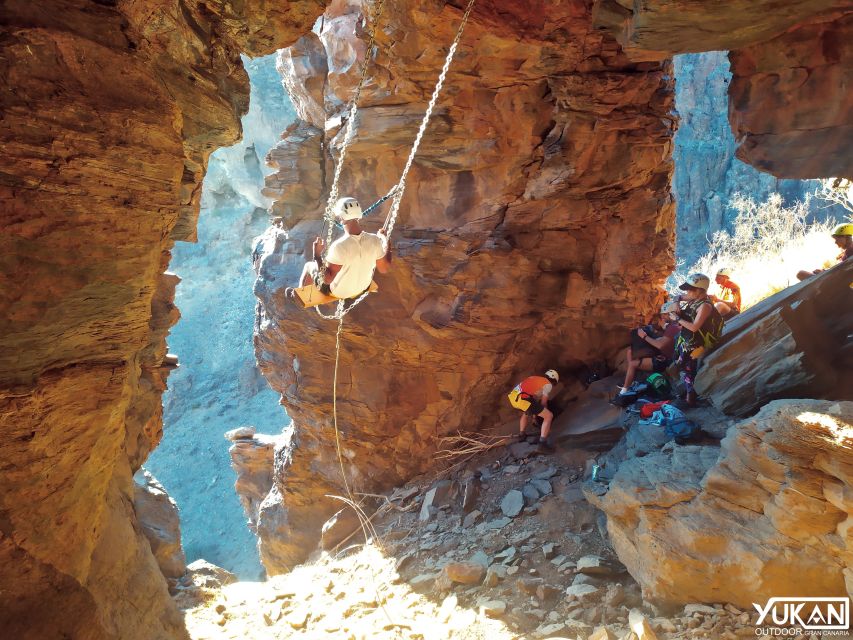
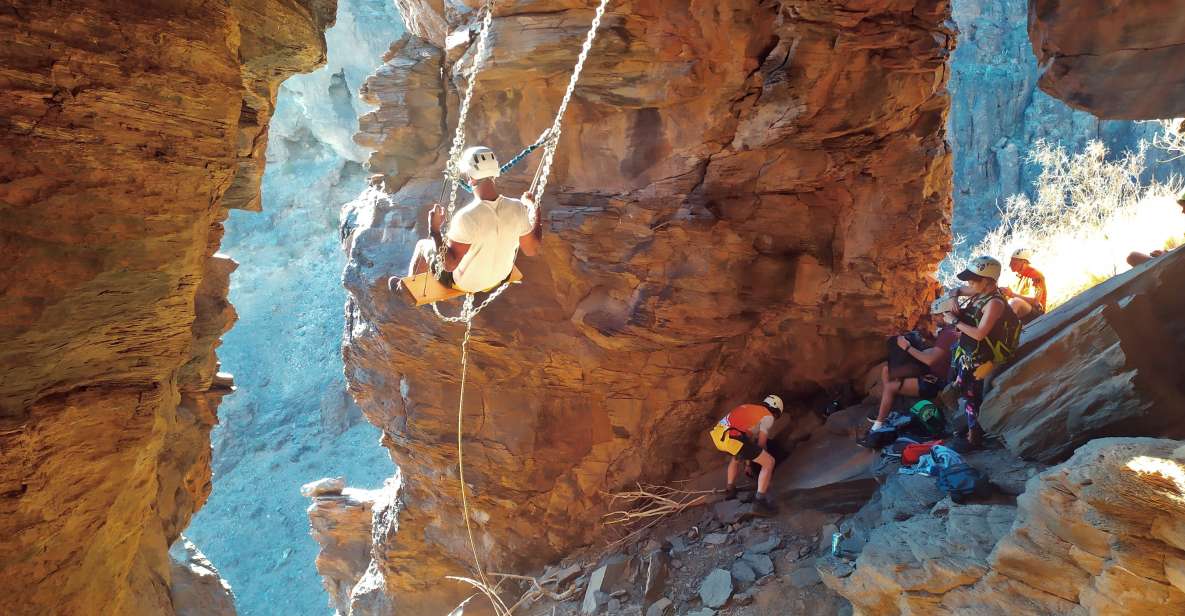
After the climb and the bridge, you’re not done. You’ll get to fly in the highest swing of Gran Canaria before heading back along a different trail.
This ending is smart. It gives you a final high note after you’ve already done the work. You’re also more likely to enjoy the swing because your body is warm, your brain is focused, and the day’s main challenge is already behind you.
Some reviews mention the experience is mentally and physically challenging but not overly exerting. That matches the overall structure: the hard part is concentration and nerves management, then the adrenaline payoff comes when you’ve earned it.
The walk back is via a different trail, which keeps the scenery from feeling repetitive. And with the group’s small size, you’re more likely to get a few laughs and photo moments on the descent.
What You’re Really Paying For (It’s Not Just the Climb)
At $82 per person, this isn’t priced like a random outdoor jaunt. It’s closer to paying for a guided safety system plus a full experience design.
Here’s where the value comes from:
- Gear included: harness, helmet, ferrata kit
- Insurance included: a big deal for activities with real risk exposure
- Guide included: instruction plus belaying support when needed
- Extras included: torch, snack, and pictures
- Small group size: up to 10 means less waiting and more attention
If you tried to do something like this solo, the costs and complexity jump quickly—especially gear, safety setup, and finding the right route. Here, the structure is doing the heavy lifting.
You also get a “learn-by-doing” format. Via ferrata is one of the best ways to experience the physical feeling of climbing without needing years of training.
Who Should Book This Via Ferrata Trip
This is ideal if you want:
- an active day with real cliff features, not just a casual hike
- beginner-friendly learning with patient guides
- an adrenaline finish (bridge plus swing)
It’s also a good pick if you’re the type who likes to be challenged but hates getting lost or unsure. The guides explain techniques before you start and are there throughout with rope support when sections get tricky.
On the other hand, it’s not for you if you’re:
- under 14
- afraid of heights or have vertigo
- pregnant
- dealing with back or heart problems
- over 60
- over 220 lbs / 100 kg
- under 4 ft 8 in / 145 cm
- managing altitude sickness or low fitness
Also, if you know you freeze when something feels intimidating, this may be risky. The activity is safe, but your comfort level with exposure is still part of the equation.
What To Bring (So You Don’t Feel Underprepared)
For this style of half-day adventure, pack like you’re doing a hike plus a climbing warm-up.
Bring:
- Hiking shoes with grip
- Sunscreen
- Water
- A daypack
That’s it. Keep the pack light. If you’re carrying a heavy bottle or too much water, it can make movement feel harder. One of the best “learned the hard way” tips in the reviews is to avoid overloading a single backpack with a heavy 2L.
If you’re unsure about footwear, reviews suggest you don’t strictly need climbing shoes. But if you want them, you can ask the guides ahead of time about renting.
Should You Book? My Take
If you’re excited by the combo of via ferrata learning + caves + a 60-meter suspension bridge + the island’s highest swing, this trip is a strong yes. It’s structured for people who want a real challenge without needing prior climbing experience, and the gear + insurance + guide support make it feel responsibly adventurous.
I’d only hesitate if heights and exposure already make you tense. And if your fitness is low, plan to be honest with yourself about effort and balance. But for most people with normal fitness who can handle heights, this is one of those activities that feels like a highlight, not a checkbox.
FAQ
How long is the Gran Canaria via ferrata trip?
The experience runs for about 4 hours.
Where is the meeting point?
Meet your guide at the ground parking area near the bus stop in Bahía Feliz. The exact location is provided in the activity details.
Do I need prior climbing experience?
No. The route is designed so you don’t need experience, but you do need normal fitness.
What climbing gear is included?
You’ll be provided with a harness, helmet, and a ferrata kit.
Is transportation included?
No, transportation isn’t included.
What language are the instructors?
Instructors offer English and Spanish.
How big is the group?
It’s a small group limited to 10 participants.
What should I bring with me?
Bring hiking shoes, sunscreen, water, and a daypack.