REVIEW · LAS PALMAS
Gran Canaria : Vía Ferrata “Amor & Odio” – Medium level
Book on GetYourGuide →Operated by UMIAGA experience · Bookable on GetYourGuide
Cables, sea air, and a route that tests you. Amor y Odio on Gran Canaria is a medium via ferrata built for people who want a real mountain challenge without jumping straight into the deep end. You’ll climb a protected line of fixed cables and safety gear, with ocean views that make your legs feel a bit less grumpy.
I really like two things here: first, the experience is run with safety-first equipment and qualified guiding. Second, the route lets you choose paths depending on your comfort level, so you can work at your pace instead of forcing a one-size-fits-all climb. One drawback to plan for: it’s not a casual walk, and it’s not for everyone—if you have vertigo, heart or respiratory issues, epilepsy, or mobility limits, this outing is specifically listed as not suitable.
In This Review
- Quick highlights
- Amor y Odio: what makes this Gran Canaria climb worth your time
- The 4-hour flow: approach, climb choices, Monkey Bridge, swing, and back
- Safety and gear: what’s provided, and how to take it seriously
- The guide experience: Aron’s mix of climbing coaching and local context
- What you learn on a via ferrata day (and why it sticks)
- Price and value: why $82 can make sense for this kind of day
- What to bring and wear: your day will feel easier with the right basics
- Who this fits best (and who should skip it)
- Getting there: where to meet so your day starts calm
- Should you book Amor y Odio on Gran Canaria?
- FAQ
- How difficult is the Amor y Odio via ferrata on Gran Canaria?
- How long is the activity?
- How long is the walk to the start of the ferrata?
- What are the main features on the route?
- What’s included in the $82 per person price?
- Do I need to bring climbing equipment?
- What should I wear and bring?
- Is it suitable for children?
- What languages do the instructors speak?
Quick highlights
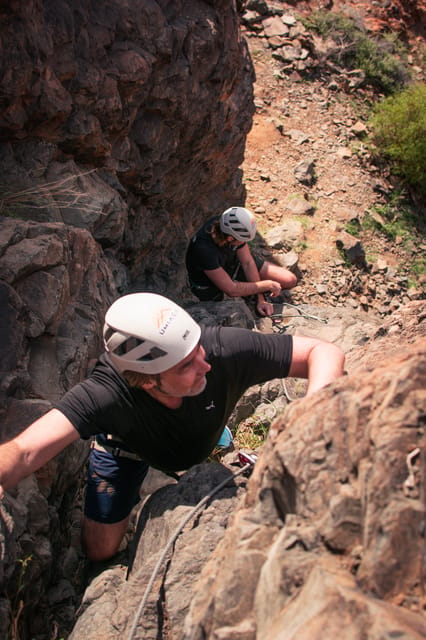
- Sea-view via ferrata on Gran Canaria with a protected climb system (cables, ladders, bridges, safety devices)
- Medium difficulty with route options based on your level and the group
- Monkey Bridge and later a swing that are built for big views and nerves
- Small group (up to 9) and a guided experience
- Included photos plus water and an energy bar, so you don’t have to pack the extras
- Top-quality gear and insurance (RC and ACC) for peace of mind
Amor y Odio: what makes this Gran Canaria climb worth your time
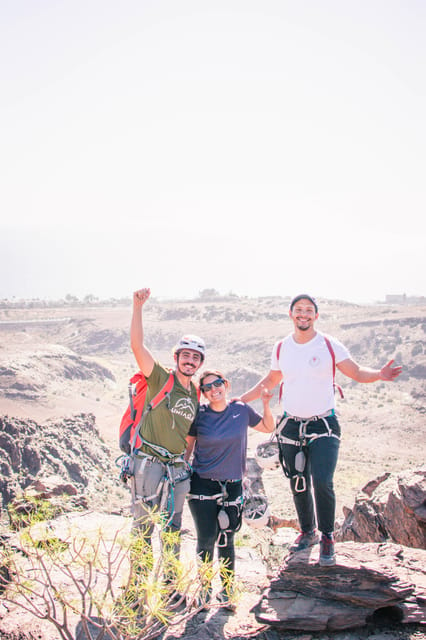
Gran Canaria’s Via Ferrata Amor y Odio is the kind of activity that turns scenery into a sport. Instead of just hiking, you’re using a safety line—fixed cables plus equipment—to move along the mountain route. The result is that you get both the physical effort and the mental click of committing to the next section.
This one earns its “medium” label. It’s aimed at people who want to start in the mountains and also at those who’ve already tried a via ferrata before. Translation: you’ll have a challenge, but the day isn’t designed to crush you. And the sea views matter. When the coastline shows up while you’re clipped in and moving, it changes the whole mood of the climb.
Then there’s the human side. Small group size (limited to 9) means you get attention without feeling like you’re in a crowded bus line. Plus, the guide’s role isn’t just “watch and hope.” The experience is also about explaining the environment—nature and local context—so you’re not only climbing, you’re understanding where you are.
The name even hints at an emotional rollercoaster. People can expect intense emotions, because via ferrata reliably does that: you feel proud after, and you usually feel nervous during. If you’re the type who likes honest effort and clear milestones, you’ll probably enjoy this.
You can also read our reviews of more tours and experiences in Las Palmas.

The 4-hour flow: approach, climb choices, Monkey Bridge, swing, and back
Timing on via ferrata is everything because you’re mixing walking, climbing, and staying focused. Here’s what your day rhythm looks like:
1) Easy start: the 30-minute approach
You’ll walk about 30 minutes before you reach the start of the ferrata. This section is valuable. It helps you settle your pace, test your footwear, and get your breathing under control before you’re clipped in and moving higher.
Tip for you: treat the approach like the warm-up you’d do at the gym. Walk steadily, hydrate early, and don’t save all your nerves for the cable start.
2) Inside the ferrata: medium route options
Once you’re in, you can choose different paths depending on your level and the group. That flexibility is a big deal for a medium route. It means the guide can steer you toward the section that matches your comfort, instead of forcing a single harder line.
Practically, this is how you keep the day enjoyable. You’re still challenged, but you’re not set up to fail because you’re trying to “prove something.”
3) The middle moment: Monkey Bridge
Passing the middle of the route brings you to Monkey Bridge. This is the kind of feature that makes via ferrata memorable, because it’s a definite “landmark” in the climb. It’s also the sort of crossing that tests balance and focus—your body wants to rush, but your safety system rewards calm movement.
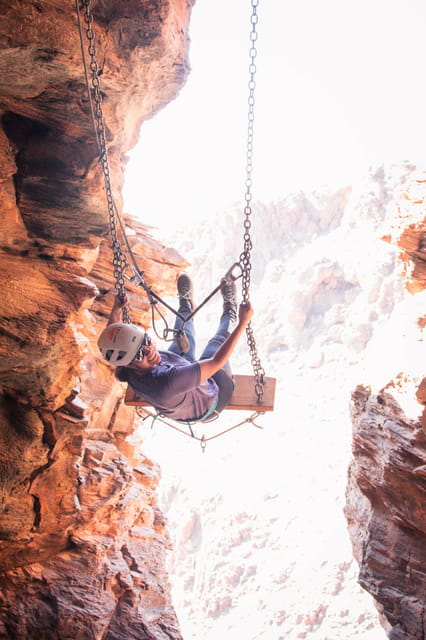
4) Later on: a swing with sea views
Further ahead you’ll find a swing that lets you enjoy wonderful views. Even if you don’t love heights, the swing section can feel like a payoff moment: you’re moving through something playful, but you’re still connected and secured.
This is a good reminder for your mindset: you don’t have to love the scariest part. You just have to get through it, one controlled step at a time, and then look up when the views show themselves.
5) Finish: about 30 minutes back down
After you finish the ferrata, you’ll return to the starting parking lot on a path of about 30 minutes. It’s typically your “mental decompression” part of the day—less problem-solving, more walking and letting your heart rate settle.
Overall, the total duration is about 4 hours, which is long enough to feel like a real outing, but not so long you’ll be exhausted from the walk alone.
Safety and gear: what’s provided, and how to take it seriously
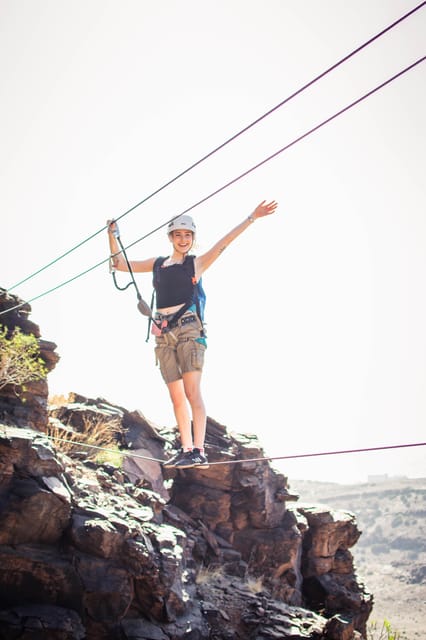
Via ferrata is a sport, not a playground. The good news is that this activity is built around safety in all activity, top-quality material, and qualified guides.
You’ll get:
- the specific material for the activity (so you’re not scrambling to rent the right hardware)
- qualified guides
- RC and ACC insurance coverage
- professional photo reporting (so you can focus on climbing while someone captures it)
Here’s how to think about safety on the day. The equipment works only if you use it correctly and keep your attention on the system. That means you listen closely at the briefing, and you follow the guide’s pace rather than your adrenaline.
What I’d watch for if you’re new: don’t treat the climb like “I can muscle through.” Via ferrata is more about technique—stable body position, controlled foot placement, and staying clipped in while you move. Even on a medium route, rushing can turn minor discomfort into real fear.
If you’ve done nothing like this before, you’ll likely feel a learning curve. That’s normal. The guides are there to help you manage both the physical steps and the mental ones.
The guide experience: Aron’s mix of climbing coaching and local context
One of the most praised parts of this via ferrata is the guide’s way of balancing skills with story. In the feedback, Aron comes up as a standout. The consistent theme: great coaching for the climbing itself, plus solid knowledge about the territory.
That matters more than it sounds. On a via ferrata, you don’t only need instructions for where to put your feet. You also need your head to stay in the right place. A guide who talks about what you’re seeing—local history and nature, plus explanations of the climbing and surroundings—helps you stay engaged and less locked into fear.
It’s also a nice change of pace. Instead of just “go up because you paid,” you get a sense of place. You’re in a mountain setting near the coast, and the sea views aren’t just decoration. They’re part of the experience’s payoff.
If you like travel days that teach you something without turning into a lecture, this format fits.
What you learn on a via ferrata day (and why it sticks)
Via ferrata makes you practice bravery in a controlled way. You don’t need to be fearless. You need to be methodical.
This particular route is described with key themes like overcoming personal challenges and intense emotions. That’s not marketing fluff. It’s how via ferrata works: you face moments where your brain says, slow down, and your hands and feet learn how to respond safely.
You also learn:
- how to trust the protected route
- how to follow your own level decisions when the guide offers options
- how to keep breathing and composure during tricky crossings like Monkey Bridge
- how to shift from concentration to enjoyment when the swing section gives you a view
If you’ve ever hiked somewhere dramatic and wished you could do more than walk, this is the activity that turns “wish” into action.
And for people already started climbing: medium difficulty gives you room to progress without it becoming a full-on ordeal. It’s a practical way to build comfort with fixed-cable movement.
Price and value: why $82 can make sense for this kind of day
At about $82 per person for roughly 4 hours, you’re paying for more than the climbing itself. You’re paying for:
- guides (and a small group cap)
- gear and materials tailored to via ferrata
- insurance coverage (RC and ACC)
- an included energy bar and water
- professional-quality photo reporting
So the cost is doing practical work for you. You don’t have to source equipment on your own, and you get photos captured professionally—useful if you want memories that actually look good, not blurry “my phone slipped while I climbed” shots.
Could you find cheaper adventures in Gran Canaria? Sure. But via ferrata is one of those activities where the real value comes from safety systems, training, and responsible management. This one leans hard into those basics.
Where you might decide twice: if you’re very unsure about your fitness or comfort with exposure, you’d be better off choosing a gentler option first. The price is fair for the service, but you still want the day to be worth it emotionally.
What to bring and wear: your day will feel easier with the right basics
This isn’t a “show up in sandals” kind of outing. The activity lists clear expectations for what to wear and what to avoid.
Bring:
- comfortable shoes (closed-toe)
- comfortable clothes
- long pants
- sunscreen
- drinks and/or water (including a reusable bottle)
- daypack
Not allowed includes:
- weapons or sharp objects
- smoking
- drones
- alcohol or drugs
- littering
- bare feet
If you want an easy day, the biggest practical checklist is: wear footwear that grips well, keep your legs protected with long pants, and bring enough water that you can stay comfortable through both the approach and the return.
Also, think about heat and sun. Gran Canaria can be bright, and climbing makes you sweaty fast. Sunscreen and a bottle you can actually drink from matter more than people expect.
Who this fits best (and who should skip it)
This via ferrata is medium difficulty, but suitability is about much more than skill level. The activity is specifically listed as not suitable for a long list of medical or comfort conditions, including:
- children under 14
- pregnant women
- people with back problems, mobility impairments, wheelchair users
- people with heart problems
- people with vertigo
- people with respiratory issues
- people with epilepsy
- people with motion sickness
- people with altitude sickness
- people with recent surgeries
- people with haemophilia
- people with pre-existing medical conditions
- people with low level of fitness
- plus multiple age and height restrictions
That’s a strong signal: this climb is taken seriously from a health perspective. If any of your concerns overlap with the listed categories, don’t “test it” on the day. Choose a different activity.
Who tends to match well:
- adults who can handle a moderate physical challenge
- people who have some comfort around heights but want support and route options
- first-timers who want a guided introduction to mountain climbing mechanics
- people who enjoy nature explanations while doing something active
If you’re unsure, think of it this way: via ferrata is safe when you’re set up correctly. It’s not meant to be pushed through with stubbornness.
Getting there: where to meet so your day starts calm
The meeting point is a parking area just behind the Bahia Feliz bus stop. That’s convenient because it’s easy to orient yourself to a known spot, and it keeps the start simple.
Aim to arrive a bit early so you can get your gear sorted without rushing. Via ferrata days don’t reward last-minute stress.
Should you book Amor y Odio on Gran Canaria?
Book it if you want a guided medium via ferrata experience with sea views, included gear, and a group size small enough to feel supported. It’s especially a smart pick if you like the idea of learning the environment while you climb, and if you want a route where you can choose harder or easier sections depending on comfort.
Skip it if you fall into any of the listed not-suitable categories, especially vertigo, heart or respiratory issues, epilepsy, motion sickness, or low fitness. In those cases, the safest move is picking a different style of Gran Canaria day.
If you’re on the fence, here’s your quick test: you should feel comfortable being clipped in, following instructions, and taking your time on crossings like Monkey Bridge. If that sounds like your kind of challenge, this one is likely to deliver a day you’ll remember.
FAQ
How difficult is the Amor y Odio via ferrata on Gran Canaria?
It’s listed as a medium level via ferrata. The experience is designed for people who want to start in the mountains and for people who have already begun via ferrata activities.
How long is the activity?
The duration is 4 hours.
How long is the walk to the start of the ferrata?
There is an approach walk of about 30 minutes before reaching the beginning of the via ferrata.
What are the main features on the route?
You’ll pass Monkey Bridge in the middle of the route, and further ahead there is a swing that offers wonderful views.
What’s included in the $82 per person price?
Included are services and materials, all specific equipment for the activity, qualified guides, RC and ACC insurance, a high-quality professional photographic report, an energy bar, and an individual bottle of water.
Do I need to bring climbing equipment?
No. The activity includes the specific materials and all equipment needed for the via ferrata.
What should I wear and bring?
Wear comfortable clothes and long pants, plus closed-toe shoes. Bring sunscreen, drinks, water (a reusable bottle is recommended), and a daypack. Comfortable shoes and proper footwear matter.
Is it suitable for children?
The activity lists it as not suitable for children under 14 years.
What languages do the instructors speak?
The guide/instructor languages are Italian, English, and Spanish.